A Ukrainian soldier survived in a Russian dugout and took a prisoner

The Guardian reports this in a feature from Odessa.
Ukrainian soldier Vadym Letunov of the 118th Brigade survived after spending two weeks in a Russian dugout, where he ended up by accident following an attack on his position.
According to Letunov, he arrived at the front line at the end of February. The shelling began the very next morning. The Russians pounded the dugout where he was staying with another Ukrainian soldier, Sashko, for six to seven hours a day.
The position was attacked by kamikaze drones and mortars. After each strike, the soldiers repaired the shelter, put out fires and replaced the sandbags.
Later, Russian drone operators deployed a ‘Molniya’ with an anti-tank mine. One explosion occurred near the entrance to the dugout, after which both Ukrainian soldiers suffered concussion.
Subsequently, a mine struck the dugout itself. The explosion blew the roof off the shelter. Sashko’s legs were torn off, and he died. Letunov realised that the next drone could finish him off too, so he climbed out and ran in the direction where he thought the Ukrainian positions were.
How Letunov ended up in a Russian dugout
The soldier spotted a fortified position amongst the trees. The entrance was covered with a blanket. Letunov began shouting, thinking there were friendly troops inside.
When he went inside, he saw a man in uniform with an automatic rifle. The Ukrainian named his brigade and said that his position had been bombed. At first, he didn’t realise he had ended up with a Russian.
After a few words, Letunov heard the accent and realised he was facing an enemy.
“You’re not one of us, are you? Please don’t kill me,” he said.
The Russian soldier, whose name was Nikita, ordered him to come inside. He said that the Ukrainian was unarmed, so he wouldn’t shoot him. Nikita also showed him a homemade cross made of two wooden slats with the inscription “save and preserve”.
The Russian promised to let Letunov go the next morning, but he didn’t.
Two weeks alongside an armed Russian
Letunov, a 34-year-old corporal from Odesa, realised that his chance of survival depended on whether he could influence the Russian soldier.
According to the Ukrainian, Nikita was a drug addict and a petty criminal who had been released from prison to take part in the war against Ukraine. He had deserted from battle, been taken prisoner, and then sent back to the front.
The Russian’s commander, a Chechen, gave him orders over the radio.
Nikita forced Letunov to undress and searched his clothes and belt for drugs. He believed the Russian propaganda that Ukrainian soldiers were “drug addicts” and had hidden GPS trackers.
Letters from Russian schoolchildren were stuck to the walls of the Russian dugout. They were all identical.
Nikita claimed that the Russian army was the best in the world, but he himself was cold, hungry and lonely. Once a day, a Mavic drone dropped him about 250 grams of rations – a packet of porridge, jam and a small bottle of water.
A prisoner with sudden mood swings
Letunov said that Nikita had sudden mood swings. Sometimes he would press a gun to the Ukrainian’s forehead and say he was going to kill him right then and there.
The Ukrainian decided to behave in a way that would inspire trust. He pretended to be simpler than he really was and did not try to escape, even though he sometimes had the chance to do so.
When one of Letunov’s toes turned black due to gangrene, he asked Nikita to take him outside and shoot him there, so that his body could be seen and returned to his family. The Russian became angry and refused, as he himself was afraid to go outside.
Meanwhile, in the 118th Brigade, Letunov was already considered all but dead. The commander told his mother, Irina, that the likelihood of her son returning was only 5%. She fainted.
Letunov’s wife, Olesya, with whom he is raising their five-year-old son Andriy, believed her husband was alive. She continued to send him messages on Telegram.
The Russian began talking about surrender
In the dugout, Nikita gave the Ukrainian one square of chocolate a day and a capful of water.
Eventually, the Russian began to complain about his conditions – the lack of food, the need to collect rainwater and drink his own urine.
One morning he asked Letunov whether he should surrender. The Ukrainian replied that he shouldn’t, but explained that conditions in captivity were normal: three meals a day, cigarettes and the Geneva Convention.
According to Letunov, this conversation was repeated five times.
When they ran out of water, Nikita said he knew a place where they could find some. They went out into the fog and heard a Ukrainian drone.
Letunov hung a sign on a tree with his call sign, Cartman, and his brigade number. He knelt down, pointed to the sign and started shouting that he was a Ukrainian soldier.
How Letunov was recognised by his own side
At first, the brigade assumed both men were Russian. They sent a strike drone after them, but it crashed.
The second strike drone was called off only after the commander checked Letunov’s social media and realised that the exhausted man in the video was their missing comrade.
Half an hour later, another drone appeared. It dropped a radio.
Letunov told the soldiers about Nikita, but tried to hint that they shouldn’t ask too many questions, as he was a prisoner and his life depended on the Russian’s mood.
They immediately ordered food and water. The drone dropped four portions of food. Letunov said he couldn’t swallow and gave his portion to Nikita. According to him, this was also a ploy, as the Russian had previously said that when he was full, he became kind.
Later, a Russian drone dropped a booby-trapped log containing TNT. Nikita was ordered to place it in the forest.
Return to his own
Until the very last moment, Letunov did not know whether the Russian would really surrender or blow him and the dugout up.
One Friday, fog rolled in over the position, and a Ukrainian armoured vehicle suddenly pulled up. Both men jumped inside. Letunov was without shoes.
“I didn’t believe until the very end that I’d get out of there,” he said.
Earlier, Nikita had considered trying to seize a Ukrainian armoured vehicle and return to his own lines in it. However, in the end he surrendered and destroyed his phone.
When they arrived at the brigade headquarters, Letunov was hugged and welcomed. He told a senior officer that he had promised the Russian fair treatment.
In a video described by The Guardian, Nikita smiles and says he has taken Vadym prisoner.
What happened next
Letunov stated that the Kremlin successfully brainwashes Russian soldiers, convincing them that they are fighting ‘fascists’ paid for by the US and Europe. According to him, the Russians do not understand that Ukrainians are defending their land.
Upon arrival, Nikita was given coffee, to which he added condensed milk and six spoonfuls of sugar. Two hours later, he was taken away by the SBU. He may well be exchanged for Ukrainian prisoners of war.
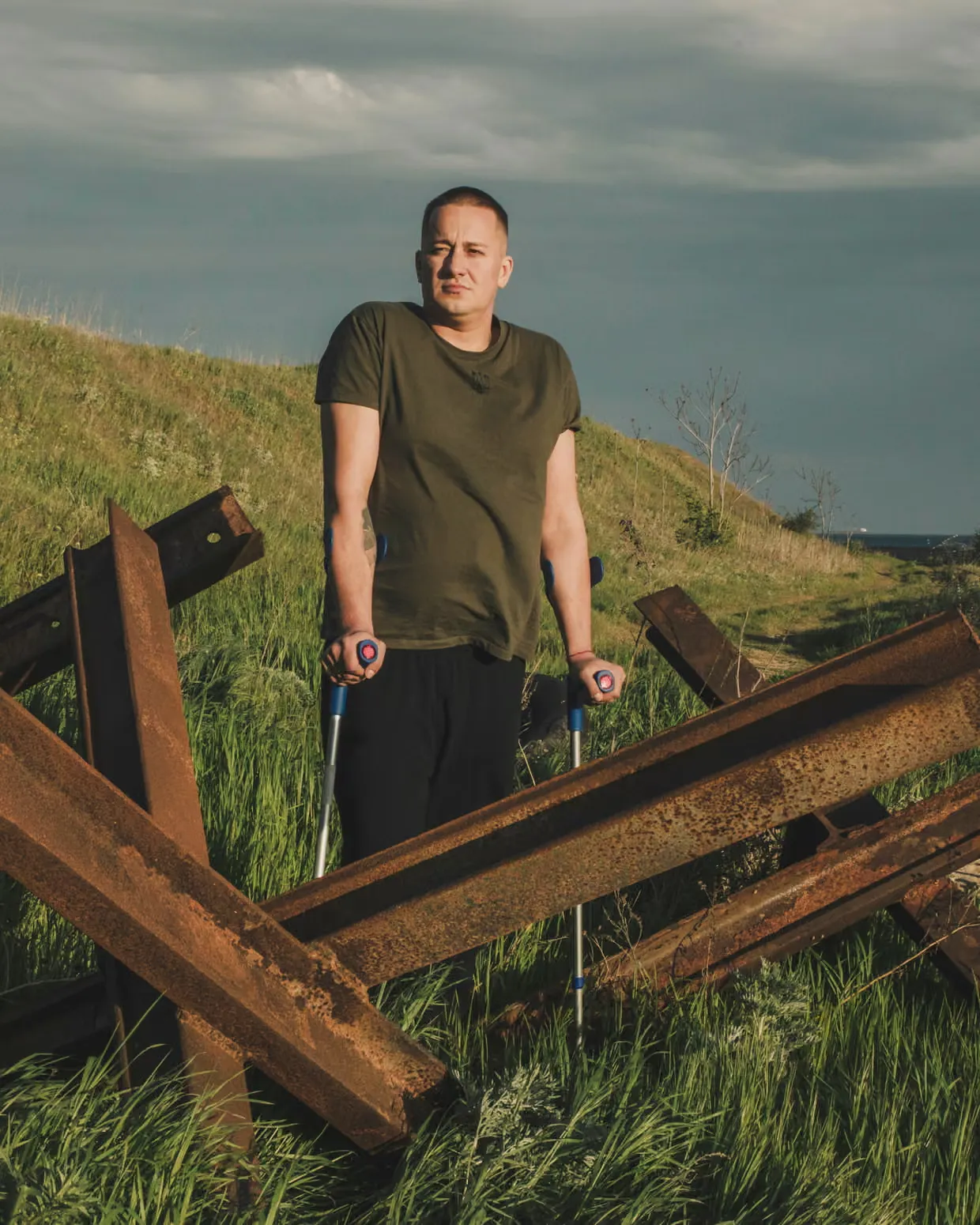
Letunov lost a toe. He is now on crutches and undergoing treatment at a rehabilitation centre after being reunited with his family in Odesa.
He described his survival as a miracle.
“It’s a miracle. A one-in-a-million chance, they tell me. I was a prisoner. But in the end, I came out as a prisoner, of sorts. That’s rare,” said Letunov.
As reported by ThePublic, Ukrainian drones are hitting targets deep inside Russia at a distance of over 1,500 kilometres
Follow us on Telegram