The High Anti-Corruption Court has extended the questioning of Labazuk in the case concerning the bribery of Kubrakov and Nayem
This is stated in the report on the High Anti-Corruption Court hearing and in the case file.
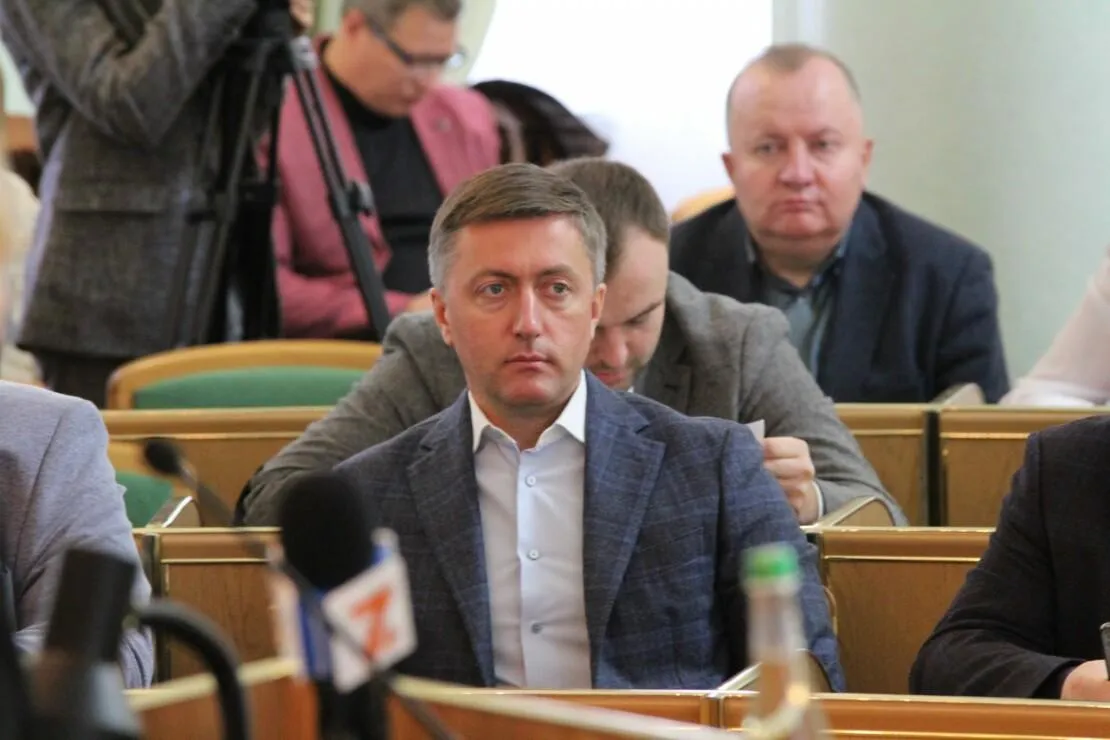
On 21 April, the High Anti-Corruption Court continued the questioning of MP Serhiy Labazuk in the case concerning an attempt to bribe senior officials responsible for reconstruction. The officials in question are Deputy Prime Minister for Reconstruction Oleksandr Kubrakov and the head of the State Agency for Reconstruction, Mustafa Nayem.
At the outset of the defence’s statement, it is specifically emphasised that the defendant is not criminally liable for giving knowingly false testimony and may use this as a defence in the case.
During questioning, Labazuk stated that until 2022, his company, JSC “YARDI”, had no difficulties in securing government contracts. According to him, the value of such contracts exceeded 7 billion hryvnias, and the work was carried out exclusively through lawful means via tenders, without the need for bribes. He also said that prior to the full-scale invasion, he viewed Kubrakov and Nayem as representatives of the “new generation” and fighters against corruption, and had not heard of their possible involvement in “schemes” and kickbacks.
According to the defendant, the situation changed after 24 February 2022. He claims that new contracts for the company ceased to arrive, and the company itself, having significant loan obligations and a large workforce, was incurring losses of around 200 million hryvnias annually. Labazuk stated that the market had shrunk dramatically, and of the roughly 30 companies, only about five “insiders” remained, who allegedly received orders worth tens of billions of hryvnias. He cited “Autostrada” as an example. According to him, JSC “YARDI” was consequently forced to work as a subcontractor, carrying out work at 10% less than stipulated in direct contracts, and this system benefited not the state, but specific individuals.
Labazuk also stated that in the spring of 2023, the company found itself on the brink of bankruptcy. According to him, information was actively circulating at the time about the “insiders versus outsiders” system and the need for kickbacks in the form of a percentage of the contract value. He claims that Nayem constantly referred him to Kubrakov, saying that “only Sashko can resolve your issues”, and in this way, according to the defendant, made it clear that without personal arrangements with the minister, there would be no work.
According to Labazuk, at first Nayem demonstrated some assistance in communicating with regional road services, for which the MP merely thanked him verbally. Explaining why he did not go to the police, he stated that he saw no logic in doing so, as he had no direct evidence, and Kubrakov was one of the most influential figures in the country at the time.
Separately, the MP described in detail the circumstances of his meetings with Kubrakov and Nayem in the summer of 2023. He claims that it was Nayem who persuaded him to approach Kubrakov to resolve the issues facing JSC “YARDI”, and that the meeting itself was organised by Kubrakov’s assistant. According to the defendant, it was Kubrakov and Nayem who steered the conversation from a discussion of the general situation in the industry to specific contracts for the company.
Particular attention during the questioning was paid to the meeting on 8 August, which, according to Labazuk, took place in a park “without phones”. The MP claims that at this meeting, Kubrakov agreed to assist in securing contracts worth around 1 billion hryvnias, without demanding anything in return. According to this version, further communication was to be handled by Denis Nazimov, director of Labazuk’s firm, and Mustafa Nayem. However, on 14 August, as the defendant states, Nazimov reported a request for “details”, which Labazuk interpreted as a direct demand for a bribe from Nayem on Kubrakov’s instructions.
The MP also stated that the decision to provide an unlawful benefit was, for him, a “surrender” to the circumstances, since, in his words, without this the company had no chance of securing work through legitimate means within the established system. He added that he did not complain to Kubrakov about Nayem’s actions, as he considered them “one and the same”. Furthermore, Labazuk claims that the company objectively did not have the spare funds to pay a 3–5% kickback on turnover, as the business’s profitability was lower, yet he felt he had no choice.
During questioning, the defence repeatedly insisted that these circumstances point to deliberate provocation by officials. The defence lawyers claim that the officials allegedly created conditions of artificial starvation for the company, and then themselves proposed a corrupt solution to the problem.
What is known about the case
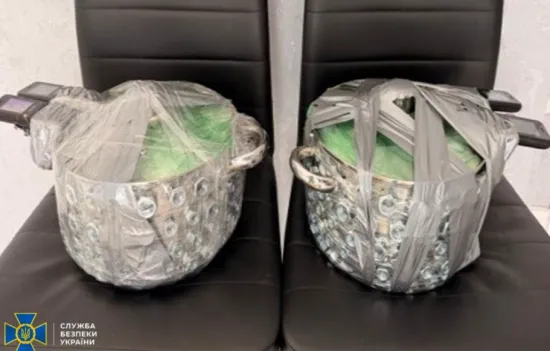
According to the investigation, Serhiy Labazuk sought to secure contracts worth 1 billion hryvnias for the company under his control, “URD”. Investigators believe that the suspect offered officials a “kickback” of 3–5% of the contract value, and as a “thank you” for funding the bridge reconstruction work, handed over $150,000 in a Chinese box in the car park of a supermarket in the capital.
Charges have also been brought against the director of URD LLC, Denis Nazimov. According to the investigation, Labazuk personally lobbied for the allocation of 1 billion hryvnias for projects in the Khmelnytskyi, Zhytomyr, Kherson and Rivne regions. The investigation claims that during meetings, the suspects offered officials “kickbacks”, and Labazuk personally confirmed these agreements, coordinating his business partner’s actions with senior officials.
The case file states that all negotiations and the transfer of funds took place under the supervision of the NABU as part of an investigative experiment, in which Mustafa Nayem and Oleksandr Kubrakov were involved. Prosecutors from the SAPO claim that the guilt of Labazuk and Nazimov is fully confirmed by the evidence gathered. The prosecution cites recorded conversations as key evidence, in which, according to the investigation, the percentage rates of ‘kickbacks’ and mechanisms for eliminating competitors from tenders were discussed in detail.
The investigation also insists that the MP played a leading role: he allegedly not only initiated meetings with senior officials but also personally endorsed his business partner’s corrupt proposals. Separately, the prosecution draws attention to the systematic nature of the defendants’ intentions, which, according to them, is confirmed by records and documents seized during searches, in particular the so-called ‘drafts’ detailing the allocation of budget funds for specific infrastructure projects.
Serhiy Labazuk’s defence, for its part, bases its case on a strategy of challenging the admissibility of key evidence. The lawyers allege systematic procedural violations by NABU detectives, challenge the legality of the searches, and point to the involvement of witnesses under the age of 15 and the seizure of property without the necessary court authorisation. Separately, the defence questions the results of covert investigative actions, claiming there are signs of tampering in the audio recordings and that the transcripts do not match the actual conversations. The defence also insists that the involvement of senior officials from the Ministry of Recovery in the investigative experiment was of an extra-procedural nature, which, in their view, indicates a provocation of a crime and deprives the witnesses of their status as informants.
The defendants are charged under Part 4 of Article 369 of the Criminal Code of Ukraine – offering, promising or providing an unlawful benefit to a public official holding a particularly responsible position, or committed by an organised group of persons or a member thereof. Following the completion of the pre-trial investigation in May 2024, the case was referred to a panel of judges at the High Anti-Corruption Court. The court is continuing to hear the case on its merits.
As reported by ThePublic, the High Anti-Corruption Court has extended the detention of three suspects in the case involving the misappropriation of over 231 million hryvnias during procurement for the National Cancer Institute. The individuals in question are Yuriy Vasylenko, director of Orthoimpex LLC; Dmytro Kaliushchenko, former secretary of the NCI’s tender committee; and Bohdan Borisyuk, head of the NCI’s lung and mediastinal tumour department.
Follow us on Telegram