Scientists have advanced towards growing teeth in the laboratory

It's no surprise that many people fear the dentist. Tooth replacement often requires invasive surgery and the installation of a titanium post into the patient's jawbone, after which one must wait months for it to turn into an artificial root before a crown can be placed on it.
Research groups around the world are working on finding ways to implant or grow real biological teeth in the human jaw, writes ThePublic.info, citing CNN.
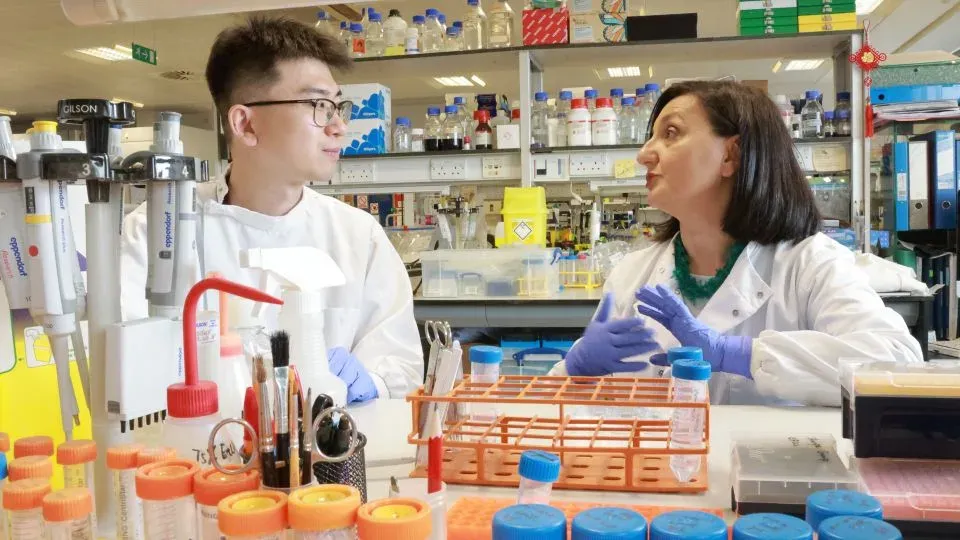
Perhaps, this is still far off, but at the Royal College of London, Ana Angelova Volponi, director of the postgraduate program in regenerative dentistry, has been experimenting with lab-grown teeth for nearly two decades. She was part of a team that in 2013 grew a tooth from human and mouse cells.
This year, she led a study that continued this work and achieved a breakthrough in the material used to hold the growing tooth in the laboratory. This material better mimics the real environment in which biological teeth grow in the oral cavity. This is a key step toward replacing mouse cells with human ones and stimulating their formation into a tooth.
«Two types of cells participate in tooth formation, in a kind of dialogue, and then we have an environment where this occurs», - she said
The environment, which researchers call a "scaffold," is crucial for the formation of the laboratory-grown tooth and is the subject of Volponi's latest research.
In 2013, Volponi used a collagen protein scaffold, but now she uses a hydrogel — a type of polymer with a high water content, as explained by Suchen Zhang, a doctoral student at the Royal College of London and co-author of the study.
«We initially collect cells from mouse embryos, then mix them together and centrifuge to obtain a small cell pellet», - he said. «Then we introduce this cell pellet into the hydrogel and grow it for about eight days». Since the work was focused on the environment, human cells were not needed.
After eight days inside the hydrogel, developed in collaboration with Imperial College London, tooth-like structures will form. In the 2013 study, these «tooth buds» were transplanted into a mouse, where they developed into a tooth structure with a forming root and enamel.
Before a lab-grown tooth can be used in human patients, many challenges need to be overcome. However, as Volponi noted, the new material helps piece together some parts of this puzzle by improving the «communication» between cells responsible for creating the tooth.
Researchers still do not know exactly how to replace mouse embryonic cells with adult human cells. But if this puzzle can be solved, Volponi envisions two possible ways to introduce grown teeth into everyday dental practice:
«We either grow the tooth to a certain stage of development and then place it into the alveolar socket, in the place of the lost tooth, where the new formation can fully transform into a biological tooth, integrating into organic structures such as bone and ligament. Or we fully grow the tooth first and then surgically implant it. It is still too early to say which approach will prove more viable».
A true, biological replacement tooth grown from the patient's own cells would have many advantages over a crown or implant. First, it would integrate into the tissue without inflammation or rejection. Moreover, it would feel just like a real tooth — unlike implants, which lack sensitivity and elasticity because they simply fuse with the bone.