A US war against Iran could bring strategic benefits to Russia

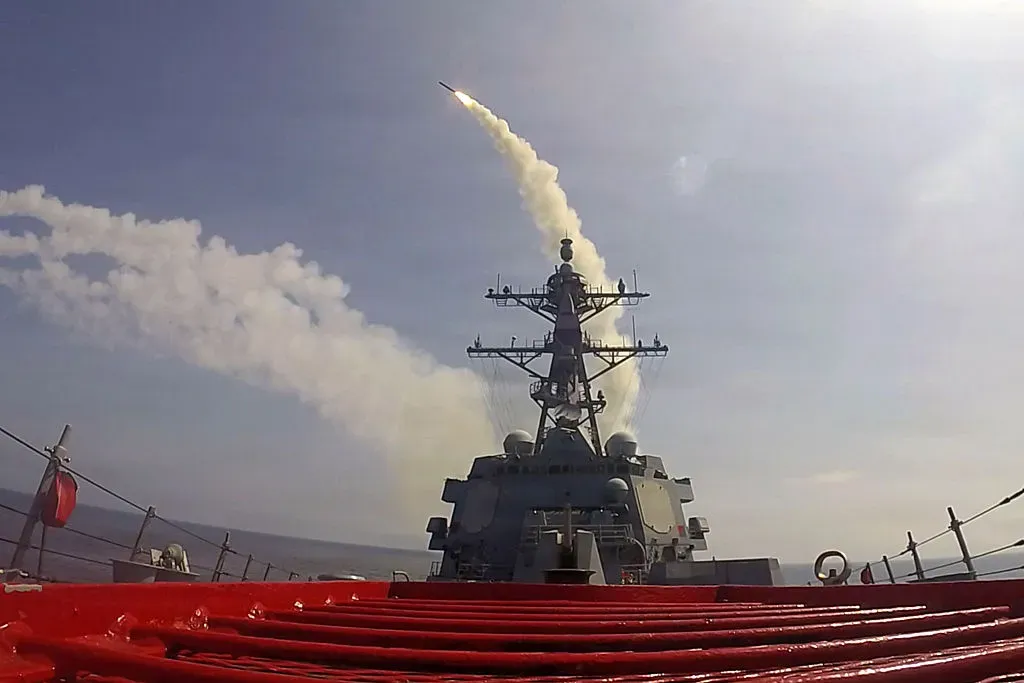
During operations against Iran, the US Navy uses Tomahawk cruise missiles to strike launchers and production facilities that enable Iran to launch retaliatory strikes. The logic behind this is that destroying missiles on the ground is cheaper and safer than intercepting them in the air. This is according to Mark Champion, a columnist for Bloomberg.
A similar argument was previously used by Ukrainian President Volodymyr Zelensky, who called on the US to provide Ukraine with Tomahawk missiles. He proposed using them against Russian launchers and factories that produce missiles for strikes against Ukraine. The article notes that the active use of these missiles by the US in the Middle East makes the transfer of such weapons to Ukraine less likely.
Tomahawks can strike targets at a distance of up to 2,500 kilometres and deliver a warhead weighing about 450 kilograms. At the same time, their transfer to Ukraine was considered difficult due to technical limitations and the limited number of launchers. Ukraine does not have a navy, and the US does not have many ground-based installations that could be used to launch these missiles. In addition, such missiles are seen as an important element in a potential conflict with China over Taiwan or the South China Sea.
The article notes that the US war with Iran is already bringing indirect benefits to Russia. The longer the conflict lasts, the greater these benefits may become.
The operation, which according to US President Donald Trump could last four or five weeks, could significantly reduce US missile stocks for both offensive and defensive operations. At the same time, rising tensions could push up global oil and natural gas prices, which are important sources of revenue for the Russian economy.
A possible prolonged closure of the Strait of Hormuz or the destruction of oil and gas export infrastructure in the Persian Gulf countries could also increase demand for Russian energy resources, which are subject to sanctions. Russian oil tankers, which have remained unsold for a long time after US pressure on India to reduce purchases, could find buyers in such a case.
Supporting an intensive air campaign using two aircraft carrier strike groups also requires significant intelligence resources. This includes aerial reconnaissance and real-time satellite analysis. The article notes that these resources are important for Ukraine's defence and could be redirected elsewhere if strikes on Iran continue.
The author notes that for the Kremlin, the start of the US war against Iran was a favourable moment, while for Kyiv, the situation looks less advantageous.
At the same time, Iran has been an important partner for Russia since the start of the full-scale invasion of Ukraine on 24 February 2022. Tehran has supplied Moscow with ammunition, drones and technology for their production.
Iran is located close to Russian territory across the Caucasus and the Caspian Sea, has influence in the Middle East and borders Afghanistan. The country is also an important link in the North-South International Transport Corridor, which Russia and India are developing to connect their markets.
The loss of Iran as a partner due to the strengthening of US influence in Moscow could be seen as a strategic loss. At the same time, the article notes that Russia currently shows little willingness or ability to support Tehran in the conflict.
For the Kremlin, the key issues remain the situation in the war against Ukraine and the financial needs of the Russian budget. The article also notes that Russia has recently faced a slowdown in its advance on the front lines, while personnel losses are increasing.
Although Russia has greater human resources than Ukraine, the ratio of losses to territory gained is becoming increasingly difficult to maintain.
An additional factor is the loss of unofficial access by Russian units to the Starlink satellite network, which was used on the front lines. This has affected the units' ability to coordinate their actions, which previously allowed Russian forces to advance.
The text notes that rising global oil prices could ease economic pressure on Russia. The Kremlin's position could also be influenced by a situation in which Washington would want to achieve a ceasefire in Ukraine after the completion of operations against Iran.
The author emphasises that Tomahawk or Patriot missiles can be deployed in a matter of minutes, but their production and restocking takes up to two years.