The war in Ukraine has become a testing ground for combat robots equipped with artificial intelligence

Russia’s war against Ukraine has become one of the main factors accelerating the development of combat systems equipped with artificial intelligence. Indeed, the Ukrainian front line is increasingly being seen as a testing ground for new autonomous military technologies.
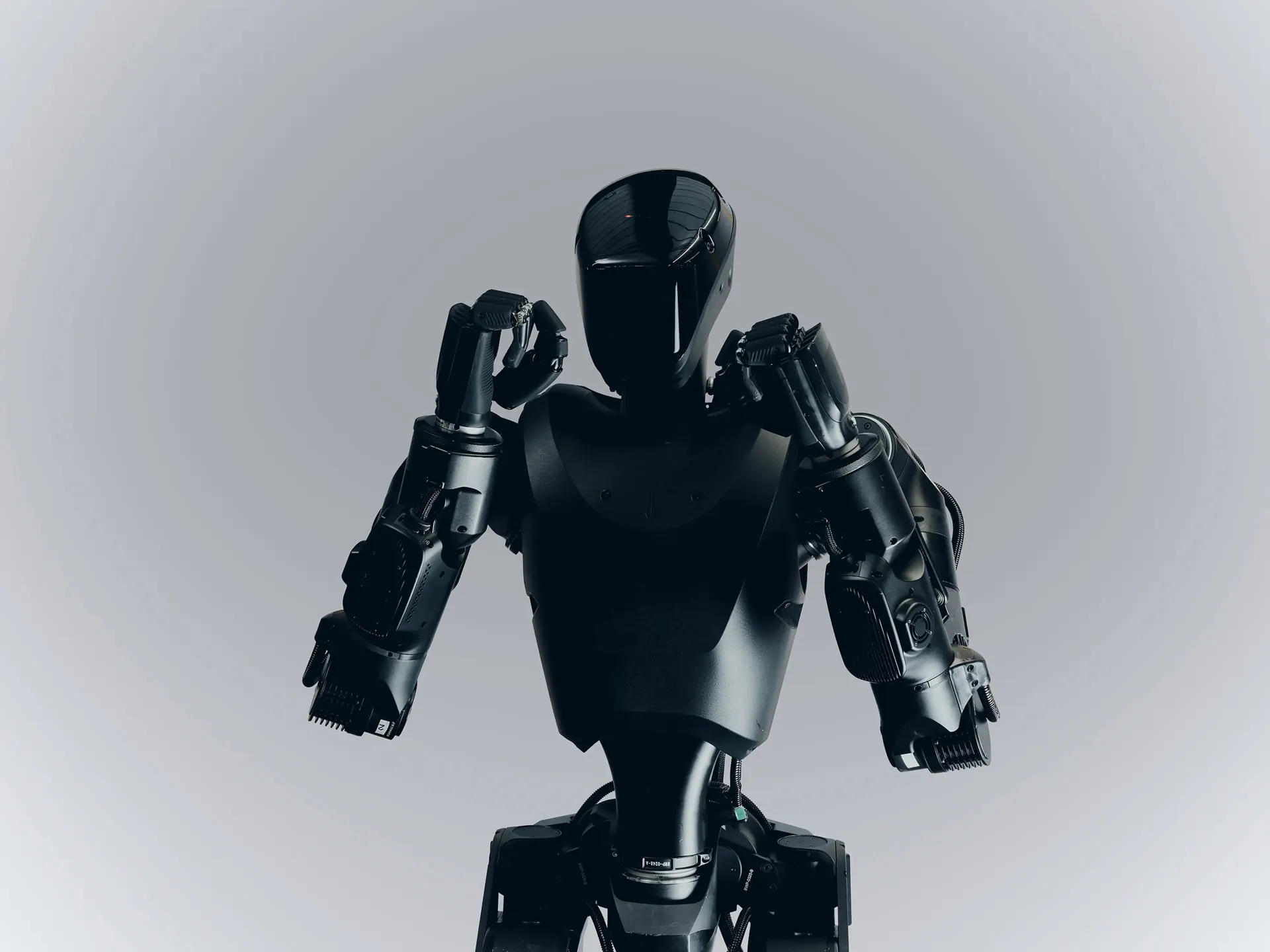
The American company Foundation states that it has already sent two Phantom humanoid robots to Ukraine. Initially, they are intended for frontline reconnaissance. At the same time, the company is preparing these robots for potential use in combat scenarios for the Pentagon.
The Phantom MK 1 was created as a humanoid robot for defence tasks. Foundation describes it as the world’s first such system developed specifically for the military. The company’s co-founder, Mike LeBlanc, a US Marine Corps veteran, stated that the aim is for the robot to be able to use any weapon that a human is capable of using.
The company already has research contracts with the US Army, Navy and Air Force totalling $24 million. In particular, the robots are set to be tested by Marine Corps units during exercises involving the breach of fortified positions.
The developers believe that the use of robots in warfare will reduce military casualties. In their view, such systems do not experience fear or fatigue, can operate continuously, and can function in conditions that are dangerous for humans.
At the same time, it is the war in Ukraine, according to LeBlanc, that has shown just how rapidly the battlefield is changing. Following a trip to Ukraine, he stated that he was struck by the scale of the robotisation of warfare.
“This is a real robot war, where robots act as the main combatants and humans merely as support forces,” he said. According to him, this is radically different from the wars in which he had previously participated.
Ukraine is currently launching up to 9,000 drones every day. This is precisely why it has become the main testing ground for arms manufacturers seeking to automate various stages of the so-called kill chain, that is, the process of detecting, targeting and destroying a target.
The article notes that autonomous drones, capable of moving independently to targets over long distances and engaging them, are already in active use in Ukraine. Ukrainian quadcopters equipped with artificial intelligence can attack Russian troops without an operator’s intervention if communication is lost or electronic warfare makes remote control impossible.
Computer vision also enables the systems to recognise specific targets. The text mentions that drones are already capable of flying through windows and attacking individual people.
A separate incident is described in which, at the end of January, three wounded Russian soldiers emerged from a building to surrender to an armed Ukrainian ground robot.
According to Foundation’s developers, humanoid robots could be particularly useful in Ukraine for transporting ammunition, reconnaissance and operations in areas inaccessible to drones, particularly in low-lying bunkers. They also believe that such systems will allow existing weapon arsenals to be utilised without the need to create specialised platforms for each new type of weaponry.
Alongside Foundation, other companies in the US are also developing autonomous combat systems. In particular, Scout AI is testing software that allows artificial intelligence to independently plan an attack, identify a target and issue commands without further human intervention.
In February, the company conducted a test during which seven AI agents organised and carried out a coordinated attack. According to the co-founders of Scout AI, in the future, humans may cease to control drones manually altogether.
The article also highlights the risks. Critics stress that the emergence of humanoid combat robots could lower the political and moral barriers to starting new wars, blur accountability for war crimes, and further distance humans from the decision to kill.
Furthermore, artificial intelligence can make mistakes, demonstrate bias, or deviate from pre-set limits. The text notes that international law does not yet provide a clear answer to the question of who will bear responsibility if an autonomous system kills a civilian or commits a war crime.
Against this backdrop, the United Nations and the International Committee of the Red Cross are calling for a legally binding agreement to be agreed by the end of the year, which would ban autonomous systems without ‘meaningful human control’. More than 120 states support this initiative, but the US, Russia and Israel are in no hurry to approve it.
The article emphasises that the war in Ukraine is already pushing the world into a new era, where machines will increasingly make decisions on the battlefield.