The Military Ombudsman has identified the main causes of the conflict

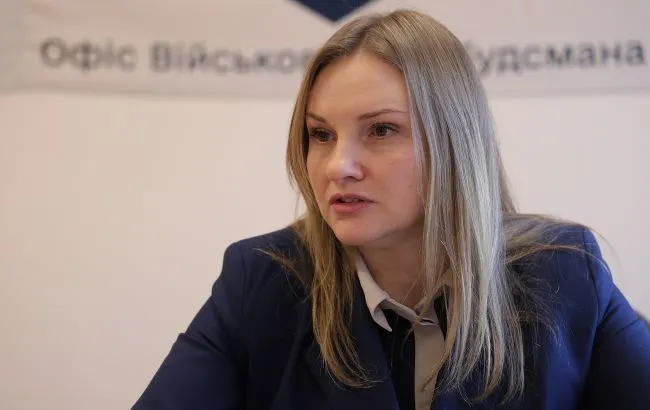
Olga Reshetilova made these remarks in an in-depth interview with RBC-Ukraine, recorded on 24 March.
Reshetilova emphasised that an increase in the number of deserters usually coincides with an intensification of hostilities, so she considers it wrong to attribute everything to the issue of “bad commanders”. According to her, the statistics do not confirm that conflicts with the leadership are the main trigger for such decisions. Most cases, as the ombudsman said, are recorded among recruits undergoing basic military training or among those who have just been assigned to units and have not yet seen combat.
She also highlighted another common reason: a soldier needs medical treatment or a medical examination, but cannot obtain a referral in time. At the same time, according to Reshetilova, fear of death still ranks first in surveys. She directly described this as “an entirely natural phenomenon”.
The Ombudsman believes that this problem cannot be solved by punitive measures alone. In her view, what matters here is trust in the commander, cohesion within the unit, and normal human relationships within the team, where a soldier knows he can rely on his comrades. It is precisely this, she said, that reduces the level of fear and contributes to the unit’s resilience.
At the same time, Reshetilova specifically refuted the notion that abuse by commanders is widespread. She stated that the majority of commanders in the Armed Forces of Ukraine are responsible individuals with extensive combat experience, whilst those causing problems, she said, are known by name to the Office of the Military Ombudsman and are monitored individually. In the same interview, she noted that complaints of physical and psychological abuse account for only 3% of all cases received by the office.
Reshetilova also drew attention to another aspect of this issue. She said that in the army there are situations where soldiers themselves, having agreed amongst themselves, withdraw from their positions without warning anyone, and as a result, others subsequently lose their lives. In her view, it is precisely such cases that demonstrate how complex the issue of justice is in cases involving the Special Forces, when one must simultaneously consider both a person’s fear and the consequences of their decisions for the unit.
Another problem she highlighted was the breakdown in communication between the frontline and headquarters. Reshetilova explained that she sometimes had to literally force commanders to ring soldiers at their positions if the chain of command was not working. She also emphasised that contact with families is critically important for the morale of the troops. According to her, the office insists that units ensure such contact by any means available — from delivering letters to radio messages.
An interview with RBC-Ukraine adds another important detail to this picture. Reshetilova reported that her office is currently receiving an average of 66 enquiries a day, with the total number already exceeding 3,700. The majority of complaints concern missing personnel, referrals to medical commissions, treatment, discharge from service and transfers. In other words, the issue of missing persons does not arise in a vacuum, but within a much broader crisis — an overburdened system, problems with medical decisions, exhaustion and a lack of certainty for those in uniform.
Separately, the Ombudsman cited an example of a major failure currently under investigation: according to preliminary data, around 2,000 people, presumably unfit for service due to health reasons, arrived at one of the military units. According to her, representatives of the Ministry of Defence and the Army Command have already been involved in the investigation. Although this case is not directly related to the topic of the Special Forces, it clearly illustrates the broader picture: problems often begin even before a person reaches the front line — at the stage of mobilisation, medical examination, deployment and basic training.
As a reminder, the Volyn Regional Military Registration and Enlistment Office has noted that in the event of non-payment of a fine for violating military registration or mobilisation rules, the decision may be referred to the enforcement service for compulsory collection. In such cases, the amount increases, and additional restrictions may be imposed on the debtor.