15 April 2026: What is today’s church holiday, traditions and taboos?

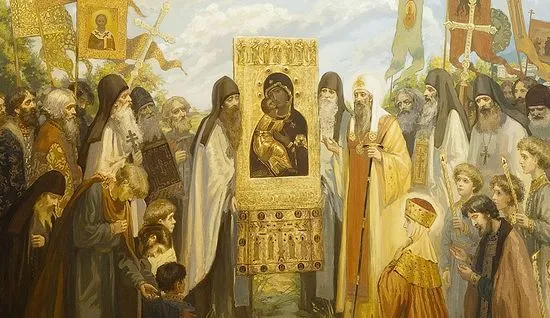
On 15 April, according to the new church calendar, one of the most revered icons – the Vyshhorod or Volodymyr Icon of the Mother of God – is commemorated. It is considered one of the oldest among the seventeen icons of the Mother of God mentioned in the church calendar.
According to church tradition, the icon was painted by the evangelist Luke on a plank from the table at which Jesus Christ, the Most Holy Mother of God and the righteous Joseph the Betrothed had dined. The image belongs to the iconographic type known as ‘Eleusa’, or ‘Contemplation’, in which the Mother of God and the Infant tenderly press their cheeks against one another.
Historians believe that in the early 12th century, the icon was brought from Constantinople to Kyiv as a gift to Saint Prince Mstislav Volodymyrovych. This event is linked to the dynastic marriage of a member of the Monomakh family to the son of the Byzantine Emperor Alexius I Comnenus. It is thought that the icon was originally housed in Saint Sophia Cathedral in Kyiv, and in 1136 it was moved to a monastery in Vyshhorod. There, the icon became famous for numerous miracles and healings, thanks to which it became a place of pilgrimage. Several decades later, Prince Andrei Bogolyubsky took the icon to Vladimir. According to the latest information, the icon was housed in the Tretyakov Gallery.
On this day, according to both the new and old calendars, we celebrate Bright Wednesday – the third day after Easter. Solemn services continue in churches, and the Royal Doors remain open until Saturday as a sign of Easter joy. According to an ancient custom, candles are also placed in churches on this day with a prayer for protection from hail and bad weather.
In addition to the Vyshgorod-Vladimir Icon of the Mother of God, 15 April according to the new calendar commemorates the Apostles of the Seventy, Aristarchus, Pudas and Trofimus, the martyrs Vasilisa and Anastasia, the martyrs of Mesukevia, Sukhi and his warriors, the martyr Sava of Gothia, the righteous Prince Mstislav Volodymyrovych, the Assembly of the Venerable Fathers who laboured on Mount Sinai, as well as the Vilnius and Kasperiv Icons of the Mother of God. According to the old calendar, the Venerable Titus the Wonderworker is honoured on this day.
In folk tradition, Bright Wednesday was known as Hail Wednesday, Round Dance Day, and Pud’s Day – in honour of the Apostle Pud. The day was considered special for beekeepers: in the morning they inspected the apiaries and hives, checking the hives after winter. If the weather turned warm, the bees were taken out into the fresh air and placed closer to flowering trees.
On this day, they would also retrieve the remaining honey stored for the winter and serve it at the table – this was considered a sign of good luck and prosperity for the whole year. By Bright Wednesday, it was customary to bake Easter cakes and dye eggs again, but no longer for oneself, but for those in need. In popular belief, the generosity shown on this day was supposed to bring prosperity and happiness until the following Easter.
Before the Vyshhorod Icon of the Mother of God, believers pray for protection, peace and prosperity. The miraculous icon has long been considered healing: people sought help from it for serious ailments, especially heart and eye diseases, as well as protection for their homes and loved ones. It was believed that through this icon, the Mother of God watches over warriors, helps to quell hostilities, bestows peace and strengthens family ties.
Among the things one is advised not to do on this day are: quarrelling, being rude, refusing to help, and harming animals, birds and bees. According to folk beliefs, one should not lend money, shake out pillows and mattresses, take out old things, pick up money from the ground or share secret plans. The main prohibition on Hail Wednesday was working in the garden or vegetable patch, so as not to invite sudden hail and lose the harvest.
Folk omens on this day were linked to the weather and the coming summer. A red dawn foreshadowed rain or wind; a particularly bright sun – rain; strong wind – clear and dry weather; snow – a cool summer; and the loud croaking of frogs – bad weather. If the alder had blossomed by this time, it was believed that it was already time to sow buckwheat.
As reported by ThePublic, the first egg was spotted in the nest of the storks Hrytsyk and Odarka. The event was confirmed by researcher Iryna Sarazhynska, and over 500 viewers watched it simultaneously via the live stream.
Follow us on Telegram