A Russian fighter jet flew just a few metres away from a British reconnaissance aircraft over the Black Sea

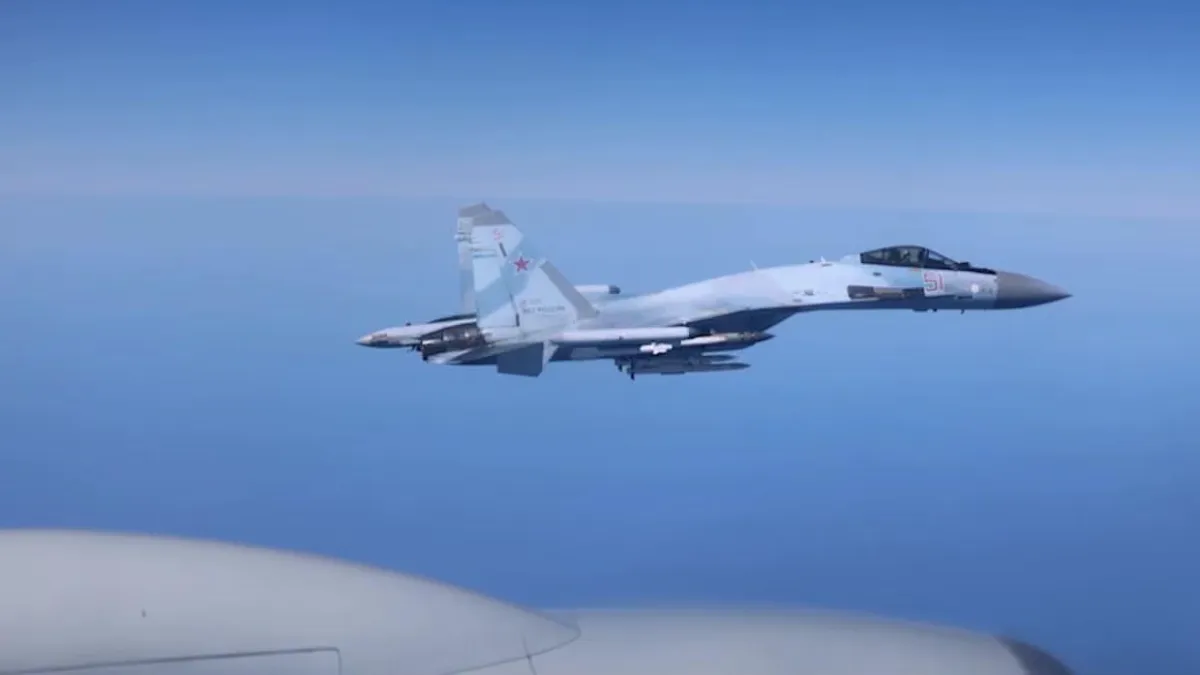
A Russian Su-27 fighter jet flew within about six metres of a British RAF Rivet Joint reconnaissance aircraft, which was flying over the Black Sea at a speed of around 500 miles per hour.
This was reported by British Defence Secretary John Giley, who described the Russian pilots’ actions as “dangerous and unacceptable”, according to The Guardian.
According to him, the incident took place in mid-April. The Russian Su-27 flew past the nose of the unarmed British aircraft six times, creating a risk of collision that could have triggered a diplomatic crisis between the two countries.
During another incident, which also took place in mid-April, a Russian Su-35 fighter jet came so close to an RAF Rivet Joint that the British aircraft’s emergency systems were triggered, including the disengagement of the autopilot. At the time, the aircraft was carrying out a reconnaissance mission in international airspace.
The RAF Rivet Joint is an electronic intelligence aircraft with a crew of up to 30. It is capable of conducting surveillance at a range of around 150 miles and was being used to monitor Russian activity as part of NATO patrols.
“This incident is yet another example of dangerous and unacceptable behaviour by Russian pilots towards an unarmed aircraft operating in international airspace,” said John Giley. According to him, such actions pose a serious risk of an accident and potential escalation.
The UK Ministry of Defence noted that this is the most dangerous incident involving Russian military personnel and a British Rivet Joint aircraft since 2022, when a missile was fired at a British aircraft over the Black Sea.
The report also notes that Russia is stepping up its military activity in Europe. In Lithuania, politicians were forced to take shelter after a drone violated the country’s airspace, and operations at Vilnius Airport were temporarily suspended.
The day before, a Russian representative at the UN claimed that Moscow allegedly had information about Ukraine’s plans to launch military drones from the territory of Latvia and other Baltic states. In Latvia, these claims were dismissed as “pure fiction”.
Last month, two Russian frigates escorted oil tankers and a vessel suspected of transporting weapons through the North Sea and the English Channel. As a result, the Royal Navy conducted a month-long surveillance operation.
John Healey also previously reported that the UK had been tracking three Russian submarines which had been operating near critical underwater infrastructure in the North Atlantic for a month.
“I would like to commend the high professionalism and courage of the RAF crew, who continued to carry out their mission despite these dangerous actions,” said the UK Defence Secretary.