Ajax appliances are being sold in Russia following the company’s announced withdrawal from the market

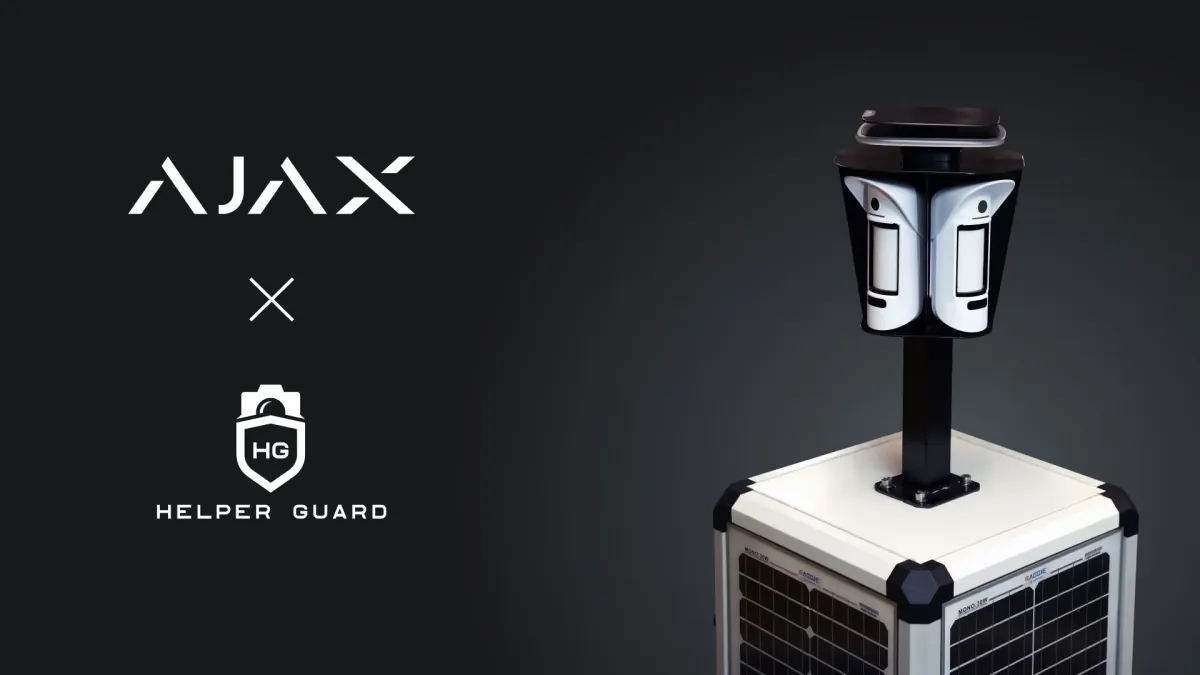
This is evidenced by data from the 52WMB customs database. ThePublic has verified some of the information cited in this article using open sources.
Ajax Systems announced that it was ceasing operations in Russia and Belarus on 2 March 2022. The company stated that it was halting sales, closing its Russian office and ceasing supplies to Belarus. Subsequently, the Russian legal entity was wound up, and the Kyiv School of Economics’ LeaveRussia project granted Ajax the status of a company that had completed its exit from the Russian market.
However, the closure of the office and the cessation of official sales did not remove Ajax equipment from the Russian market. As of July 2026, the brand’s products are still being offered by several local online shops and marketplaces.
The Russian website Ajaxstore.ru still features a catalogue of Ajax hubs, sensors, sirens and other equipment, an order form, Russian telephone numbers and an email address for customers. On its contact page, the shop claims to sell the brand’s full range of equipment.
However, the information on the website itself is contradictory. Some pages allow customers to place an order, but the catalogue also offers the option to submit a pre-order pending the arrival of stock. In search results, the website warns that Ajax products are not supplied to Russia and that technical support is not provided. Therefore, the website’s operation alone does not confirm regular new deliveries from the manufacturer.
Ajax products are also available on the Russian platforms Hikvision24, Loma.pro and Ozon. Hikvision24 lists prices in roubles and marks certain devices as in stock. On Loma.pro, most of the items we checked are available only to order or are listed with the last known price. Ozon offers hubs and sensors, including models designed for Russian radio frequencies.
The availability of products from third-party sellers does not mean that Ajax Systems continues to trade officially in Russia. These may be old stock, the resale of equipment already imported, or supplies made without the manufacturer’s consent. To determine the origin of specific batches, serial numbers, invoices, customs declarations and documents detailing the movement of goods to the end retailer are required.
In Belarus, Ajax equipment also remains on sale. It is offered by the Onliner catalogue and the Minsk-based shop Secur.by, where prices are listed in Belarusian rubles and items can be added to the basket.
However, the website Ajaxbel.by, mentioned in previous reports, no longer operates as a standalone Ajax shop. It now redirects users to the website of another security system, iFLOW. The search engine still retains old Ajaxbel pages on which the company ‘BayTechService’ describes itself as the official dealer for Ajax Systems in Belarus, but these are dated 2017–2024. This does not confirm the dealer’s current status in 2026.
The theory regarding a possible route via Kazakhstan is based on data from trade declarations. The reports claim that the Dubai-based companies Ajax Systems Trading FZE and Ajax Systems Trading DMCC shipped equipment from Poland to Kazakhstan. The recipients are named as ‘Intant Trading House’ and ‘Safeti Expert’.
According to an analysis by ID Leaks, the number of recorded shipments by Ajax Systems Trading DMCC to Kazakhstan rose from 159 in 2022 to 1,025 in 2023. These figures refer specifically to shipment records, rather than the number of individual devices.
Another publication, based on data from 52WMB, states that between September 2025 and March 2026, “Intant Trading House” received approximately 13,300 units of Ajax products, whilst “Safety Expert” received around 45,500. Together, this amounts to almost 59,000 devices.
Kazakhstani companies do indeed sell Ajax equipment. The Safety Expert website features hubs, motion detectors, sirens and other devices with prices listed in tenge. Some of the products are marked as in stock. Intant also has a catalogue of Ajax equipment and organises events featuring the brand.
In September 2025, Intant announced the Ajax Roadshow, declaring itself the company’s official distributor in Kazakhstan. This confirms that deliveries to Intant were not covert: Ajax was publicly developing the Kazakhstani market and holding product presentations there.
That is precisely why the sharp increase in shipments to Kazakhstan does not yet prove re-export to Russia. Kazakhstan is a separate sales market, and Intant and Safety Expert sell equipment within the country. To confirm the onward movement of products to the Russian Federation, customs declarations are required in which these Kazakhstani companies are listed as exporters and Russian sellers as recipients. No such complete chain of documentation has been found in publicly available sources.
Those making the allegations also point out that Ajax devices allegedly operate with Russian SIM cards, receive updates and connect to the cloud service via Russian IP addresses. No independent technical investigation or response from the company regarding these claims has been made public.
The hub’s compatibility with a SIM card does not in itself indicate official sales in the country. The devices use standard mobile networks, and a system that has already been sold can continue to operate even after supplies have ceased. At the same time, access to Ajax Cloud means that the manufacturer has not technically disconnected all existing Russian users from the cloud infrastructure.
At the time of writing, Ajax Systems and its founder, Oleksandr Konotopskyi, have not publicly explained the origin of the more recent batches of equipment found on Russian and Belarusian sites. Nor is there any information regarding criminal proceedings in which law enforcement agencies would have confirmed the supply of Ajax products to Russia via Kazakhstan.
Thus, open sources confirm three facts: Ajax officially withdrew from the Russian and Belarusian markets in 2022; its products are still available for purchase in both countries; and deliveries to Kazakhstani partners have increased significantly since the start of the full-scale war. However, the claim that the company organised re-exports from Kazakhstan to Russia remains, for the time being, a theory, as there is a lack of documentation regarding the final route of the goods to substantiate it.