The Dutch Prime Minister and Czech President called for Western unity and greater European resolve towards Russia in Munich.

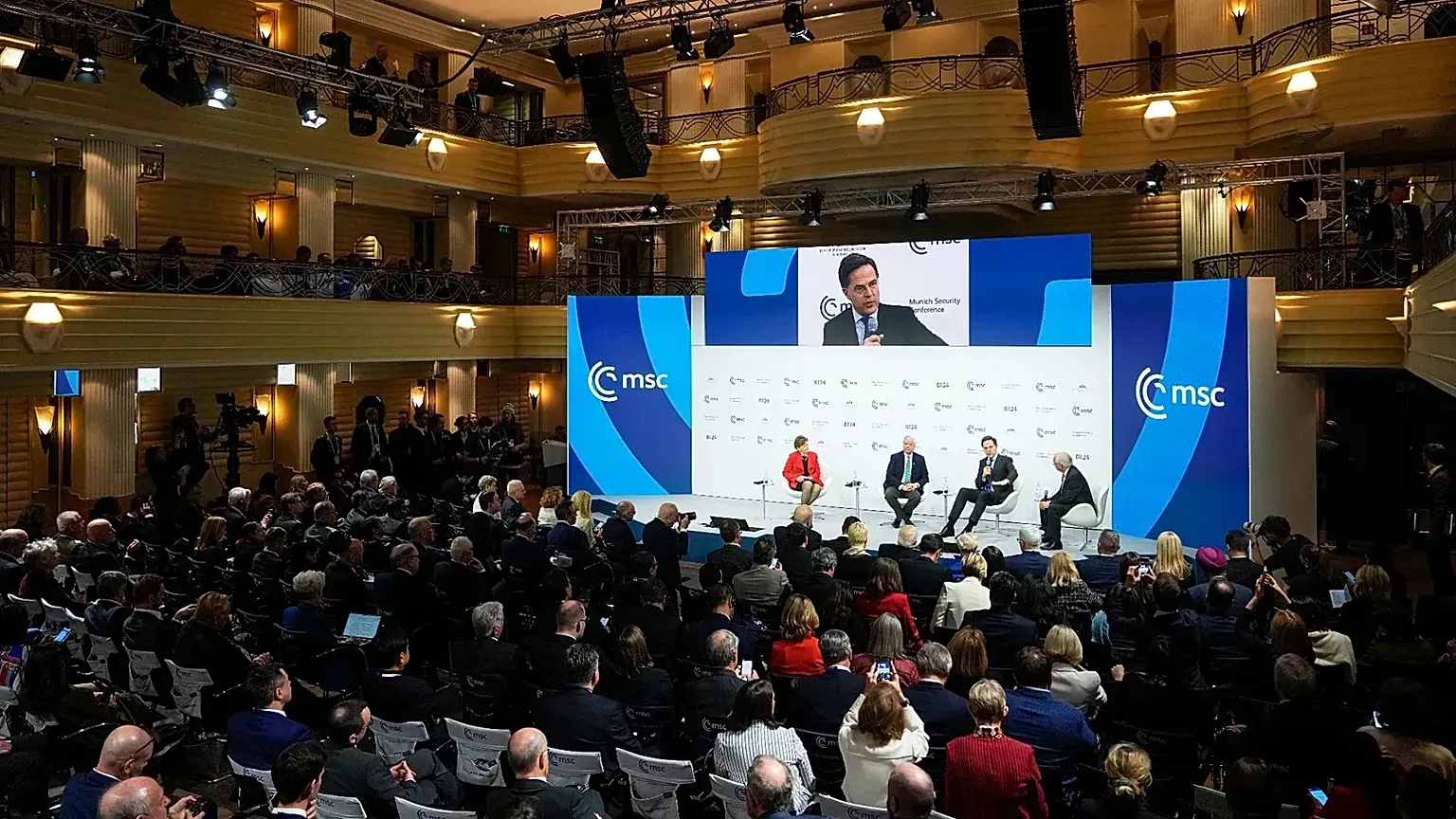
During his speech at the 9th Ukrainian Lunch in Munich, Dutch Prime Minister Dick Schoof emphasised that Russia can only be forced to make peace through systematic and coordinated pressure. According to him, the effectiveness of such pressure depends not only on unity between the US and Europe, but also on a certain degree of coordination with China.
Schoof noted that we must not lose hope for a just end to the war, but we must remain realistic, because, in his opinion, Putin does not want peace. He noted that the Russian leader continues to attack Ukrainian cities, destroy energy infrastructure and leave hundreds of thousands of people without heat during the cold season, trying to break the will of Ukrainians.
The Dutch Prime Minister stressed that peace for Ukraine is only possible through strength, which means that it is necessary to build and strengthen its military capabilities. He noted the innovativeness of Ukrainians on the battlefield and called on partners to provide as much assistance as possible, while acknowledging that the process is moving too slowly.
Schoof paid particular attention to the economic dimension of pressure, emphasising the importance of sanctions, particularly against the shadow fleet. He asked who could really put pressure on Russia and answered that it was the US, Europe and a country like China. That is why, according to him, it is necessary to ensure coordinated action to put pressure on Putin from all sides.
During the same event, Czech President Petr Pavel stated that, given Ukraine's resilience, Europe should adopt the Scandinavian spirit of determination and fearlessness in the face of Moscow's threats. He noted that Ukraine's struggle is inspiring and that Europe needs more courage.
Pavel cited the example of the Danish prime minister, who, according to him, withstood pressure from a major ally, as well as the Finnish leadership, which was not intimidated by Russia's threats before joining NATO. The Czech president believes that the message of fearlessness should be heard throughout Europe.
He added that Russia should be perceived as a weak country with a large number of nuclear weapons, and that is how, in his opinion, the situation should be assessed.