‘Diia’ has introduced new categories for payments to victims of Russian aggression

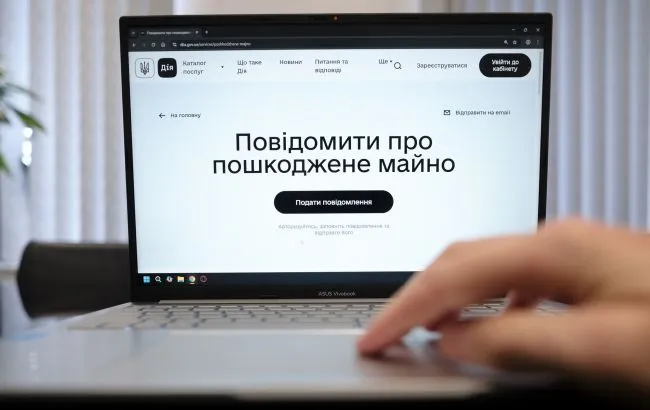
This is reported by the IDP Legal Guide.
There are now more categories. A separate category, A2.10, has been created for people who have suffered violations of human rights or the laws of war. It covers cases that previously did not fall under any section of the Register.
An important point: this refers exclusively to non-pecuniary damage and emotional distress. If the war also caused material losses, these must be specified separately – these are different claims.
Compensation for vehicles and businesses
Category A3.7 has become one of the most extensive. It covers a wide range of economic losses. You can submit a claim in the following cases:
- loss of financial support due to the death, capture or deportation of a close relative;
- expenses for a funeral or the search for the body of the deceased;
- damage to or loss of valuable property, such as a car or cultural artefacts;
- losses incurred by sole traders due to the evacuation of their business or the destruction of assets.
If you have suffered financial loss as a result of the war and do not see your situation listed elsewhere, please select this section. It is a general category.
Access to healthcare
Category A4.1 is for those who were unable to receive medical treatment. This applies to cases where a hospital was destroyed or it was impossible to reach it.
A lack of necessary medicines or doctors is also grounds for a claim. If your health has deteriorated as a result, you are entitled to compensation. Additional costs for rehabilitation should also be included in your claim.
Education and retraining
The new category A4.2 relates to the loss of access to education. It applies if a school or university has been destroyed or is under occupation.
Hostilities often make education impossible. Applications on behalf of minors may be submitted by parents or legal guardians. This also applies to cases where official bans have been imposed as a result of the war.
Opportunities for communities and businesses
Local authorities now have the right to report environmental damage and the destruction of cultural heritage. This also applies to the plundering of natural resources in occupied territories.
Businesses are now entitled to compensation for the costs of:
- relocating facilities to safe regions;
- support for employees and their families;
- the loss of the company’s cultural assets.
The procedure has been simplified for residents of frontline areas. Remote survey reports can now be used to confirm damage to homes. This is particularly important in areas where shelling makes it physically impossible for a commission to carry out an on-site inspection.
How to submit an application via ‘Diya’
All applications are submitted via the “Diya” portal using an electronic signature. New sections will appear in the menu in stages. There is no need to worry if the category you require is not yet available.
The system is being linked to government registers gradually to ensure data accuracy. Citizens are advised to prepare all available documents in advance.
What else is important to know about compensation
The terms of the ‘eOselya’ programme have been significantly amended for veterans. For them, the interest rate on mortgage loans will be 3%, with the state covering the difference.
Ukraine will also expand support for internally displaced persons and guarantee housing for family-type children’s homes. In particular, the Cabinet of Ministers has extended the period for paying compensation to institutions accommodating internally displaced persons to 90 days.
Follow us on Telegram