The US Senate has backed a resolution calling for an end to military action against Iran

Diana Shevchenko
Diana Shevchenko Journalist
The US Senate has backed a resolution calling for an end to military action against Iran

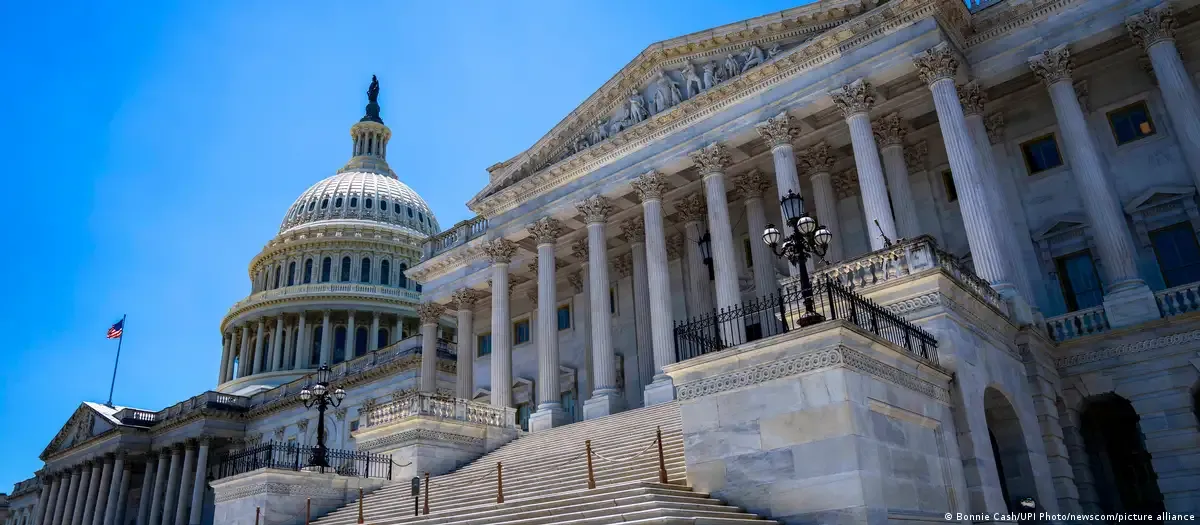
The US Senate building in Washington. Photo: Bonnie Cash, UPI Photo, newscom picture alliance
The US Senate has passed a resolution requiring President Donald Trump to cease military action against Iran. The document had previously also been backed by the House of Representatives.

On 23 June, the US Senate backed a legislative initiative requiring President Donald Trump to cease US military action against Iran. Fifty senators voted in favour of the resolution, whilst 48 voted against it, according to Reuters.

Earlier this month, the House of Representatives also approved the bill. This marks the first time since the passage of the War Powers Act in 1973 that both houses of Congress have backed a resolution calling for the withdrawal of US troops from combat operations.

The vote was yet another signal from Congress amid growing concerns over the war with Iran, which began on 28 February following attacks by the US and Israel on Iran. The resolution was supported largely along party lines, though four Republicans joined the Democrats. Two other Republican senators did not take part in the vote.

Despite Congress’s support, the White House stated that the vote has no legal force. The Trump administration emphasised that such resolutions are not sent to the president for signature and do not have the force of law. The White House also stated that military operations had effectively ended following the ceasefire on 7 April.

Donald Trump himself criticised the Senate’s decision, calling it “ill-timed and meaningless”. He also stated that those who supported the resolution had complicated his work and effectively lent their support to Iran.

The legal status of the resolution remains unclear. The War Powers Act of 1973 provided for such a mechanism to terminate military operations; however, in 1983, the US Supreme Court ruled that such resolutions must be submitted to the President for signature or veto in order to take legal effect.

Experts believe that only the courts can provide a definitive answer regarding the constitutionality of this mechanism. Scott Anderson, a senior fellow at the Brookings Institution, noted that the executive branch is likely to ignore the resolution on constitutional grounds.

Democrats insist that it is Congress, not the President, that has the right to decide whether the country should enter a war. Democratic Senator Tim Kaine stated that Congress must bear responsibility for such decisions.

In the House of Representatives, the resolution was also passed by a narrow majority. 215 members of Congress voted in favour, whilst 208 voted against.

It is expected that Congress will also be involved in considering a possible peace agreement with Tehran, should it relate to Iran’s nuclear programme.


Follow us on Telegram

Share tittle
Politics
The Main Intelligence Directorate has explained how Russia is promoting its interests in Africa
Politics

The Main Intelligence Directorate has explained how Russia is promoting its interests in Africa

Russia is using Africa as a platform for information operations, intelligence activities and the expansion of its military influence. According to Andriy Chernyak, a spokesperson for the Main Intelligence Directorate, Moscow operates through the ‘African Corps’, organisations under its control, disinformation campaigns and structures linked to Russian diplomatic missions.

24.06.2026
Hegset forces the commander of US Army Europe, who was responsible for supporting Ukraine, to resign – FT
Politics

Hegset forces the commander of US Army Europe, who was responsible for supporting Ukraine, to resign – FT

High-ranking General Christopher Donaghue, who heads the US Army in Europe and Africa and has played a key role in supporting Ukraine, is to leave the military ahead of schedule.

24.06.2026
Russia tailors its propaganda to each country in order to thwart Ukraine’s accession to the EU
Politics

Russia tailors its propaganda to each country in order to thwart Ukraine’s accession to the EU

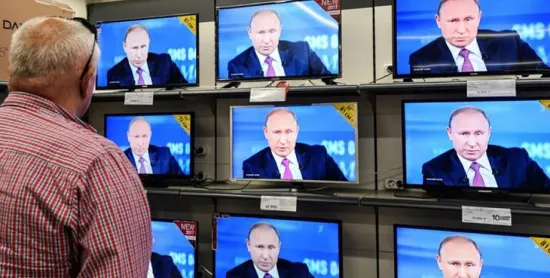
Russia is conducting a large-scale information campaign aimed at undermining Ukraine’s European integration, tailoring various propaganda narratives for Ukrainians and residents of certain EU countries.

24.06.2026
Sibiga and the Japanese Foreign Minister discussed military cooperation between Russia and North Korea
Politics

Sibiga and the Japanese Foreign Minister discussed military cooperation between Russia and North Korea

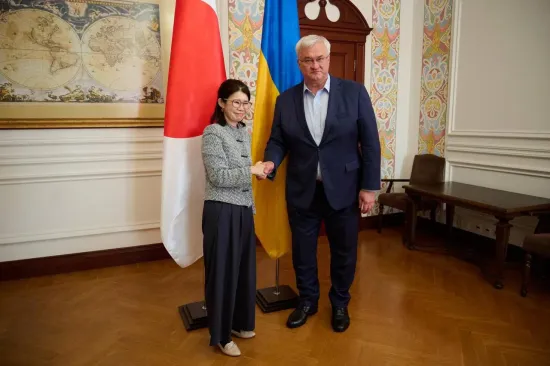
Ukraine’s Minister for Foreign Affairs, Andriy Sibiga, held a meeting with Japan’s State Minister for Foreign Affairs, Ayano Kunimitsu. The diplomats discussed the situation on the front line, military cooperation between Russia and North Korea, support for Ukraine and the involvement of Japanese businesses in the reconstruction effort.

24.06.2026
Ukraine’s Ambassador to Belarus, Bezsmertny, has assessed the risk of a new invasion
Politics

Ukraine’s Ambassador to Belarus, Bezsmertny, has assessed the risk of a new invasion

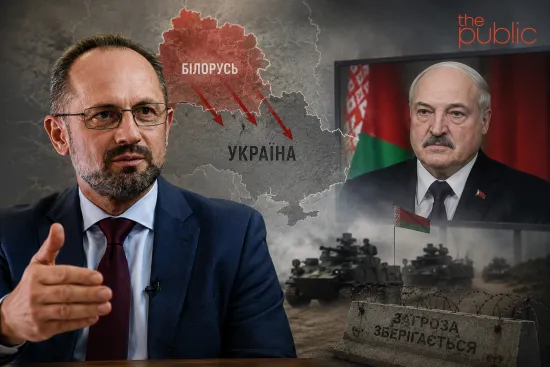
Roman Bezsmertny, a former Ukrainian ambassador to Belarus, diplomat and politician, considers a new ground offensive against Ukraine from the Belarusian direction to be unlikely. At the same time, he stated that Alexander Lukashenko’s regime remains an ally of Russia, and that Belarusian territory may continue to be used for strikes, sabotage and as military infrastructure for the Russian Federation.

24.06.2026