How to celebrate 8 March in schools: educators offered new formats

Representatives of the educational community have published relevant recommendations for events to be held before 8 March.
Educational institutions are encouraged to celebrate International Women's Day in a more modern format — through discussions, educational projects, and interactive classes.
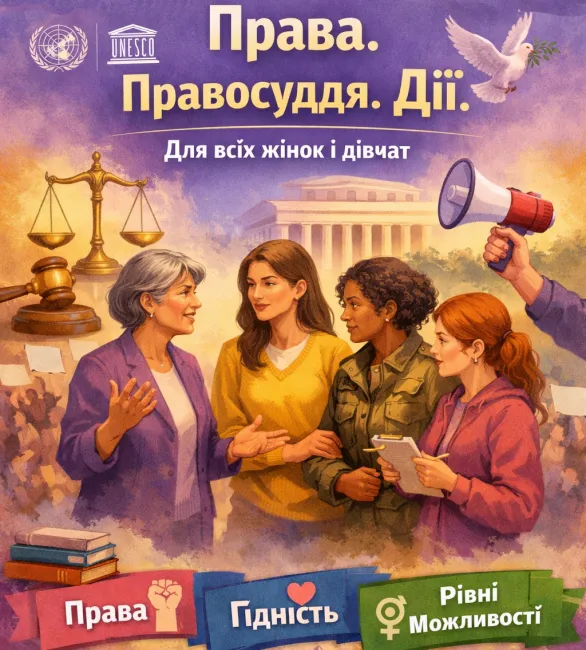
As noted in the recommendations for educators, the theme for 2026, determined by the UN system and supported by UNESCO, is "Rights. Justice. Action. For all women and girls."
That is why 8 March in schools is proposed to be viewed not as a formal holiday, but as an opportunity to talk about human rights, dignity and equal opportunities.
Educators are advised to hold thematic communication hours with students.
In particular, during such classes, it is possible to discuss issues of justice, equal access to education, the importance of knowing one's rights and the possibility of protecting them.
For older students, it is suggested to consider specific examples of the realisation of human rights — in particular, the right to education, safety, or choice of profession.
A separate format is presentations or mini-projects about women who have influenced the development of Ukraine and the world.
Students can prepare stories about female scientists, military personnel, doctors, public figures, educators or representatives of other professions.
It is recommended to pay special attention to contemporary examples — women who are working and achieving success today.
Another format could be debates or interactive classes.
For example, students are asked to analyse various statements and determine whether they are stereotypes or correspond to reality.
Such discussions help develop critical thinking and foster respect for different points of view.
The recommendations also emphasise the importance of involving boys in such activities.
In particular, students can prepare presentations on the role of women in their lives or explore the topic of partnership between women and men in science, business or public life.
In addition, it is recommended to invite specialists — psychologists, lawyers or community representatives — to conduct the classes.
They can talk to schoolchildren about human rights, combating bullying, preventing violence and other important topics.
Thus, 8 March is proposed to be used in schools as an educational opportunity to talk about dignity, equality and mutual respect.