European Ariane 6 rocket launches Galileo satellites into orbit for the first time

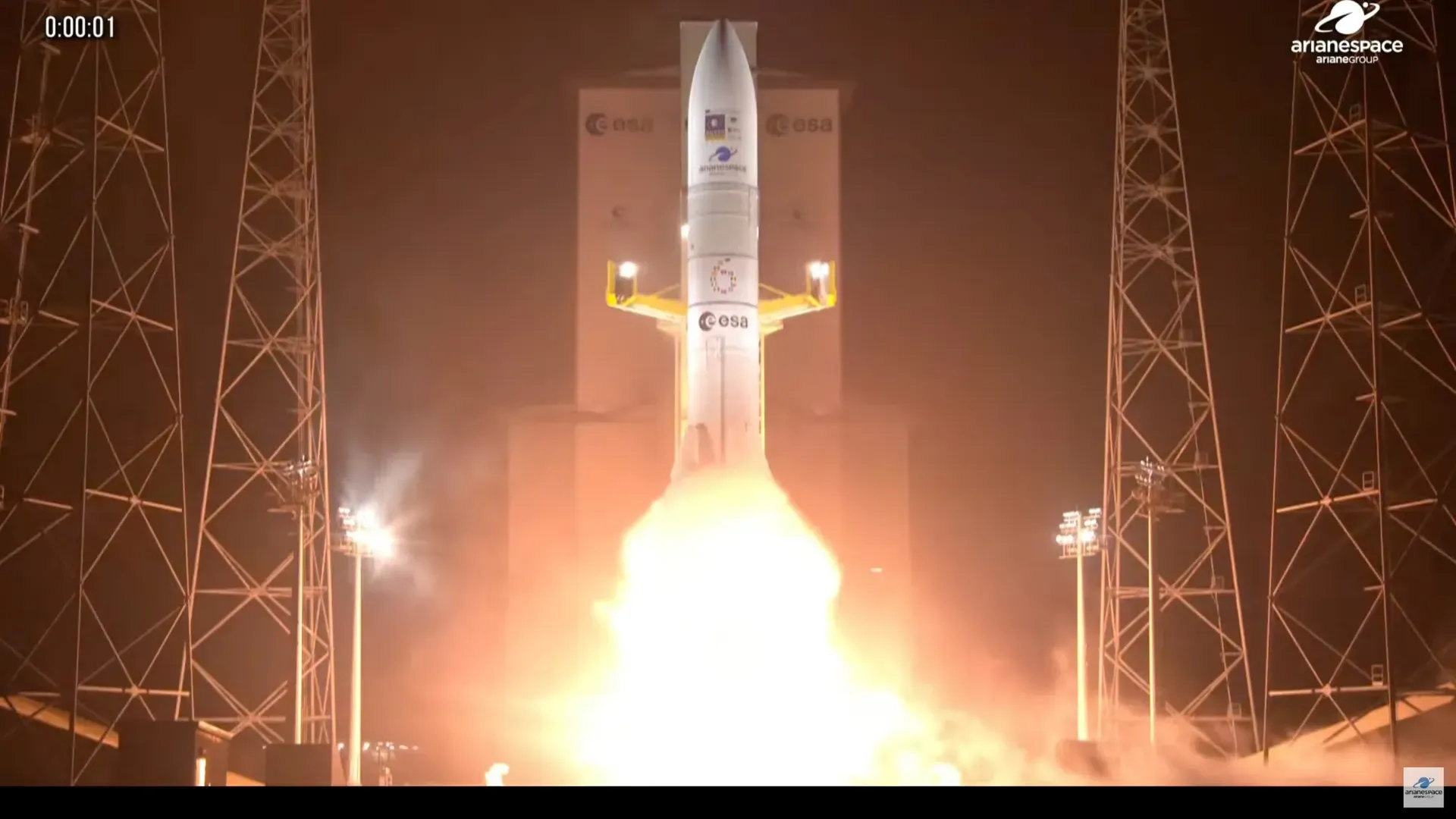
Europe has taken another step towards independence in space launches. On the night of 17 December, an Ariane 6 rocket successfully launched from the Kourou spaceport in French Guiana and put the first pair of Galileo navigation satellites into orbit. It is reported by The Public with reference to Space.
The launch took place at 00:01 am EDT. The Galileo Launch 14 mission has joined the orbital constellation, which already includes 26 active satellites. The satellites will separate from the rocket approximately 3 hours and 20 minutes after launch, after which they will deploy solar panels and undergo system checks. They will begin full operation after a four-month phase of entering the operational orbit.
The Galileo system is the European analogue of the US GPS and operates in an orbit of about 23,200 kilometres. Each satellite weighs approximately 730 kilograms. Previously, most satellites were launched by Ariane 5 rockets or Russian Soyuz rockets. After Russia's full-scale invasion of Ukraine in 2022, the EU refused to cooperate with Russia and temporarily used SpaceX services.
Ariane 6 was a key replacement for Ariane 5, which was decommissioned in 2023. The current launch was the fifth for the new rocket and confirmed Europe's readiness to independently launch strategic satellites into orbit.