Judge Vovk has devised a new way of blocking journalistic investigations
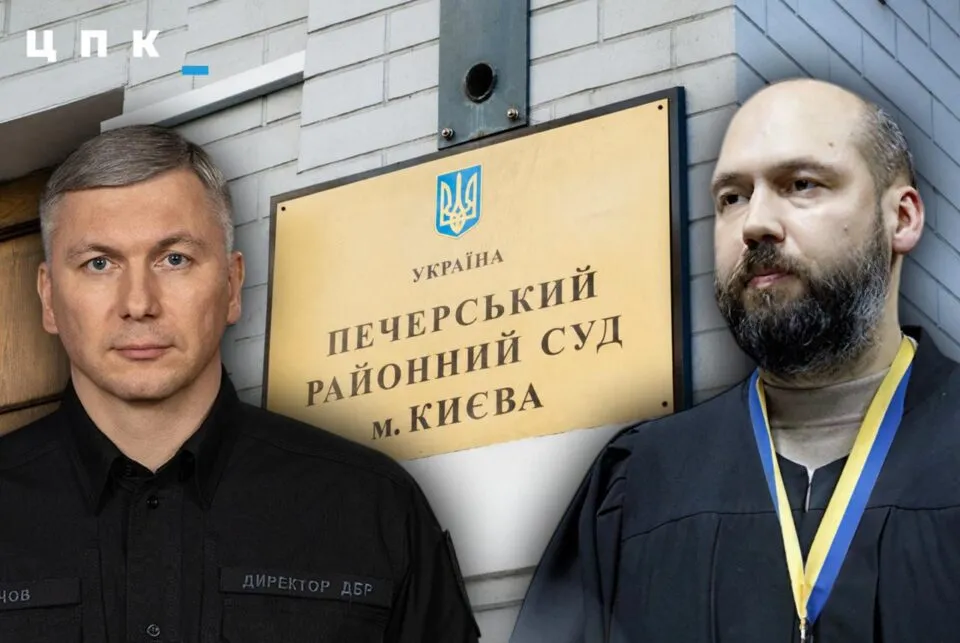
This has been reported by the Anti-Corruption Centre, which has obtained a copy of Judge Serhiy Vovk’s ruling dated 6 July 2026.
The case concerns 143 properties which, according to journalists, belonged to the brother of the director of the State Bureau of Investigations. The investigation itself had not yet been published at the time of the ruling, and the court’s decision, according to the Anti-Corruption Centre, was issued as a measure to secure a future claim — pending consideration of the case on its merits.
What exactly did the court prohibit?
According to the CPC, Judge Serhiy Vovk of the Pechersk District Court prohibited the CPC, ‘Slidstvo.Info’ and journalist Alina Stryzhak from publishing the investigation into the property of Oleksiy Sukhachov’s brother.
The CPC emphasises that the ruling was issued even before the claim itself was filed. In other words, according to the organisation, the court had not yet considered the claims on their merits, but had already restricted the ability to publish the journalistic material.
As the CPC notes, the ruling refers to the claimant’s intention to file a lawsuit seeking to prohibit the CPC and ‘Slidstvo.Info’ from gathering information about himself and Sukhachov. According to the organisation, the applicant in the case is a representative of M.S. Lisovets, acting on behalf of Parkovy-2 Ltd.
Why this could set a precedent
The CPC considers the decision dangerous for journalists, as it allows investigations to be blocked even before publication. The organisation stated that this could create a tool through which individuals featured in reports, or those associated with them, might attempt to prevent the media from reporting on officials’ financial status, the origin of their assets or their connections.
Daria Kalenyuk, Executive Director of the Centre for Media and Politics, described the ruling as a “direct restriction on freedom of speech” and stated that the organisation would appeal against the decision. According to her, failure to comply with the ruling could have legal consequences for the media, including fines and possible criminal prosecution.
What led up to the ruling
On 24 June, the Centre for Media and Political Studies sent a request for a video comment to Oleksiy Sukhachov, Director of the State Bureau of Investigation (DBR). Journalists asked him to comment on the facts that Alina Stryzhak had uncovered regarding his brother’s property.
According to the Centre for Investigative Journalism, the matter concerned Sukhachov’s brother’s acquisition of 143 properties — flats and offices. The organisation claims that the journalists found information about these properties whilst analysing publicly available state registers. A similar request was also sent to Parkovy-2 LLC, which the CPC links to the brother of the SBI director.
The CPC notes that it received no response to the requests from either Sukhachov or ‘Parkovy-2’. Less than two weeks elapsed between the submission of the request and the granting of the application in the Pechersk Court.
The CPC’s position
Olena Shcherban, deputy executive director of the CPC and the organisation’s lawyer, stated that the ruling violates the rights of journalists and the public to gather and disseminate information of public importance concerning public officials. The CPC also considers the case to be an example of a SLAPP lawsuit — a strategic lawsuit against public participation, used to block journalistic or civic work.
The organisation separately pointed out that Ukraine has committed to introducing anti-SLAPP legislation in line with European Union standards by 2027.
The CPC stated that it would appeal against the Pechersk Court’s ruling.
At the time of publication, this report focuses specifically on the CPC’s position and the organisation’s description of the court ruling it received. The investigation into the assets of the SBI director’s brother, which gave rise to the conflict, has not been made public.
Follow us on Telegram.