A catastrophe 550 million years ago wiped out 80% of life on the planet

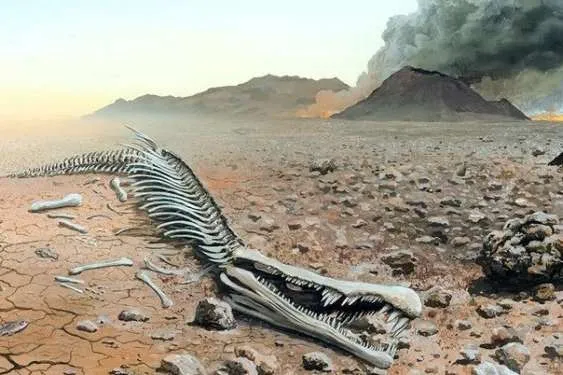
IFL Science reports on the findings of a study published in the journal *Geology*.
Until now, the scientific community had recognised five major waves of extinction, the oldest of which was considered to be the Ordovician (445 million years ago). However, findings in ash deposits in Newfoundland (Canada) are forcing a re-evaluation of this chronology.
New data suggests that the Cotlin Crisis led to the disappearance of 80% of taxa. This exceeds the 75% threshold that officially defines an event as a ‘mass extinction’. Prior to this period, the oceans were dominated by Ediacaran biota — strange soft-bodied organisms that resembled fractal plants but were in fact the first complex animals.
Key discoveries by palaeontologists:
-
Longevity of species: fossils from the Inner Meadow site have shown that ancient organisms (the Avalonian biota) survived for 10 million years longer than scientists had assumed.
-
Scale of the catastrophe: as these species did not disappear gradually but became extinct simultaneously with later forms of life, the total loss of biodiversity proved to be colossal.
-
A sudden end: The Cotlin Crisis occurred against a backdrop of complete evolutionary stasis, making the sudden disappearance of species even more mysterious.
Following this catastrophe, the famous ‘Cambrian Explosion’ began — the most powerful surge of evolution, which gave rise to most modern animal groups.
Despite the scale of the event, the cause of this ‘zero’ mass extinction remains a mystery. Unlike the extinction of the dinosaurs, where an asteroid was to blame, no traces of falling space rocks or massive volcanic eruptions have yet been found for the Kotlin Crisis. Scientists continue to search for evidence in rock formations to understand exactly what killed 80% of life on the planet.