Klymenko explained why Mindich’s extradition from Israel has been delayed

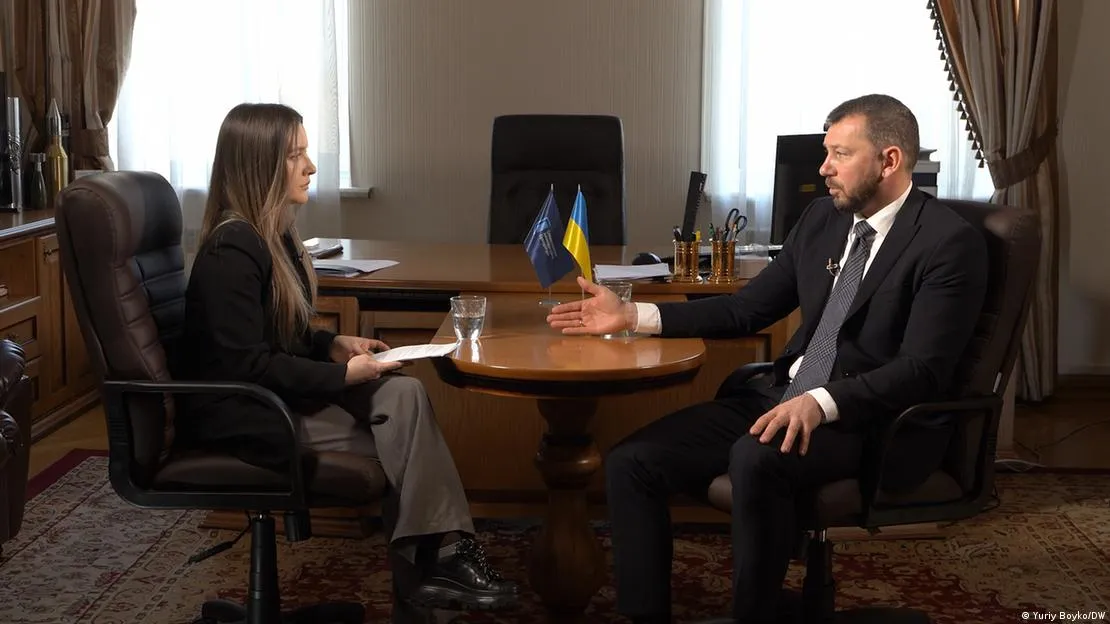
Klymenko made these remarks in an interview with DW.
Oleksandr Klymenko, head of the Specialised Anti-Corruption Prosecutor’s Office, commented on the situation regarding the extradition of businessman Timur Mindich, who has been placed on the wanted list in the ‘Midas’ case. According to him, the very process of preparing such requests must be conducted confidentially to prevent the suspect from leaving the country to which the documents are being sent. That is precisely why, he stressed, public discussion of timelines in such cases can only be detrimental.
Klymenko noted that the first extradition request in the Mindich case was sent at the end of February. However, he said, a number of shortcomings were identified in it, which had to be rectified as part of the normal working process. Separately, time was spent translating a large volume of materials. After that, the package of documents was forwarded to the Prosecutor General for signature; he signed it, and the request has already been sent to the relevant country.
In the opinion of the head of the SAP, there are no grounds to speak of deliberate delay in this case. He stated explicitly that he had not formed such an impression, and that the delay was specifically due to the technical and procedural complexity of the procedure itself.
In the same interview, Klymenko explained why extradition in such cases is a complex process in general. According to him, anti-corruption bodies cannot conduct investigative actions independently on the territory of other states. This is possible either within the framework of a joint investigation team with local law enforcement agencies, or when the foreign party carries out actions on the basis of Ukrainian warrants. At the same time, Ukrainian prosecutors and detectives do not have the authority in such cases to intervene directly in the process itself abroad.
Separately, Klymenko touched upon the “Midas” case itself. He said that the investigation had already entered a public phase: a number of individuals had been notified of suspicion, and the investigation was continuing to gather evidence. According to him, once the case became public, NABU and the SAPO were able to request documents from Energoatom and banking institutions, obtain data on mobile phone movements, and send a large number of requests for international legal assistance. However, he did not disclose further details regarding the progress of the proceedings, citing the complexity of the case and the large number of financial transactions involved. According to Klymenko’s assessment, the investigation could last for the entire maximum period provided for by law — up to 12 months.
In this context, the head of the SAPO explained why, in his view, some suspects manage to leave Ukraine before charges are formally brought. He cited the openness of the register of court decisions as one of the problems: as soon as investigators or prosecutors apply to the court with a motion, information about this may appear in the media, and potential suspects may leave the country ahead of time. That is precisely why, says Klymenko, speed, confidentiality and the protection of procedural information are critically important in cases of this level.
As a reminder, businessman Timur Mindich, who is implicated in the ‘Midas’ case concerning embezzlement in the energy sector, has stated his readiness to return to Ukraine and remain in custody on condition of ‘fair bail’.