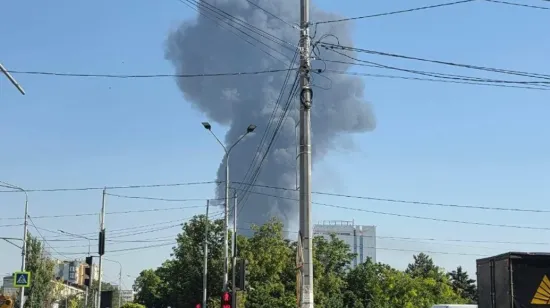
When will the war end: what fortune-tellers, psychics, AI and experts are saying

Katerina Melnychenko
Katerina Melnychenko Deputy Editor-in-Chief
When will the war end: what fortune-tellers, psychics, AI and experts are saying

Photo: ThePublic
Witch doctors, tarot readers, ChatGPT and military analysts are increasingly in agreement on one point: 2026 could prove to be a pivotal year for the war in Ukraine. But whilst the esoteric world promises a ‘turning point’, experts are far more cautious in their predictions – speaking of protracted negotiations, interim agreements and a possible shift in the very nature of the conflict.

The question of when the war will end has once again become one of the most popular topics in the Ukrainian media landscape. Whereas previously such discussions were mainly led by politicians, military personnel and analysts, now fortune-tellers, tarot readers, astrologers and even artificial intelligence have actively joined the fray. It is telling that very different sources are increasingly converging on a single timeframe – 2026.

It is precisely around 2026 that most public ‘predictions’ are currently centred. Molfars and other public seers link the end of the war to the so-called four-year cycle. This refers to the very same “four” that has been mentioned time and again in publications about predictions regarding the war: four years from the start of the full-scale invasion points precisely to 2026. This logic has not disappeared from recent comments either – we are now hearing talk of “significant changes” specifically in 2026.

But even within this esoteric sphere, almost no one is promising a simple and swift peace anymore. On the contrary, a different view is increasingly being voiced: if any agreement does emerge, it will not necessarily mean a normal and stable peace. In other words, even molfars and tarot readers are increasingly speaking not of an end, but of a turning point or a difficult transitional phase.

Artificial intelligence is coming to much the same conclusion. In public media experiments, ChatGPT and Claude do not paint a rosy picture of a swift end to the war either. Most often, they suggest a scenario in which the end of 2026 or 2027 becomes a period of change – not necessarily a grand peace, but rather a truce, a freeze, a reduction in the intensity of fighting, or an interim agreement without a definitive political conclusion.

It is precisely this convergence between molfars, tarot readers and AI that currently looks most intriguing. It is clear that one cannot equate them: esotericism has no evidential value, and an algorithm is no prophet. But as a social symptom, it is highly revealing. The country is so weary of war that it is seeking answers everywhere – in analytics, digital models, cards and ‘signs’. And almost everywhere, the same deadline emerges: 2026.

However, if one strips away the mystical veneer, professional analysts are far more cautious in their assessments. Their basic conclusion is this: no one is seriously guaranteeing a swift and comprehensive peace. The most realistic scenario for 2026 currently looks like a period of tough negotiations, protracted stalemates, attempts at agreements, and the parallel continuation of the war.

Moreover, recent weeks have only complicated this picture. The conflict surrounding Iran is drawing the attention of the US and the West, and with it – political momentum, resources and some military priorities. For Ukraine, this is a bad sign, as a protracted Middle East crisis could impact both foreign aid and the very logic of the war of attrition, which Kyiv and its allies effectively shifted to after 2023.

The expert logic here is quite simple. If the war in Iran drags on, Russia could benefit from more expensive energy sources and stabilise its financial position somewhat. For Ukraine, the picture is bleaker: energy imports are becoming more expensive, the burden on Europe as the main donor is growing, and competition for weapons, particularly air defence systems, is becoming even fiercer. In other words, the international situation itself is beginning to work not towards accelerating peace, but towards further complicating the war.

Added to this is the deadlock in negotiations. There are many contacts, many statements, but the main sticking point has not gone away – the territories, the format of possible concessions, and the willingness of the parties to move towards at least an interim formula. This is precisely why two opposing versions have emerged regarding the negotiations. According to one, all of this is political theatre with no real outcome. According to the other, some of the agreements may indeed be taking place behind closed doors, which is why talk of possible deadlines is surfacing.

There is another point that analysts are highlighting: even if hostilities were to subside at some point, this would not yet signify a full-fledged peace. We may be talking about a ceasefire, a freeze, or a long transitional phase without a final political resolution. This is precisely why, in expert assessments, 2026 is more often seen not as the year of a guaranteed end to the war, but as the year when its new format may be determined.

In any case, even the most dispassionate expert analysis currently fails to provide the certainty that the general public craves. No one is naming a specific date. No one guarantees that the war will end in the coming months. And that is precisely why the predictions of fortune-tellers, soothsayers and AI fit so well into the Ukrainian information space: they at least give people a timeframe that neither politicians, nor the military, nor diplomats can provide.

If we put all these theories together, a fairly clear picture emerges. Molfars, tarot readers and astrologers overwhelmingly point to 2026 as a turning point. Artificial intelligence also most often points to the 2026–2027 timeframe. Professional analysts are more cautious in their statements, but they do not rule out that a great deal could be decided during this very period – not necessarily through complete peace, but at least through a change in the nature of the war itself.

Therefore, the simplest conclusion at present is this: 2026 has become the main point of anticipation. For the Molfaroks, it is a turning point. For AI, it is a year of transition. For analysts, it is a year of difficult decisions. And whether it will be the year the war actually ends, no one knows yet.

Share tittle
Society
Ani Lorak's concerts in Russia have been cancelled following accusations that she supports the Ukrainian Armed Forces
Society

Ani Lorak's concerts in Russia have been cancelled following accusations that she supports the Ukrainian Armed Forces

Ani Lorak’s concerts in cities across the Far East have been cancelled in Russia following accusations that she allegedly supports the Ukrainian military.

03.06.2026
The 50+ mobilisation in June 2026: the home front or the front line
Society

The 50+ mobilisation in June 2026: the home front or the front line

Men over the age of 50 who are liable for military service may be called up in Ukraine if they are fit for service and do not have a deferment or exemption.

03.06.2026
Sweden wants to ban social media for children under the age of 15
Society

Sweden wants to ban social media for children under the age of 15

Sweden may join the ranks of countries that restrict children’s access to social media. A government commission is proposing to introduce a minimum age of 15 for using social media, and the relevant legislation could come into force as early as 1 January 2028.

03.06.2026
Epiphanius, Onuphrius or the Pope: which church leader do Ukrainians trust?
Society

Epiphanius, Onuphrius or the Pope: which church leader do Ukrainians trust?

Most Ukrainians are not very familiar with the country’s religious leaders – but among those they do know, Metropolitan Epiphanius enjoys the highest level of trust. Kirill, Patriarch of the Russian Orthodox Church, has no trust at all in Ukraine.

03.06.2026
The ECHR has banned the automatic detention of journalists during protests
Society

The ECHR has banned the automatic detention of journalists during protests

The European Court of Human Rights has ruled that the authorities cannot automatically detain a journalist during a protest simply because they have refused to comply with a police order to leave the scene.

03.06.2026
Analytics
Salaries in government bodies: how much do specialists and senior management earn?
Economy

Salaries in government bodies: how much do specialists and senior management earn?

The Ministry of Finance of Ukraine has published detailed statistics on public sector pay for March 2026, broken down by position. Average earnings range from 20,800 UAH for manual workers to over 140,000 UAH for senior management

03.05.2026
A crisis of confidence: the terrorist attack in the Holosiivskyi district has caused the police’s approval ratings to plummet
Society

A crisis of confidence: the terrorist attack in the Holosiivskyi district has caused the police’s approval ratings to plummet

The terrorist attack in the Holosiivskyi district of Kyiv on 18 April led to a collapse in public trust in law enforcement agencies. This is evidenced by the results of a poll conducted by ‘Slovo i Dilo’

03.05.2026
Only 1–2% of mobilisations result in conflict: Council data
Society

Only 1–2% of mobilisations result in conflict: Council data

Claims of widespread coercion during mobilisation are untrue, and the widely shared videos online reflect only a small fraction of what is actually happening

25.04.2026
Китай планує запустити сім ядерних реакторів у 2026 році: чому це важливо для України
Economy

Китай планує запустити сім ядерних реакторів у 2026 році: чому це важливо для України

Китай у 2026 році планує ввести в експлуатацію сім нових ядерних реакторів. За даними, озвученими державним телебаченням CCTV із посиланням на річний звіт китайської атомної галузі, країна вже має 60 діючих комерційних реакторів і ще 36 енергоблоків на стадії будівництва.

17.04.2026
Pension Fund officials have declared millions in income, flats and cash
Analytics

Pension Fund officials have declared millions in income, flats and cash

Yevhen Kapinus, Chairman of the Board of the Pension Fund of Ukraine, and his two deputy chairwomen – Tetiana Korol and Iryna Kovpashko – declared millions in income, flats, foreign currency cash and substantial sums in bank accounts in their 2025 declarations. According to official data from the PFU, they are the fund’s senior management.

15.04.2026
War
A Russian drone attacked an evacuation vehicle belonging to a humanitarian mission in Druzhkivka
War

A Russian drone attacked an evacuation vehicle belonging to a humanitarian mission in Druzhkivka

In Druzhkivka, in the Donetsk region, a Russian FPV drone struck an armoured vehicle belonging to the ‘Proliska’ humanitarian mission, which was being used to evacuate civilians. The driver was unharmed, but the vehicle sustained damage.

03.06.2026
1,500 motorcycles have been procured for the Ukrainian Armed Forces – Fedorov
War

1,500 motorcycles have been procured for the Ukrainian Armed Forces – Fedorov

The Defence Procurement Agency (DPA) has signed contracts for the supply of 1,500 motorcycles to the Armed Forces of Ukraine.

03.06.2026
Syryskyi called for the rational use of resources due to a shortage of air defence missiles
War

Syryskyi called for the rational use of resources due to a shortage of air defence missiles

Commander-in-Chief of the Armed Forces of Ukraine Oleksandr Syrskyi emphasised that Ukraine lacks modern air defence systems and the missiles required for them. He stressed the importance of making efficient use of available resources, improving effectiveness, and receiving assistance from partners.

03.06.2026
Moscow is looking for a way to bring 'its' campaign to a close without it looking like a defeat – WP
War

Moscow is looking for a way to bring 'its' campaign to a close without it looking like a defeat – WP

The Kremlin is exploring options for ending the war against Ukraine, as the Russian economy and military face mounting difficulties. The capture of the entire Donetsk region is gradually becoming Putin’s key condition for ceasing hostilities, indicating a significant scaling back of Moscow’s initial ambitions.

03.06.2026
The US and Iran have exchanged fresh blows as negotiations hit a snag
War

The US and Iran have exchanged fresh blows as negotiations hit a snag

The US and Iran have exchanged fresh strikes against one another amid escalating tensions in the Persian Gulf and reports of difficulties in the negotiation process. Both sides have claimed to have carried out attacks on military installations and maritime targets.

03.06.2026