Gulf countries are considering the construction of new pipelines to bypass the Strait of Hormuz

Anna Kramarenko
Anna Kramarenko Editor-in-Chief
Gulf countries are considering the construction of new pipelines to bypass the Strait of Hormuz

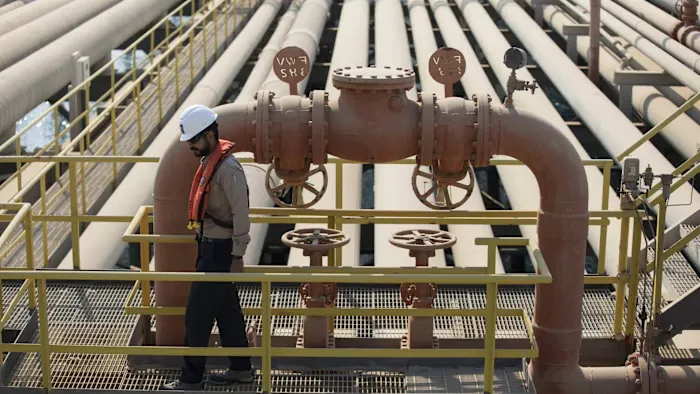
Saudi Arabia’s 1,200km East-West pipeline was built in the 1980s after fears the Iran-Iraq war would close the strait and is now a key lifeline Simon Dawson Bloomberg
The threat of Iranian control over the Strait of Hormuz is forcing countries in the region to reconsider their plans for alternative routes for oil and gas exports. These are large-scale infrastructure projects, the implementation of which could take years.

Gulf states are considering the construction of new pipelines to reduce their dependence on the Strait of Hormuz amid fears it could be blocked, reports the Financial Times.

Representatives from governments and the energy sector note that such projects may be the only way to reduce risks to oil and gas exports, although they will require significant investment and a long time to implement.

The situation has drawn renewed attention to the 1,200-kilometre East-West oil pipeline in Saudi Arabia. It was built in the 1980s following fears of a possible closure of the strait during the Iran-Iraq War. Currently, this route allows up to 7 million barrels of oil per day to be transported to the port of Yanbu on the Red Sea, bypassing the Strait of Hormuz.

Saudi Aramco CEO Amin Nasser stated that this pipeline is currently the main export route.

Saudi Arabia is considering increasing the share of oil exports via pipelines rather than transporting it through waters controlled by Iran. Options include expanding the capacity of the East-West pipeline or creating new routes.

Previously, such projects were not implemented due to high costs and complexity. However, according to Maisoun Kafafi, a programme adviser for the Middle East at the Atlantic Council, there is a shift in approach taking place in the region.

“I sense a shift from hypothetical discussions to practical implementation. Everyone is looking at the same map and drawing the same conclusions,” she said.

Among the possible solutions being considered is the creation of a network of pipelines rather than individual routes. At the same time, this option is the most difficult to implement.

Separately, the possibility of reviving the IMEC initiative is being discussed, which envisages the creation of a transport corridor from India through the Gulf states to Europe. A pipeline to the Israeli port of Haifa was previously part of this project.

Yossi Abu, CEO of the Israeli company NewMed Energy, stated that the construction of pipelines to the Mediterranean Sea is a likely option, regardless of whether they pass through Israel or Egypt.

Interest in new projects existed even before the conflict began, noted Christopher Bush, CEO of Cat Group. At the same time, he emphasised that the cost of such initiatives remains high. He estimates that building an East-West pipeline could cost at least $5 billion, whilst more complex routes through several countries could run to $15–20 billion.

Among the risks, he cited security issues, in particular the presence of unexploded ordnance in Iraq and the activities of militant groups. Natural conditions, particularly deserts and mountainous areas, also pose challenges.

In the short term, the expansion of existing routes is being considered, notably the East-West route in Saudi Arabia and the pipeline from Abu Dhabi to Fujairah. The possibility of developing new export terminals on the Red Sea coast is also being explored.

According to industry representatives, final decisions will depend on the future situation regarding the Strait of Hormuz.
Share tittle
Economy
Women in Ukraine earn less than men: in which sectors is the pay gap the widest?
Economy

Women in Ukraine earn less than men: in which sectors is the pay gap the widest?

The average salary in Ukraine in the first quarter of 2026 was 28,885 hryvnias. However, the figures for men and women differ significantly, with the gap exceeding 47% in certain sectors.

04.06.2026
In 2026, over 2.1 billion hryvnias were allocated for the construction and repair of shelters in Kyiv
Economy

In 2026, over 2.1 billion hryvnias were allocated for the construction and repair of shelters in Kyiv

The city authorities have allocated 2,148,145,000 hryvnias for the construction of new civil defence shelters and the renovation of existing ones in 2026. In 2025, almost the same amount was allocated for construction alone.

04.06.2026
200 million tonnes of cargo have been transported via the Ukrainian maritime corridor
Economy

200 million tonnes of cargo have been transported via the Ukrainian maritime corridor

Since the launch of the Ukrainian maritime corridor in 2023, 200 million tonnes of cargo have been transported via it, of which 118 million tonnes is Ukrainian grain.

04.06.2026
‘Don’t pretend you’ve achieved anything,’ said the MP, criticising the director of the Economic Security Bureau of Ukraine for manipulating the results of their work
Economy

‘Don’t pretend you’ve achieved anything,’ said the MP, criticising the director of the Economic Security Bureau of Ukraine for manipulating the results of their work

MP Danylo Getmantsev stated that parliamentarians are dissatisfied with the slow progress in bringing the economy out of the shadows, and that, instead of delivering tangible results, the Economic Security Bureau is ‘feeding’ the public with presentations and manipulating the figures in its reports.

04.06.2026
Restrictions on petrol sales have been introduced in Moscow and St Petersburg
Economy
  • Important

Restrictions on petrol sales have been introduced in Moscow and St Petersburg

Petrol stations in Moscow and St Petersburg are introducing limits on the sale of petrol and diesel. The companies attribute these measures to market conditions and supply difficulties.

03.06.2026
War
Syrsky took tough measures due to the poor preparation of those called up
War

Syrsky took tough measures due to the poor preparation of those called up

Following inspections carried out in May, eight military units in Ukraine have lost the right to train new recruits independently.

04.06.2026
The Kremlin is seeking a way out of the war amid military and economic difficulties
War
  • Important

The Kremlin is seeking a way out of the war amid military and economic difficulties

Russia is facing mounting pressure due to the situation on the front line, economic problems and strikes by Ukrainian drones on its territory. European officials suggest that Moscow’s increasingly aggressive rhetoric may be linked to attempts to restart the negotiation process on its own terms.

04.06.2026
Russia has attacked more than 900 port infrastructure facilities and injured 255 workers since the start of the war — Kuleba
War

Russia has attacked more than 900 port infrastructure facilities and injured 255 workers since the start of the war — Kuleba

The Russian military has attacked at least 935 port infrastructure facilities since the start of the full-scale war. People have also been injured.

04.06.2026
The youngest was just two days old. Since the start of the full-scale invasion, Russia has killed 707 Ukrainian children
War

The youngest was just two days old. Since the start of the full-scale invasion, Russia has killed 707 Ukrainian children

Since the start of the full-scale invasion, Russia has killed 707 children in Ukraine, with a further 2,548 wounded. 4 June marks the International Day of Innocent Children Victims of Aggression.

04.06.2026
Unmanned aerial systems struck the Russian vessel 'Svitlyak' in Crimea
War

Unmanned aerial systems struck the Russian vessel 'Svitlyak' in Crimea

On the night of 4 June, the Ukrainian Armed Forces’ Unmanned aerial vehicle unit struck a Russian ‘Svitlyak’-class border patrol vessel in the temporarily occupied Crimea. Air defence systems, infrastructure facilities and the enemy’s railway equipment were also targeted.

04.06.2026