Magnetic storms on 9–10 March: what will solar activity be like?

This was reported by the Space Weather Prediction Centre (SWPC) of the US National Oceanic and Atmospheric Administration (NOAA).
Experts have released a forecast for magnetic storms on 9–10 March. Geomagnetic activity is measured using the planetary K-index, a scale from 0 to 9 that shows the intensity of solar activity.
If the index reaches 5 or higher, it is considered a strong magnetic storm, which can affect people's well-being and the operation of equipment.
Magnetic storms on 9 March
On Monday, 9 March, solar activity with a K-index of 3.7 is expected. This indicator corresponds to a weak level of geomagnetic activity.
Experts classify it as a "green" level, which means there will be no significant magnetic storms.
Forecast for 10 March
On Tuesday, 10 March, even lower solar activity is forecast, with a K-index of approximately 3.
This also corresponds to a weak geomagnetic background, which usually does not have a serious impact on people or technical systems.
Experts note that magnetic storm forecasts are subject to change. Solar activity data is updated approximately every three hours, so the situation may be adjusted.
What is a magnetic storm?
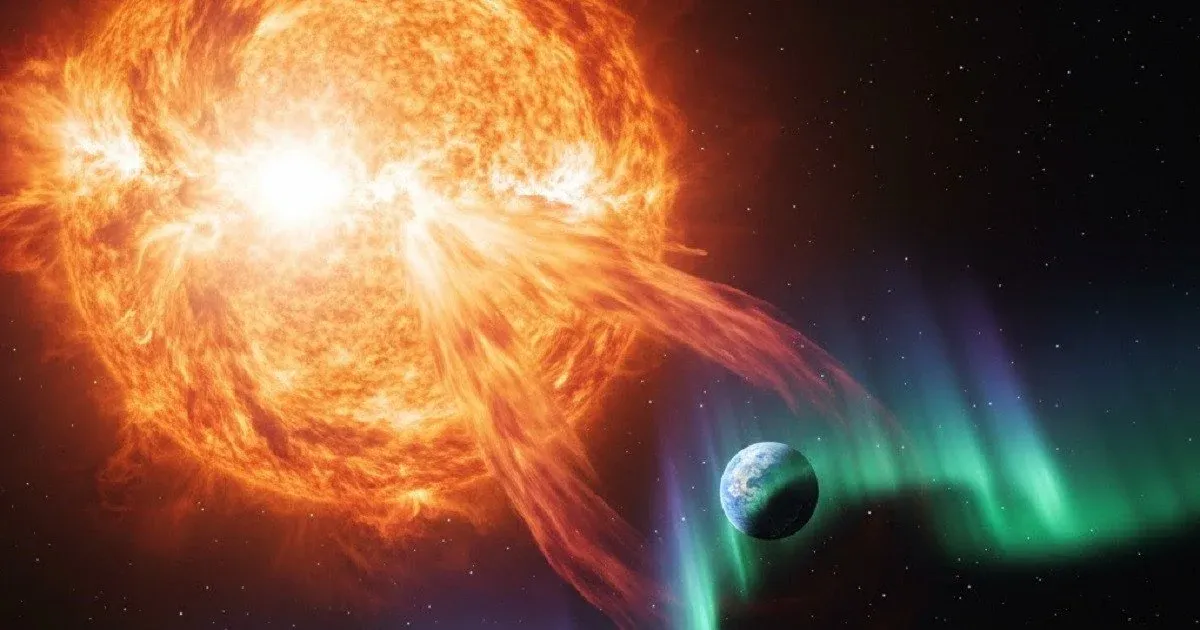
A magnetic storm is a phenomenon caused by flares and explosions on the Sun. During these events, large numbers of charged particles — protons and electrons — are ejected into space.
When these particles reach the Earth's magnetosphere, geomagnetic disturbances occur, which are called magnetic or solar storms.
The K-index is used to assess their strength. Values from 1 to 4 are considered weak and often go unnoticed. Values of 5 and above indicate strong magnetic storms.
During powerful geomagnetic disturbances, there may be interruptions in the operation of satellites, mobile communications, radio signals and navigation systems. If the K-index rises to 7–8, polar auroras can sometimes be observed at high latitudes.
How magnetic storms affect people
During magnetic storms, atmospheric pressure changes, which can cause some people to experience headaches, fatigue or increased stress levels.
There is no specific medication for the effects of magnetic storms, but maintaining a healthy daily routine can help you get through these periods more easily.
How to help your body
Experts advise the following on days of increased solar activity:
-
get plenty of sleep and stick to a daily routine;
-
eat light and healthy food;
-
reduce your consumption of coffee, alcohol, fatty and spicy foods;
-
drink more water and herbal teas;
-
take more walks in the fresh air;
-
avoid heavy physical exertion and stress.
People with chronic diseases are advised to get more rest and keep necessary medications on hand.