Mobile water tankers and scheduled water supplies: what Ukrainians might face if the Russians target water supply networks this summer

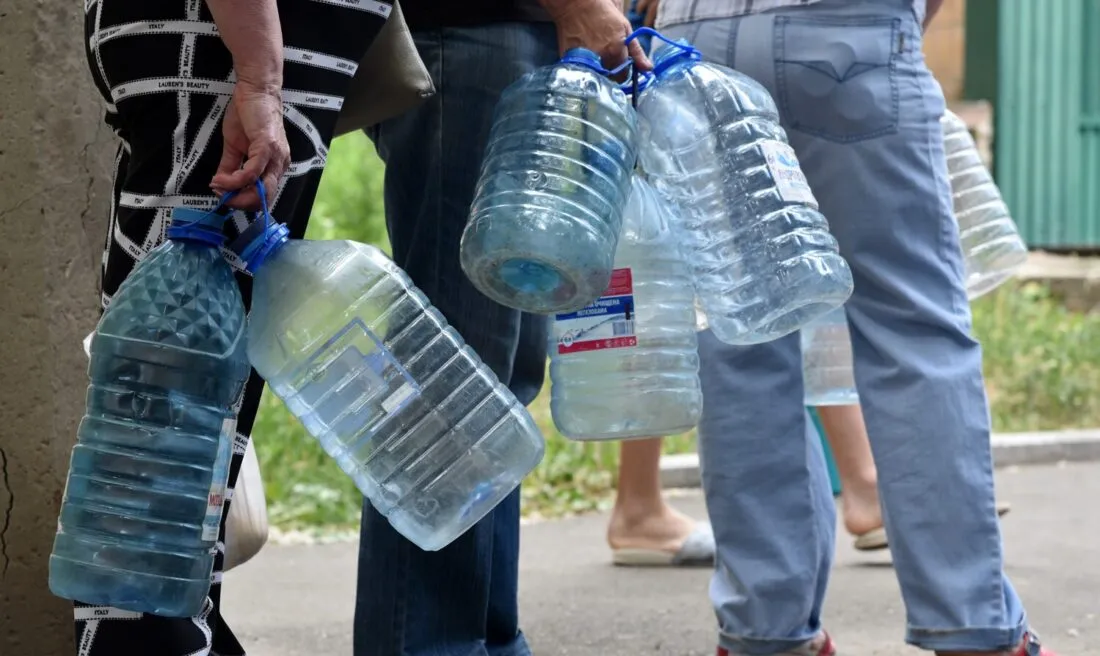
Following massive attacks on Ukraine’s energy infrastructure, Russia is preparing strikes against water supply systems. If these attacks are successful, millions of people will receive water on a scheduled basis.
ThePublic explains which cities are particularly at risk, which ones could be affected, and where to get water if supplies run out.
Which cities are at risk
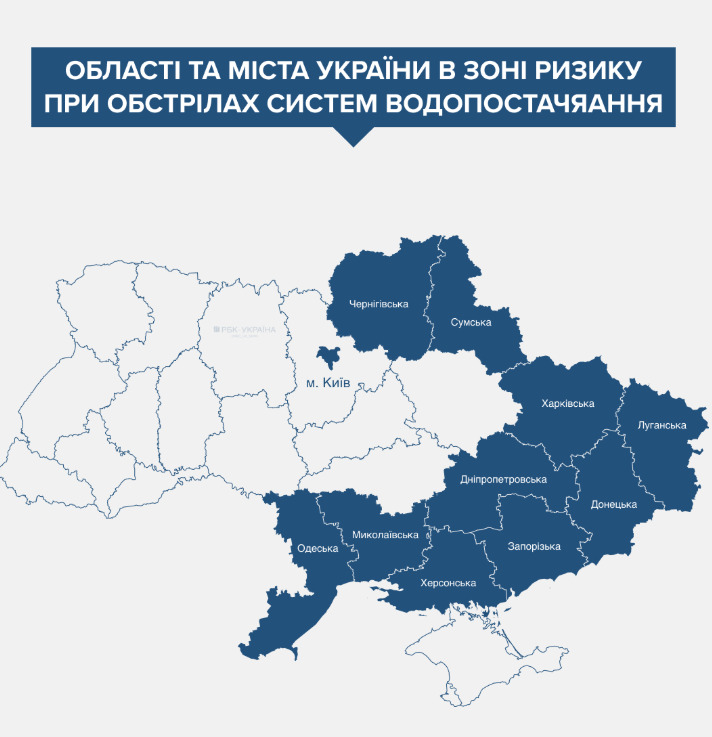
Ten regions are in the main risk zone: Luhansk, Donetsk, Chernihiv, Sumy, Kharkiv, Zaporizhzhia, Dnipropetrovsk, Odesa, Mykolaiv and Kherson. The capital is also under threat.
Who will manage the water supply in the event of a crisis
Experts say that if water intake facilities are damaged, even with an alternative source available, water rationing will be unavoidable.
Water supply in Ukraine is decentralised – there is no single operator, such as Ukrenergo in the energy sector. Therefore, decisions on water supply schedules will be made independently by local authorities – each region separately.
New fixed water intake facilities will not be built in time for the summer: this takes between 9 and 12 months. Therefore, mobile stations are the only quick option in the event of an emergency.
What is in the special risk zone
The main components of the system: water intake, treatment and distribution (water mains).
Water treatment facilities are unlikely to come under heavy shelling. This would not have a significant negative impact on the Russians. Even if the water from the taps is of poorer quality, it will still be suitable for domestic use and for the sewage system. And the supply of drinking water can be ensured.
It is difficult to disable underground water distribution systems. These consist of an extensive network of pipelines and pumping stations, damage to which would only cause localised problems in specific sections of the system.
The main targets for the Russians may be water intake facilities. These vary from one settlement to another.
The water source may be rivers and sometimes underground wells. However, most Ukrainian settlements have only one water intake facility. Only in some large cities are there several water intake facilities in operation.
This means that the destruction of a single facility could lead to the cessation of water supply to an entire settlement.
For example, the restoration of the water pipeline that the Russians destroyed in Mykolaiv back in 2022 took several years and cost over 6 billion hryvnias. The city’s centralised water supply was only restored by the end of 2025.
Artem Shira, Vice-President of the Ukrainian Water Association, also believes that the enemy’s primary targets are likely to be water intake facilities and pumping stations.
“Pumps are hard to find (for replacement), and repairs will take weeks,” he told RBC-Ukraine.
The main vulnerability of water networks is the lack of backup water intake systems that could serve as a viable alternative in the event of the existing system being destroyed.
“We often operate a single water intake system. But even where there is a backup, it is effectively in the same building as the main one – literally just a couple of metres away. There are also two pumps nearby – the main and the backup – and two transmission lines (for the pumps to operate – ed.). If there is a strike, everything will be destroyed immediately,” Shira noted.
The issue of installing alternative water intake points in settlements is currently being considered. However, their construction and commissioning are practically impossible before summer – this would take between 9 and 12 months.
The authorities are considering the option of using mobile water intake stations – roughly speaking, mobile water pumps. They will be able to move from the water source to areas where stationary stations have been put out of action.
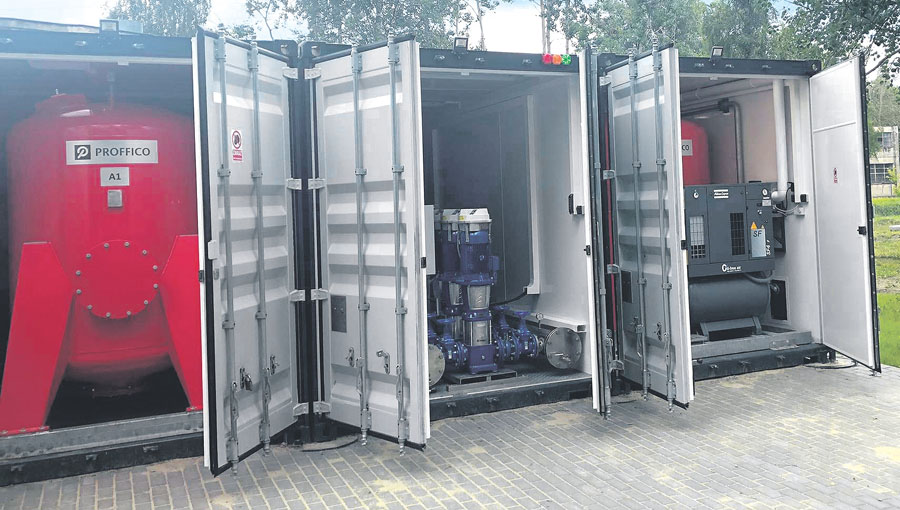
“In winter, we used mobile generators. We want to apply the same logic to water. Obviously, we won’t be transporting water itself, but equipment that will travel along rivers and function as an alternative water intake,” said Shira.
Some of the equipment for such stations is already being procured, and some is being manufactured in Ukraine. At present, we can speak of at least six stations. They will have a fairly high capacity – 100,000 to 300,000 cubic metres per day.
This is sufficient for medium-sized regional centres – Zaporizhzhia, Kryvyi Rih, Mykolaiv, Vinnytsia, Poltava. For Kyiv, Odesa and Lviv, a single unit will not be enough.
Mobile water pumping stations can be brought into operation much more quickly than new stationary water intake facilities.
“These stations will be used in difficult circumstances for a short period of time. This will be a temporary water supply. Of course, there may be some inconveniences in such cases,” said the source.
Follow us on Telegram