Orbán personally ordered the detention of the Ukrainian ‘gold convoy’ – media reports

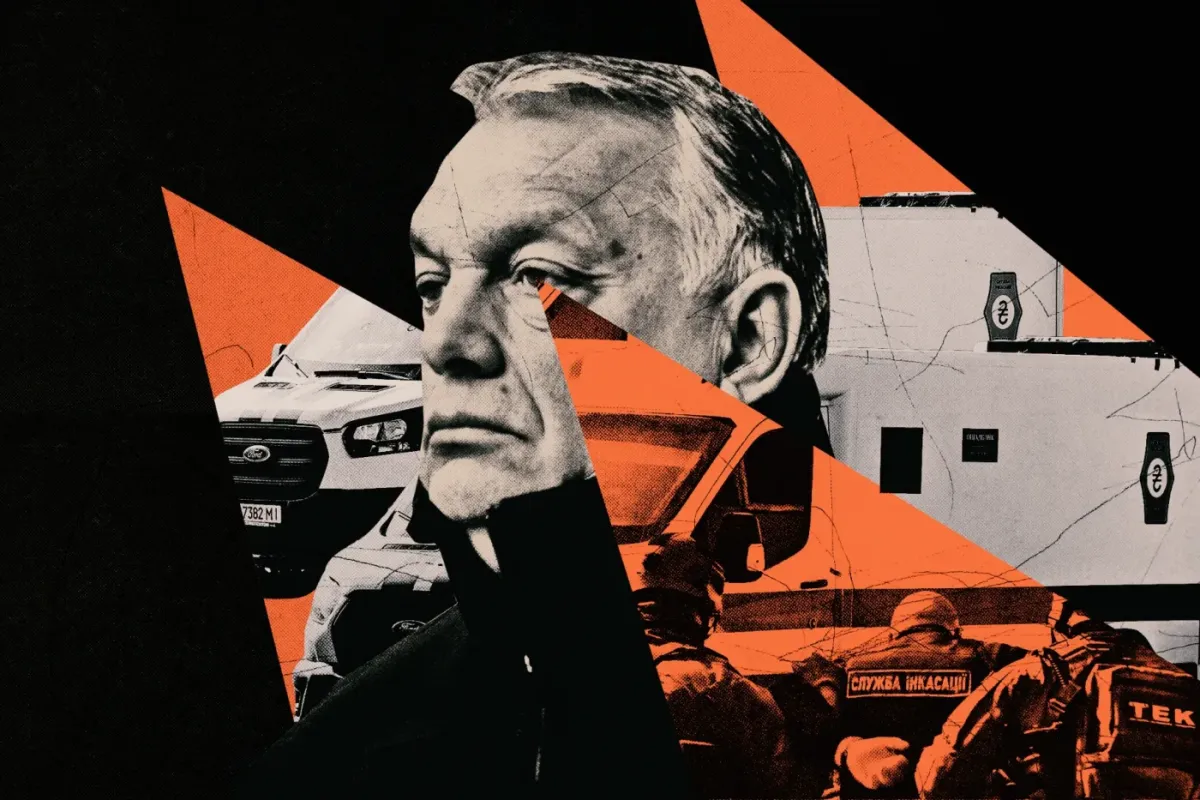
This is reported by the Hungarian publication Telex. The investigative publication VSquare had previously also reported on the political motives behind the operation against the Ukrainian bank convoy.
The Hungarian publication Telex claims that the order to detain the Ukrainian cash-in-transit guards and seize Oschadbank funds near Budapest on 5 March may have been given by the then Prime Minister of Hungary, Viktor Orbán.
According to the journalists, over the past few weeks they have managed to speak to a number of sources who were directly or indirectly involved in the case or were aware of its background.
The publication’s sources, according to Telex, described their own roles in different ways, but agreed on one thing: the operation against the Ukrainian “gold convoy” had a political dimension, and the authorities’ actions only appeared to be a law enforcement initiative on the surface.
What Hungarian journalists claim
According to Telex, the decision to carry out the raid on 5 March allegedly came from the State Secretariat for the Supervision of Civil National Security Services under the Prime Minister’s Office.
Journalists claim that this body was acting on the instructions of Viktor Orbán, who was kept constantly informed of developments on the day of the operation.
Several independent sources cited by Telex have allegedly confirmed that it was Orbán who ordered the operation against the “gold convoy” and insisted on its implementation.
Earlier, VSquare, citing four sources, reported that the raid by the Hungarian Counter-Terrorism Centre (TEK) on vehicles belonging to the Ukrainian state bank was driven not by law enforcement considerations but by political motives. According to VSquare, the operation was intended to create a conflict with Ukraine that could be exploited ahead of the parliamentary elections in Hungary.
What happened on 5 March
On 5 March, Hungarian security forces detained two Oschadbank cash-in-transit vehicles that were transporting cash and gold from Austria to Ukraine.
According to Reuters, Hungary announced the detention of seven Ukrainians and the seizure of approximately $82 million in cash and gold. This amounted to $40 million, €35 million and 9 kg of gold.
The Hungarian tax authority stated that it was conducting a criminal investigation on suspicion of money laundering. Ukraine, for its part, described those detained as Oschadbank employees carrying out a routine banking operation.
Ukraine’s Foreign Minister Andriy Sibiga then accused the Hungarian side of effectively kidnapping Ukrainian bank employees and demanded their immediate release. Reuters quoted his statement regarding “state terrorism and racketeering”.
How Hungary explained the seizure of funds
The Hungarian government claimed that this was a matter of national security. A decision by the Hungarian Cabinet stated that the purpose and legal grounds for transporting such a quantity of cash and gold had allegedly not been clarified during the inspection.
At the same time, the Ukrainian side and European bankers refuted these claims. They explained that following the start of Russia’s full-scale invasion, the overland transport of cash had effectively become the only viable option for Ukraine, so such operations were not unusual.
In March, the Orbán government also passed a resolution allowing the seized assets to be treated as confiscated for the duration of the investigation. The document referred to €35 million, $40 million and nine gold bars weighing 1 kg each.
Funds and valuables returned to Ukraine
On 6 May, it emerged that Hungary had fully returned to Ukraine the funds and valuables of Oschadbank seized by the Hungarian security services in March.
President Volodymyr Zelenskyy stated that Ukrainian cash-in-transit guards had been returned earlier, and subsequently both the money and valuables were returned to Ukraine in full.
According to “Ukrainska Pravda”, the seized vehicles contained $40 million, €35 million and 9 kg of gold.
Political context
The operation against the Ukrainian convoy took place a few weeks before the parliamentary elections in Hungary. At that time, Orbán was still leading the government and had built part of his campaign on criticising Ukraine and Western support for Kyiv.
In April 2026, the “Tisa” party, led by Péter Magyar, won the elections, after which there was a change of government in Hungary. Reuters describes Magyar as Hungary’s new prime minister, who has declared his intention to reset relations with Ukraine.
Follow us on Telegram