The threats failed to have the desired effect: 25 vessels from Russia’s ‘shadow fleet’ passed through British waters

This is reported by Reuters, citing an analysis of vessel tracking data.
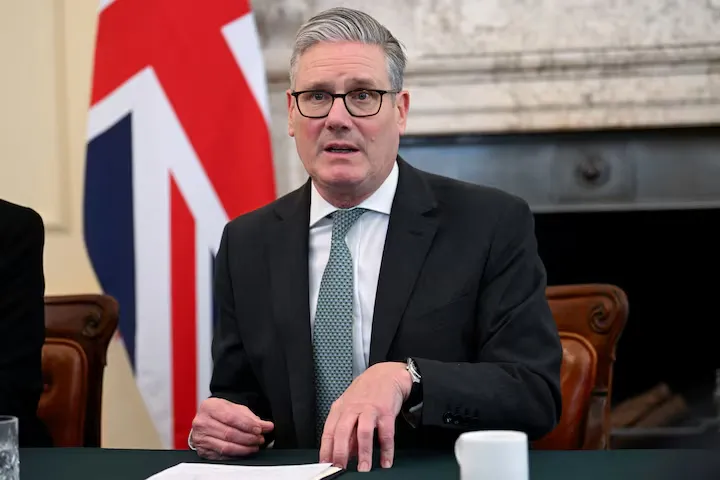
Reuters writes that following Starmer’s announcement, sanctioned Russian tankers continued to sail along the south coast of England at roughly the same rate as before. The British authorities had hoped that the mere threat of detention would force these vessels to choose longer routes bypassing British waters, but this did not happen.
Back on 25 March, the UK government officially announced that the military had been authorised to board sanctioned ‘shadow fleet’ vessels passing through British waters. Officials in London explained this as an attempt to disrupt a scheme that helps Moscow circumvent sanctions and profit from oil to fund the war against Ukraine.
Why Britain is in no hurry to make arrests
Despite the high-profile announcement, the British Ministry of Defence now says that every possible step will be considered on a case-by-case basis. Reuters notes that almost a week after the announcement, the British military has not reported a single seizure or inspection of a Russian vessel.
Experts interviewed by the agency attribute London’s caution to legal and political risks. In particular, Professor of Maritime Law Douglas Gilfoyle stated that even with British sanctions in place, the legal grounds for intervening in the passage of a foreign vessel remain very limited, and some of the potential arguments for detention are new and have not yet been tested in practice.
Former Royal Navy officer James Fennell told Reuters that London is likely trying to use the threat itself as a deterrent and will only then decide whether to proceed with a risky boarding operation. Among the possible consequences, he cited not only legal disputes but also the danger of an even greater escalation in relations with Russia.
What is known about Russia’s ‘shadow fleet’
According to the British government, 544 Russian vessels belonging to the “shadow fleet” are subject to London’s sanctions. It is these tankers that are used to transport Russian oil in circumvention of Western restrictions. The British government has also stated that around 75% of Russian crude oil is transported via this very scheme.
Reuters adds that the “shadow fleet” continues to use the English Channel as the most convenient route between the Baltic Sea, Southern Europe and other destinations. Against this backdrop, other European countries, notably France, Belgium and Sweden, have already resorted to detaining such vessels, whilst Britain has so far limited itself to issuing warnings.
It is worth noting that the UK is considering the possibility of forcibly seizing a tanker linked to Russia’s shadow fleet, which could open up a new front of pressure on Moscow amid a decline in its oil revenues.