Poland, Lithuania and France are to hold military exercises near the Suwałki Corridor

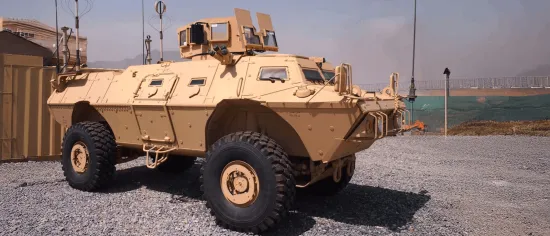
From 16 to 26 June, Poland and Lithuania will conduct the Gallant Boar 2026 military exercises, also known as ‘Vidvazhnyy Kaban’, in the Suwałki Corridor area. France will join the manoeuvres.
On the Lithuanian side, the Grand Duke of Lithuania Butigeidis Mechanised Dragoon Battalion and the “Žemaitija” Infantry Brigade will take part in the exercises. During the exercises, the military will practise joint operations and the synchronisation of allied actions, and will hone the skills necessary to ensure the defence of the Suwalki Corridor.
According to information from press releases about the exercises, it is planned to involve around 10,000 military personnel and approximately 600 pieces of military equipment in various stages of the manoeuvres.
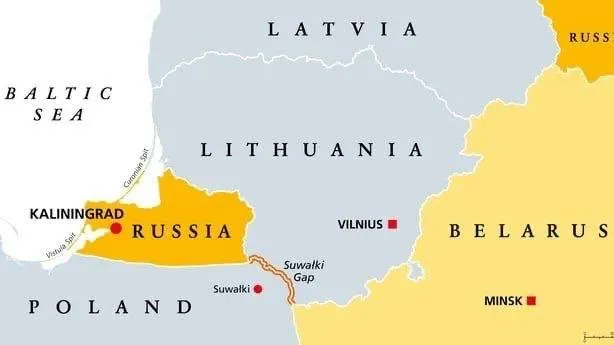
The Suwałki Corridor is a narrow strip of land between the Kaliningrad Oblast of the Russian Federation and Belarus, less than 100 kilometres long. It is of strategic importance to NATO and the European Union, as it connects the Baltic states with the rest of the EU.
This is why military exercises are regularly held in the Suwałki Corridor area, and Poland and Lithuania are stepping up security measures in this territory. In April 2026, the Lithuanian parliament approved the construction of a military training ground near the isthmus. Work is expected to be completed by 2028, and the facility will be able to accommodate up to 4,000 military personnel.
Earlier, Reuters reported that NATO also plans to establish a new command structure to speed up the deployment of military forces to Estonia and Latvia in the event of a military escalation by Russia.
In early June, Bundeswehr Inspector General Carsten Breyer told DW in an interview that Russia continues to build up its arsenal and increase its troop numbers. According to him, analysts believe that the climax could come in 2029.
Meanwhile, Danish radio station DR, Norwegian broadcaster NRK, Swedish broadcaster SVT and the Estonian publication Delfi have published satellite images showing the expansion of military bases or the construction of new facilities in western Russia. Finnish defence expert Marko Eklund noted that following the war against Ukraine, Russia could station around 115,000 troops at these bases.
Meanwhile, the Commander of NATO’s Allied Forces in Europe, US Army General Alexus Grinkevich, stated that Moscow does not seek open confrontation with the Alliance, as it understands that NATO possesses advantages which it cannot effectively counter.