Supporters of the Iranian government are taking to the streets and patrolling the cities amid the war

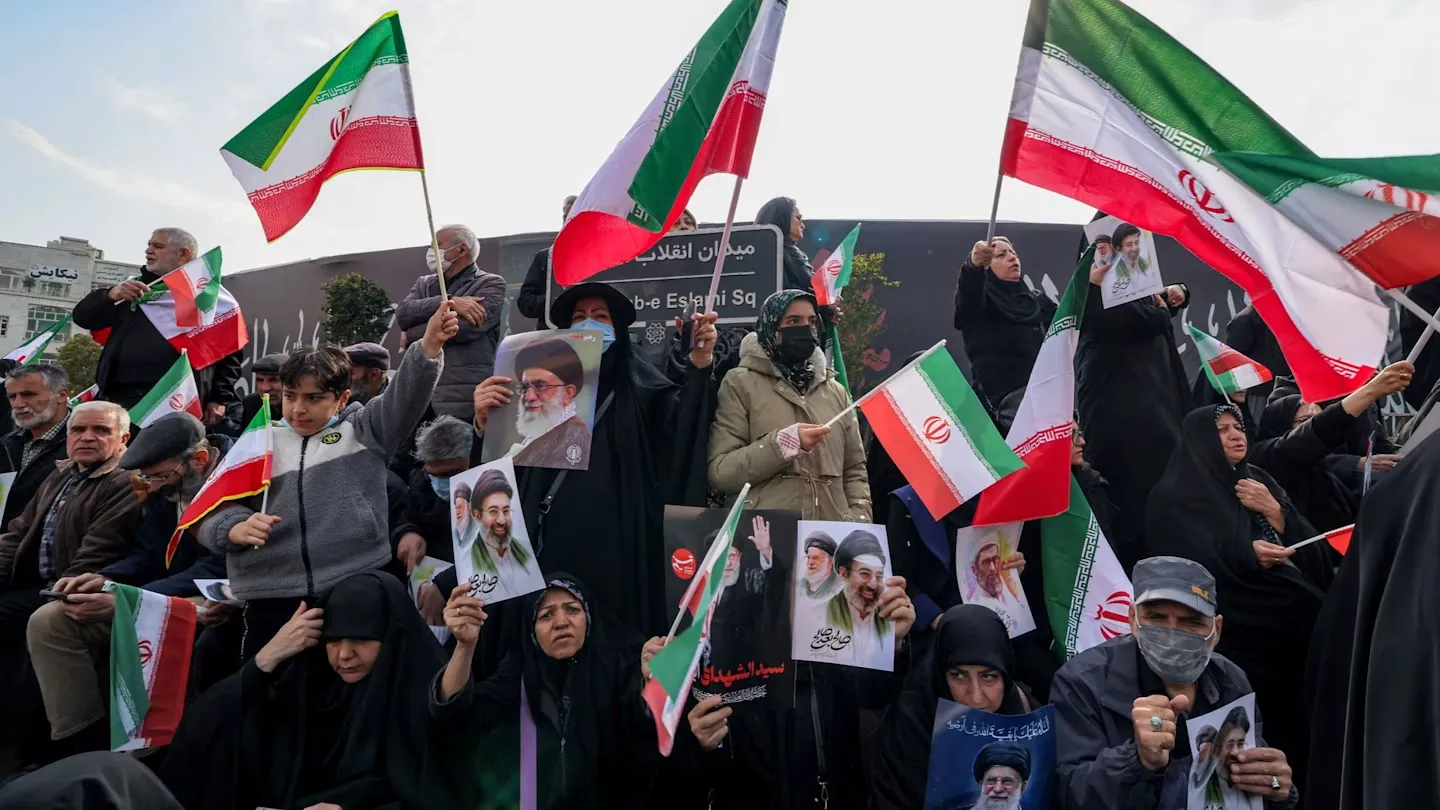
Following the US and Israeli attacks on Iran, 45-year-old Mohammad decided that his ‘religious duty’ was to support the government. Whilst the Iranian military launches ballistic missiles and drones and attempts to evade strikes, every evening he joins his wife and two children in large pro-government rallies and so-called caravans on the streets of Tehran. The Financial Times reports on this.
According to him, the constant presence of people loyal to the regime in major cities is intended to show the security forces that no new front will open up behind them in the form of protests, unrest or separatist movements.
“I am not a soldier standing by launchers firing missiles, but I can say to the armed forces: we are defending the streets, and you can go off to war without worry,” said Mohammad. He added that he does not want foreign states to decide the country’s future or intervene to create chaos.
The Islamic Republic has long relied not only on the state and military apparatus, but also on an active minority of supporters and the Basij volunteer units, which form part of the Islamic Revolutionary Guard Corps. According to the authorities, the Basij numbers in the millions.
Most members of these formations are not on the official payroll, but can be mobilised quickly. Some people who previously had no weapons are now armed. They patrol the cities on motorbikes, leading motorcades, displaying Iranian flags and playing religious music.
According to the source, this mobilisation reflects the perception of the war as an existential confrontation. It is not merely a matter of defence against external attacks, but also an attempt to prevent a repeat of the mass anti-government protests that swept the country in January.
According to the Human Rights Defenders News Agency, at least 7,000 people died as a result of the crackdown on those protests. The Iranian authorities cite a different figure, claiming over 3,000 deaths.
Calls by US President Donald Trump and Israeli Prime Minister Benjamin Netanyahu for Iranians to take to the streets again have only reinforced the authorities’ conviction that the protests were the work of external forces. This week, the judiciary executed three men for their involvement in the January protests. The authorities have repeatedly warned the public not to take part in demonstrations, warning of serious consequences.
In contrast, political leaders and military commanders are urging their supporters to remain on the streets until the war is over, however long it may last. Speaker of Parliament Mohammad Bagher Ghalibaf stated that there are three priorities for the public: ‘the street, the street, the street’.
Majid Mousavi, commander of the Islamic Revolutionary Guard Corps’ Aerospace Force, wrote on X: “Dear Iranian people: the streets are yours, the battlefield is ours.”
For many Iranians, including those who had hoped that war might be a catalyst for regime change, the appearance on the streets of loud and armed regime supporters is threatening.
One film director living in Tehran said that these people are everywhere; almost every evening they drive past his house in cars fitted with loudspeakers, broadcasting religious and revolutionary music and demonstrating their strength. According to him, it is hard to imagine who would dare to stand up to them.
One of the regime’s supporters, who takes part in these events under the name Fatemeh, stated that she is proud that the Islamic Republic is waging a struggle against the world’s most powerful military state.
The 55-year-old woman takes to the streets every evening with her son, daughter-in-law and sometimes her daughter. They gather in the squares around eight o’clock in the evening, after which they join the processions, hang Iranian flags from their car windows and patrol until midnight.
Her brother was killed during the Iran-Iraq War in the 1980s, and she later married a man whose brother had also died in that conflict. She says she is not afraid of death, either for herself or for her children.
“My children amaze me by showing more courage than my husband and I. This is the best kind of death: to die for one’s country. That is true victory,” she said.
In recent days, Israel has carried out strikes on Basij and police checkpoints on the streets of Tehran. Netanyahu stated last week that this would help “create the optimal conditions” for people to “take to the streets”. This week, Basij commander Gholamreza Soleimani was killed in an Israeli strike.
Following this, some of the checkpoints were moved under bridges or into tunnels; however, as the source notes, the number of pro-government volunteers on the streets has not noticeably decreased. One person close to the regime said that the Americans do not understand this way of thinking, and that these people are not afraid of death.
Mostafa, a 42-year-old regime supporter who also takes part in the evening protests, explained his involvement by recalling the 1953 coup, organised with the support of the US and the UK against Iran’s democratically elected government.
“When people left the streets in 1953, it paved the way for the US to organise a coup. We want to ensure that external enemies cannot use street protests as a means to bring about regime change. We intend to maintain this presence for as long as necessary to support our military forces,” he said.
Neither Mostafa, nor Mohammad, nor Fatemeh are formally members of the Basij, but they say they have links to this network and are ready to join if necessary.
Mohammad described the Basij as “a potential secret army that is activated immediately whenever the need arises”. According to him, such people usually gather in mosques, government institutions and universities. As a wealthy businessman, he himself recently received an offer to help provide food for volunteers manning checkpoints in major cities.
Before the war, radical ideologues, who now frequently take part in the caravans, had largely been sidelined from public life, particularly after the authorities relaxed some of the most controversial domestic regulations, notably the hijab requirement, following the ‘Woman, Life, Freedom’ protests in 2022.
However, Fatemeh, Mohammad and Mostafa maintain that the people taking to the streets now are doing so not to demand a return to stricter social rules, but for the sake of national unity.
Mohammad, whose wife wears a black chador, said he does not expect the Islamic Republic to become stricter after the war, and believes the authorities will continue to show leniency on certain social issues.
But, he said, first it must survive. “We must stand firm now to secure our future. We will remain on the streets for as long as it takes, even if they come to kill us,” said Mohammad.