Russia remains the greatest threat to Europe and NATO, despite sanctions and losses

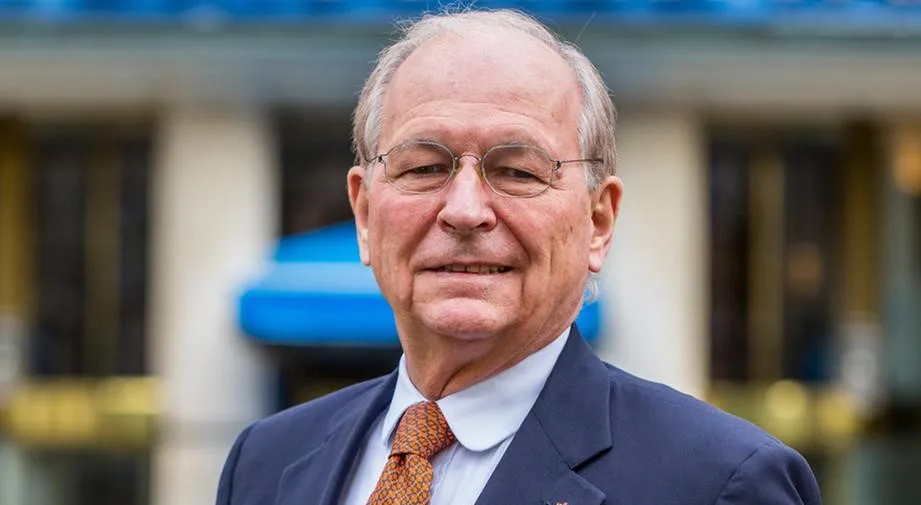
Russia's aggression against Ukraine, now in its fourth year, remains the greatest and most direct threat to the security of Europe and NATO countries. This conclusion is contained in the annual report of the Munich Security Conference, which was presented in Berlin on 9 February by its chairman, Ambassador Wolfgang Ischinger.
The report is entitled "Under Destruction" and, according to Ischinger, reflects the state of international security, where the established post-war order is increasingly unstable and risks collapsing completely. The authors emphasise that the war in Ukraine has reached new levels of brutality, and the Kremlin shows no willingness to abandon its maximalist goals.
The document notes that about 40 per cent of Russia's federal budget for 2025, or almost 8 per cent of GDP, is allocated to security and defence. According to experts, Moscow's constant nuclear threats indicate that the military threat extends far beyond Ukraine. Some intelligence services believe that after a possible ceasefire, Russia will be able to prepare for a regional war in the Baltic region within two years, and for a local conflict with one of its neighbours in as little as six months.
The authors pay particular attention to hybrid warfare. According to their data, Russia has intensified sabotage, cyberattacks, arson and diversions across Europe, increasingly combining cyber and forceful methods. According to analysts, this blurs the line between war and peace and complicates the task of deterrence without inadvertent escalation.
The report also discusses tensions in transatlantic relations. Washington's changing approach to European security, particularly under President Donald Trump, has heightened the sense of uncertainty in Europe. The authors note that the US is increasingly linking security support to economic interests, and between half and two-thirds of respondents in some European countries and Canada consider the United States to be a less reliable ally in NATO.
According to MSC estimates, US military aid to Ukraine has declined sharply since January 2025. This has forced European countries and Canada to shoulder the main burden of supporting Kyiv. The summer pause in the supply of Patriot systems, high-precision artillery and Hellfire missiles demonstrated Europe's limited ability to quickly compensate for the shortfall. In response, the allies created a mechanism for Ukraine's Priority Requirements List, which finances the purchase of American weapons for the Armed Forces of Ukraine.
At the same time, the document acknowledges that Europe remains strategically dependent on the US and lacks a unified vision for long-term deterrence of Russia and the achievement of lasting peace in Ukraine. An example of this is the EU countries' failure in December to reach a consensus on the use of frozen Russian assets, when instead a €90 billion loan was agreed upon.
The authors of the report conclude that the era of Europe's unconditional reliance on the US as a security guarantor is over. They call on European leaders to invest political and economic capital in supporting Ukraine, providing it with reliable security guarantees and accelerating its integration into the EU, as well as strengthening civil preparedness and countering hybrid threats from Russia.
The 62nd Munich Security Conference will take place on 13–15 February. Volodymyr Zelenskyy is expected to lead the Ukrainian delegation at the forum.