The Suez Canal has lost $10 billion: Egypt is counting its losses due to the crisis

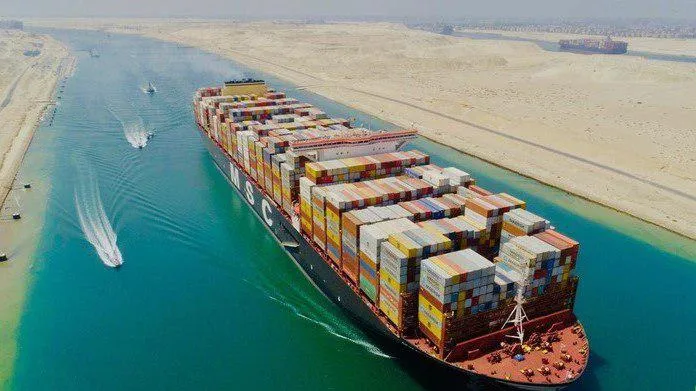
This is reported by the CTS.
Egypt has lost around $10 billion in revenue from the Suez Canal due to a sharp decline in shipping traffic on one of the world’s major trade routes.
The country’s president, Abdel Fattah al-Sisi, announced these losses. Converted into the national currency, he said, this amounts to approximately 500 billion Egyptian pounds.
The security crisis in the Red Sea has dealt a major blow to the canal’s revenue. Due to the high risks involved in shipping through the area, international carriers have begun to avoid the Suez Canal route and re-route their logistics.
Despite this, the canal administration maintains that shipping traffic has not officially ceased, and all navigation services continue to operate round the clock.
The scale of the decline is also confirmed by international estimates. According to the International Monetary Fund’s forecast, revenue from the Suez Canal could amount to around $3.6 billion in the 2024–2025 financial year. This is approximately 45% less than the previous year, when the figure stood at $6.6 billion.
The Egyptian authorities, however, provide an even harsher assessment: according to their data, in 2024 the canal’s revenues fell by more than 60% compared to 2023.
By way of comparison, in the 2022–2023 financial year, the canal generated $9.4 billion. A year earlier, this figure stood at around $7 billion. In 2023, Egypt had actually expected to generate over $10 billion in revenue.
Against the backdrop of the threat of attacks, some major shipping companies have begun to review their logistics plans. Maersk and Hapag-Lloyd are gradually returning to the region, whilst CMA CGM has once again opted for alternative routes. Some companies continue to reroute their vessels around the Cape of Good Hope.
This manoeuvre results in longer delivery times and higher transport costs.
The situation in the Red Sea deteriorated sharply after Yemeni Houthis began attacking commercial vessels in November 2023.
During this period, it is reported that over 100 merchant ships have come under attack. Four of them were sunk, and another was seized. At least eight seafarers have been killed.
The US Navy has also warned of the growing danger to shipping in the region.
The Suez Canal remains one of the critical transport hubs for global trade, as a significant portion of shipments between Europe and Asia pass through it.
A reduction in traffic on this route affects not only Egypt’s revenues. It is also capable of putting pressure on global logistics chains, freight costs, energy prices and delivery times.
Until the security situation in the region stabilises, a return to previous levels of traffic through the Suez Canal remains problematic.