Syrskyi stated that 72 per cent of rotations had been completed: around 20 soldiers have been holding their positions for more than 200 days

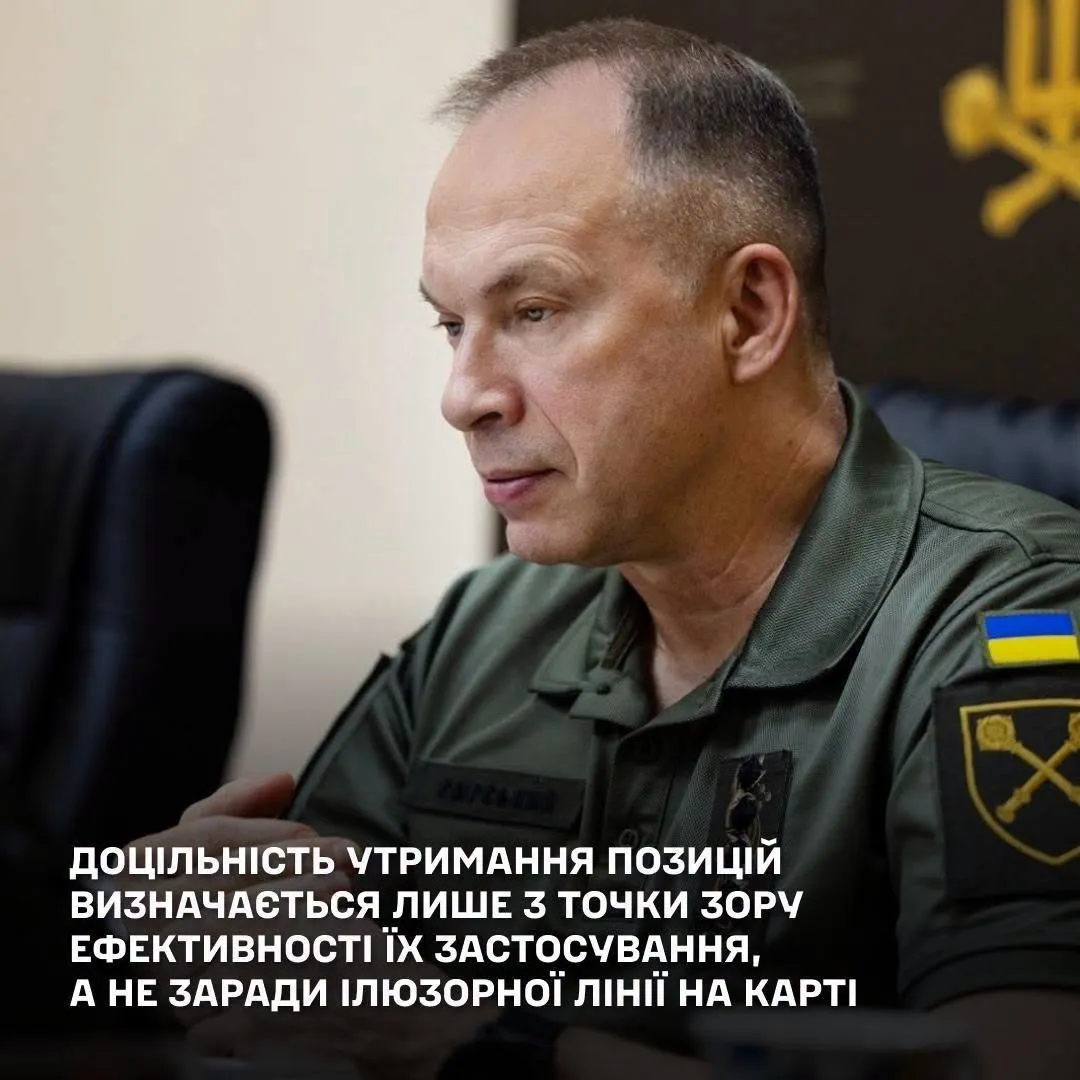
This was reported by the Commander-in-Chief of the Armed Forces of Ukraine, Oleksandr Syrskyi, on Facebook.
Not all brigades have carried out rotations
According to Syrskyi, most units have already complied with the requirement to replace soldiers who have been on the front line for a long time. However, some brigades have not yet carried out rotations.
The Commander-in-Chief stated that the command is analysing each case individually where a soldier has remained in position for more than 200 days. For such soldiers, they are seeking ways to organise a replacement.
“Our soldiers deserve to be treated with respect. Commanders are obliged to make every effort to ensure their timely rotation — in practice, not just on paper,” emphasised Syrskyi.
Why replacing troops can take months
Syrskyi explained that in certain sections of the front line, rotation turns into a complex combat operation. In certain sections of the front line, rotations become particularly difficult and dangerous to carry out in so-called ‘circle zones’, where Russian drones and other weapons control the roads and approaches to positions.
To withdraw one group of troops and bring in another, drone operators, ground-based robotic systems, reconnaissance units and other units may be deployed. Such operations are often carried out at night or in bad weather, when it is more difficult for the enemy to use drones.
At the same time, the Commander-in-Chief stated that there are sufficient trained troops to carry out rotations. He cited the attitude of commanders and their readiness to organise personnel replacements even under difficult conditions as the decisive factor.
Syrskyi urged troops not to hold positions simply for the sake of a line on a map
Separately, Syrskyi addressed the commanders, urging them to assess the advisability of continuing to hold each position.
According to him, decisions must be based on actual military benefit and effectiveness, rather than on a desire to formally preserve the front line on a map.
The Commander-in-Chief also demands honest reports on the situation of units and timely decisions if remaining in a position poses unjustified risks to the lives and health of servicemen.
What the rotation order entails
Syrskyi signed an order on the mandatory rotation of service personnel on the front line on 30 April.
The document stipulates that commanders must ensure that personnel do not remain in their positions for longer than two months. After this, rotations must be carried out within one month.
Rotations must be planned in advance, taking into account the situation in a specific sector, the intensity of hostilities, the availability of trained personnel, equipment and the means for a safe withdrawal from positions.
In May, Syrskyi stated that the Defence Forces had sufficient personnel to prepare three rotations and carry out rotations every two months.
The Military Ombudsman spoke of the impossibility of carrying out the order
At the end of June, the Office of the Military Ombudsman stated that the requirement for mandatory rotation after 60 days was, in most cases, impossible to fulfil. They reached this conclusion following an analysis of appeals and complaints from service personnel.
Military Ombudswoman Olga Reshetilova had previously stated that some soldiers can remain in dugouts for a year or even longer. According to her, the established time limits for soldiers’ deployment at their positions are often not adhered to.
Syrskyi’s statement that the order has been fulfilled to 72 per cent does not include a detailed methodology for the calculation. The Commander-in-Chief did not specify how many servicemen or units were covered by the inspection, nor what exactly was taken into account when determining this figure.
Follow us on Telegram.