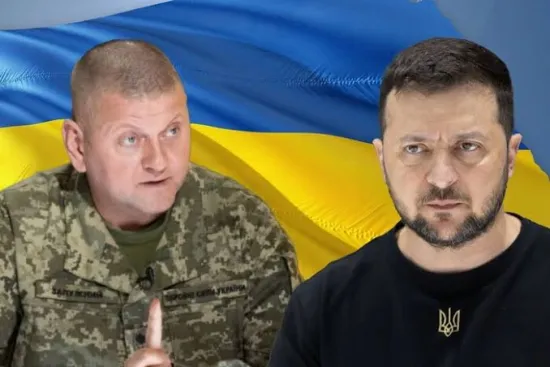
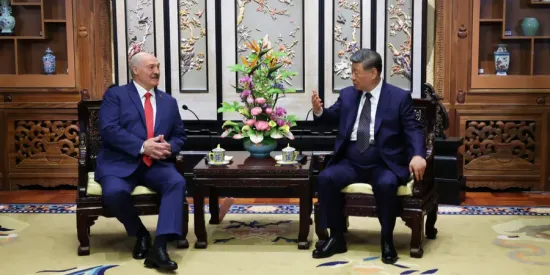
Syryskyi assessed the threats from the north, the mobilisation in the Russian Federation and the Kremlin’s nuclear blackmail

Threat of an offensive in the north
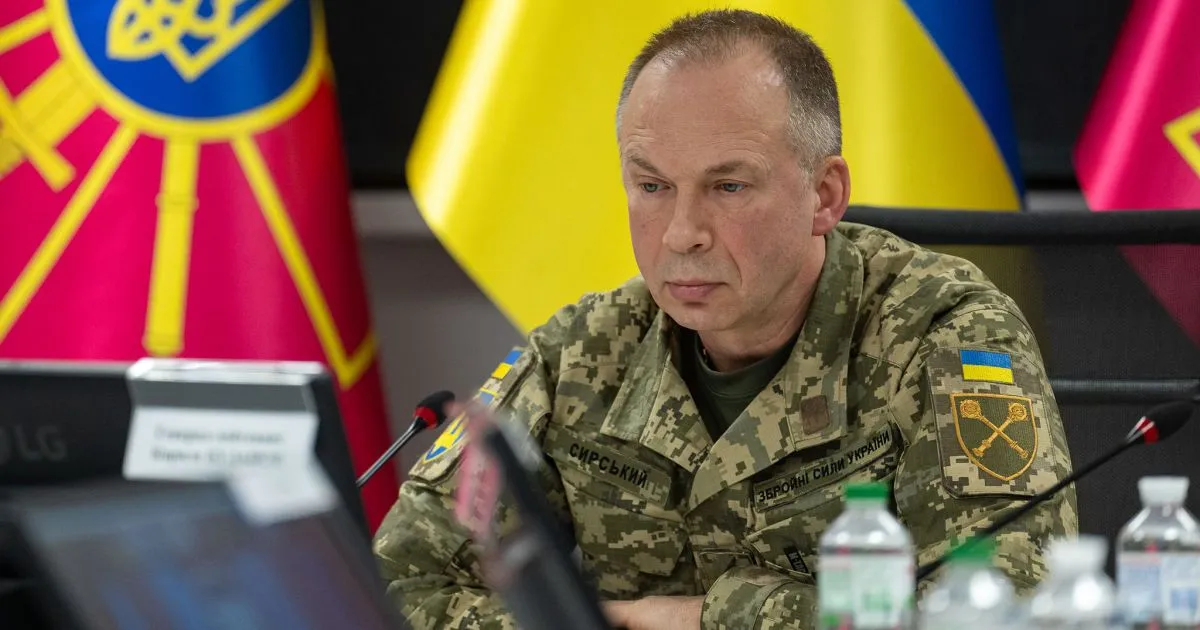
The Commander-in-Chief of the Armed Forces of Ukraine, Oleksandr Syrskyi, has stated that Russian troops may be preparing offensive operations from the Bryansk Oblast of the Russian Federation.
“The most likely scenario – and this is corroborated by several sources – is a possible offensive in the north from Russian territory, specifically the Bryansk region. This is a realistic scenario, and, of course, we are preparing for it,” Syrskyi said in an exclusive interview with TSN as part of the national telethon ‘Yedyni Novyny’.
According to him, there are currently no signs of preparations for an offensive on Kyiv from this direction. At the same time, Russian troops may be considering an offensive on the Chernihiv region.
Syrskyi noted that the aim of such actions could be to advance deeper into the region, stretch the front line and force the Defence Forces to redeploy reserves from active fronts.
“This is a way of stretching the front and depriving us of our reserves,” he emphasised.
Is there a risk of an attack from Belarus?
Oleksandr Syrskyi also commented on the risk of a new offensive from Belarusian territory. According to him, the Ukrainian command is taking even the most complex scenarios into account.
He noted that Vladimir Putin had tasked the Russian General Staff with analysing various options for offensive operations, including those launched from Belarusian territory.
“We must take all possibilities into account, even the worst-case scenarios. We know that Putin has tasked the Russian General Staff with analysing various options for conducting an offensive operation, including from Belarusian territory, with the aim of capturing Kyiv and other territories,” said Syrskyi.
At the same time, he expressed doubt that the Belarusian leadership would agree to allow its territory to be used again for a new invasion.
“I think the Belarusian leadership will not dare to use its own territory, or hand it over to the aggressor to be used as a springboard for an offensive operation,” noted the Commander-in-Chief.
How Ukrainian strikes have affected the front line
Syrskyi reported that the latest strikes on Russian bridges and logistics routes have already affected the situation on the front line.
According to him, the size of the Russian force has been reduced and now stands at 722,000 troops, including operational reserves.
The number of fronts where Russian troops are conducting active offensive operations has also decreased. Whereas there were previously 13 such fronts, there are now seven, four of which remain the main ones.
Despite this, the number of daily assaults remains high, averaging 240–260 per day. At the same time, almost 45 per cent, and sometimes up to 50 per cent, of these are offensive operations by Ukrainian units.
“The enemy’s activity has decreased significantly. I wouldn’t say by half, but certainly by a third,” said Syrskyi.
How much territory has been liberated
Since the start of 2026, the Defence Forces have liberated over 670 square kilometres of Ukrainian territory.
Syrskyi noted that this result was the outcome of the 2025 campaign, which was aimed at gradually wearing down the enemy’s main forces, increasing their losses and thwarting their offensive plans.
“The 2025 campaign was precisely designed to gradually wear down the enemy’s main forces, increase their losses and make it impossible for them to continue their offensive on all operational-strategic fronts, which, on the whole, we have managed to achieve,” he stated.
According to the Commander-in-Chief, this enabled the Defence Forces to move to active operations on certain fronts from the start of 2026.
Will Putin announce a new mobilisation in Russia?
Syrskyi did not rule out the possibility that Russia might resort to a new wave of mobilisation.
He emphasised that the Ukrainian command is considering all possible scenarios for enemy actions and is preparing for potential threats.
According to him, as a last resort, the Kremlin may take such a decision after the elections to the Russian State Duma, which are due to take place on 18–20 September 2026.
“If they do carry it out, it will be as a last resort, and certainly after the elections,” said Syrskyi.
Will Putin dare to use nuclear weapons?
Separately, the Commander-in-Chief commented on the Kremlin’s nuclear rhetoric.
He pointed out that Russia has been using nuclear threats since the start of the full-scale invasion.
At the same time, Syrskyi believes that, at present, Vladimir Putin is unlikely to dare to actually use nuclear weapons.
“We understand that this argument would place him outside the law entirely, across the whole world. Because there is a tribunal. That is why I think he will not resort, at least for now, to such steps,” Syrskyi stated.