TCK without balaclavas and under video surveillance: what the Parliamentary Commission is proposing

This is set out in draft resolution No. 15332 on the report of the Verkhovna Rada’s Temporary Investigative Commission concerning possible violations in the areas of defence, anti-corruption legislation and respect for human rights during martial law.
The Temporary Investigative Commission proposes that the Verkhovna Rada take note of its report covering six months of work and publish it on the parliament’s website.
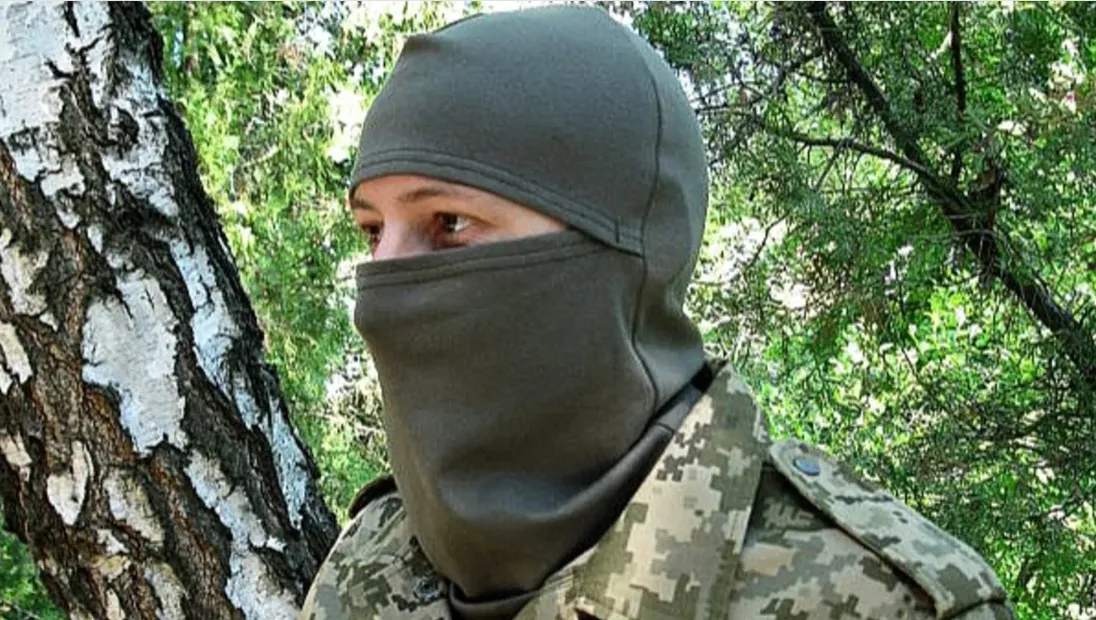
The document examines separately the actions of representatives of the Temporary Investigation Commission (TIC) and the Special Purpose Units (SPU), as well as police officers, during mobilisation measures. The Commission drew attention to the use of balaclavas, problems with video recording and the transport of citizens to the TIC.
Based on the findings, MPs recommended banning the operation of mobilisation notification teams if their members are not equipped with functioning body cameras and devices for reading electronic military registration documents.
It is also proposed to introduce mandatory continuous video recording during mobilisation measures.
What is being said about balaclavas
The commission analysed videos from social media, the press and citizens’ reports, in which representatives of mobilisation teams had their faces fully or partially covered.
The report states that concealing one’s face makes it difficult or impossible to identify officials. It may also provoke psychological resistance among citizens and contradict the principle of transparency in the work of state bodies.
During the hearing, the heads of various Territorial Coordination Centres and Joint Operations Centres stated that the use of balaclavas is not an acceptable practice, and that tube scarves may only be used for protection against the weather.
What issues were identified with body cameras
A separate section of the report concerns the photographic and video recording of mobilisation measures.
The Commission established that the National Police do not keep separate records of internal investigations due to the absence or deactivation of body cameras.
At the same time, the Ministry of Defence provided data on internal investigations into the failure to use body cameras in various regions.
The Volyn Regional Territorial Coordination and Support Centre reported 16 reports of negligence in military service following the introduction of the mandatory use of body cameras.
Why there is a push for continuous video recording
The Commission drew attention to a provision in the Ministry of Defence’s instructions which allows video recording to be paused if there is a risk of military facilities or restricted-access information appearing in the frame.
The report notes that this provision may cover an excessively broad range of situations and be used to prevent the recording of potential violations.
A separate issue concerns the transport of citizens to the TCC. According to the commission’s findings, continuous video recording during administrative detention is not, in practice, ensured, as police officers and detainees are often transported in different vehicles.
Furthermore, body cameras only record events in front of the wearer, and therefore do not provide a complete picture of what is happening inside the vehicle.
How long should recordings be retained?
The current Ministry of Defence guidelines stipulate that body-camera recordings must be retained for 30 days.
The Commission has pointed out that this period may prove insufficient given the time required to forward and consider complaints from members of the public or requests from lawyers.
In light of this, it is recommended that the minimum retention period for video recordings be extended to 90 calendar days.
How many complaints were received regarding the actions of the TCC
During the Commission’s meeting, the Verkhovna Rada Commissioner for Human Rights, Dmytro Lubinets, presented statistics on complaints regarding the actions of representatives of the TCC and the SP.
According to his data, there were 18 complaints in 2022, 514 in 2023, 3,319 in 2024, and 6,014 in 2025.
Among the most frequent complaints, the Ombudsman cited breaches of military registration procedures, unlawful detention, restrictions on freedom of movement and unlawful actions by alert groups.
What else did the commission examine?
In addition to mobilisation measures, the Temporary Special Commission investigated the interaction between the National Anti-Corruption Bureau of Ukraine (NABU), the Specialised Anti-Corruption Prosecutor’s Office (SAPO) and the State Financial Monitoring Service in the context of the ‘MIDAS’ case.
The report states that NABU does not see any systemic problems in its cooperation with the SAP, but reported isolated instances of the State Financial Monitoring Service failing to respond to requests in a timely manner or to a satisfactory standard.
The commission indicated that it is continuing to analyse the materials in this area and has not yet reached any final conclusions.
Over the course of six months, the commission held 20 meetings and three consultations, hearing from over 70 representatives of government bodies, law enforcement agencies, the Technical Coordination Centre and the Special Investigation Team, as well as institutions, organisations and members of the public.
It also sent out over 60 requests, adopted nine decisions and established an Expert Council comprising 18 specialists and representatives of state institutions.
The commission has not yet reached final conclusions on most of the issues under investigation and therefore proposes to continue its work for the period specified in the resolution.
Follow us on Telegram