A new meaning during the war: what 22 June, the Day of Mourning, really means for Ukraine

Why is the Day of Mourning observed on 22 June?
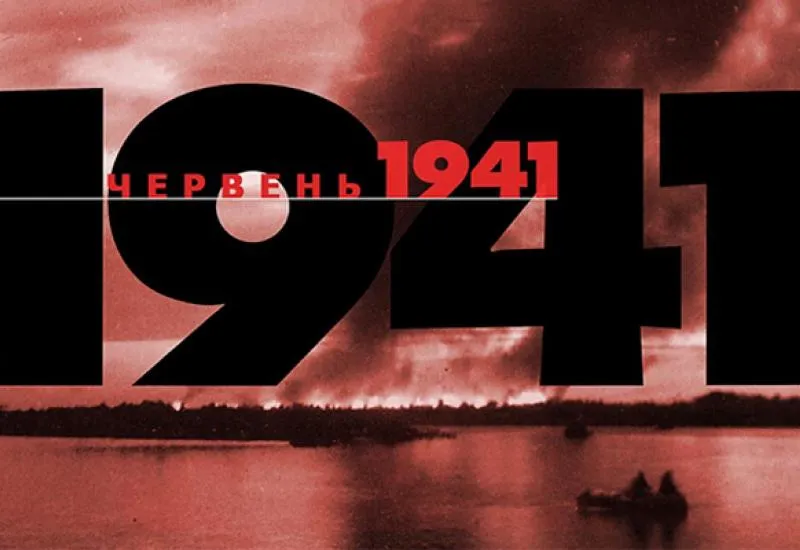
It was on 22 June 1941 that the German-Soviet War began – one of the key stages of the Second World War, which brought large-scale fighting, occupation and massive human losses to Ukrainian soil.
According to various estimates, the war claimed the lives of between 8 and 10 million Ukrainian citizens. In fact, one in five Ukrainians perished.
The Day of Mourning and Remembrance for the Victims of the War was established by a decree of the President of Ukraine, Leonid Kuchma, on 17 November 2000. According to the document, it was introduced to enable the entire nation to honour the memory of the sons and daughters of the Ukrainian people who perished during the war.
How Ukrainians’ perception of this date has changed
For a long time, 22 June was viewed in Ukraine primarily through the Soviet lens of the so-called ‘Great Patriotic War’. However, following the restoration of independence and, in particular, after the start of Russian aggression, the historical perspective on the events of the Second World War has changed.
Today, Ukrainian historians emphasise that the Second World War did not begin in 1941, but on 1 September 1939 with Nazi Germany’s invasion of Poland.
At the same time, the Soviet Union was not an adversary of Nazi Germany at the outset of the war. Prior to this, Moscow and Berlin had signed the Molotov–Ribbentrop Pact, which included secret protocols on the division of spheres of influence in Eastern Europe.
Following this:
- on 17 September 1939, Soviet troops entered Polish territory;
- the USSR occupied the Baltic states;
- it launched a war against Finland.
It was not until 22 June 1941 that Germany attacked its former ally, the Soviet Union.
Ukraine became one of the main theatres of war
Due to its geographical location, Ukraine found itself at the epicentre of the fighting. It was on Ukrainian soil that some of the largest battles of the Second World War took place.
According to the Ukrainian Institute of National Remembrance, hostilities on Ukrainian territory lasted for around 40 months, and over 60 per cent of the Wehrmacht’s forces were concentrated on the Eastern Front.
The consequences of the war for Ukraine were catastrophic:
between 8 and 10 million people were killed;
around 5 million of them were civilians;
over 2.2 million people were deported to Germany for forced labour;
over 700 towns and nearly 30,000 villages were destroyed.
Ukrainians fell victim to two totalitarian regimes
The General Staff of the Armed Forces of Ukraine emphasises that for Ukraine, this date serves as a reminder not only of the crimes of Nazism, but also of the crimes of the Soviet totalitarian regime.
During the war, Ukrainians endured the Holocaust, mass executions of civilians, deportations and repression.
At the same time, the Soviet authorities also resorted to brutal actions, including mass executions of political prisoners, the deportation of Crimean Tatars and other crimes against the population.
“For our country, this day is not about the Soviet myth of the ‘Great Patriotic War’, but about the tragedy of the Ukrainian people, who found themselves caught between the millstones of two totalitarian monsters of the 20th century: Nazi Germany and the communist Soviet Union,” the General Staff of the Armed Forces of Ukraine stated.
What significance does this date hold today?
Amid Russia’s full-scale war against Ukraine, the Day of Mourning has taken on new significance.
The General Staff emphasises that the memory of the victims of the Second World War and the struggle of previous generations is being carried on today by the Ukrainian military, who are defending the state against Russian aggression.
Therefore, 22 June in Ukraine is not only a day of remembrance of the past, but also a reminder of the price of freedom and the need to resist any manifestations of totalitarianism and aggression.
Today, Ukrainians honour all victims of the war, regardless of their nationality or whether they were military or civilian, remembering the millions of people whose lives were shattered by the greatest tragedy of the 20th century.
Follow us on Telegram