The Cabinet of Ministers has approved new procedures for the use of funds from the State Fund for Regional Development
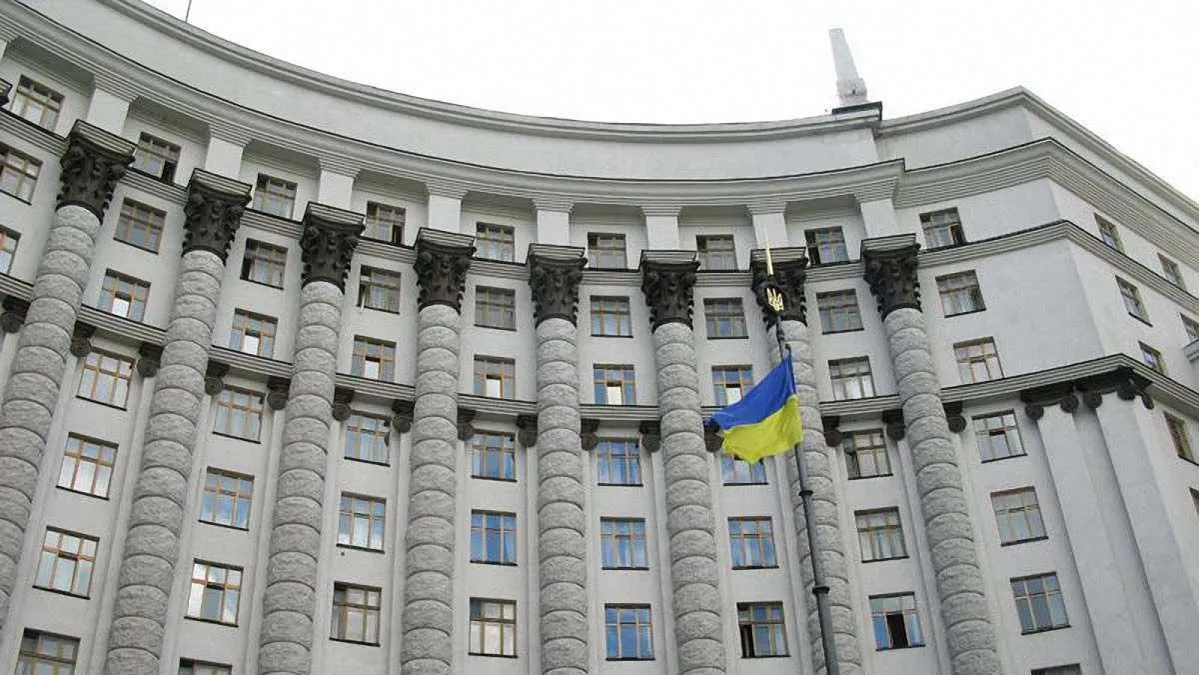
This was reported by the ‘Decentralisation’ portal, citing the Ministry of Community and Territorial Development of Ukraine.
On 8 July, the government approved two documents: new procedures for the use of State Fund for Regional Development (SFRD) funds, and procedures for the assessment and prioritisation of medium-term plans for priority public investments by regions and local authorities.
The Ministry of Development explains that the new rules are intended to make the project selection system more transparent and bring it closer to the European Union’s cohesion policy approaches. This is not simply a matter of manually allocating funds between regions, but of funding projects that must be linked to community and regional development strategies.
How much funding is allocated
The 2026 state budget allocates 2 billion hryvnias to the State Fund for Regional Development. Of this amount, 30 per cent is to be allocated to projects that fulfil the objectives of the State Regional Development Strategy, and 70 per cent to projects identified by regional strategies and local community strategies.
In other words, approximately 600 million hryvnias are to be spent on projects under the national strategy, and around 1.4 billion hryvnias on projects submitted by regions and local authorities.
Why the figure raises questions
Formally, the State Regional Development Fund (SRDF) should be considerably larger. The Budget Code contains a provision stipulating that the fund must be set at no less than 1.5 per cent of the projected revenue of the general fund of the state budget. However, the application of this provision has been suspended for 2026.
Even during the budget preparation process, the parliamentary budget committee pointed out that the draft budget allocated only 2 billion hryvnias to the State Regional Development Fund, i.e. 0.08 per cent of the projected revenue. The Budget Declaration for 2026–2028 had allocated 30 billion hryvnias to this fund for 2026.
In the explanatory notes to the budget, this was attributed to the fact that, due to the war, expenditure on the Armed Forces of Ukraine, other military formations, law enforcement agencies and national defence remains a priority.
Which projects are eligible for funding
Under the new procedure, SRDF funds are to be channelled towards medium-term plans for priority public investments in regions and local communities. Such plans must be in line with the State Strategy for Regional Development, regional strategies and the strategies of local communities.
In other words, a community or region will not be able to simply submit any project. The project must be in line with strategic documents and undergo an assessment based on established criteria.
The new procedure also delineates the responsibilities of those involved in the preparation, assessment and prioritisation of investment plans. These must be assessed using a single methodology based on socio-economic development indicators and defined criteria.
Where the main risk lies
The new procedure in itself does not mean that funds have already been allocated to specific projects. It sets in motion the mechanism by which these projects are to be selected.
It is at this stage that the key question arises: which projects will be the first to receive funding. Following the massive Russian attacks, the most pressing needs for communities remain housing for those who have lost their homes, critical infrastructure, water supply, heating, electricity and preparations for winter.
The Ministry of Development had previously cited housing support for those affected by the war, the restoration of critical and social infrastructure, and public investment projects in the areas of housing, transport, municipal infrastructure and services as priorities for the 2026 budget.
Will the projects be open to the public?
The announcement regarding the new procedure does not yet include a list of specific projects eligible for funding from the State Fund for Regional Development. The publication of such a list prior to the actual allocation of funds could address some of these questions.
It is important for the public to see not only the total amount — 2 billion hryvnias — but also the names of the projects, their costs, the beneficiary communities, their level of readiness and the reasons why these particular projects have been prioritised.
This is particularly important in the context of the war, when any budgetary investment competes with the needs of defence, housing reconstruction, the repair of critical infrastructure and the preparation of communities for winter.
What previous experience with the State Fund for Regional Development has shown
In 2025, the government had already allocated State Fund for Regional Development (SFRD) funds to priority investment projects. At that time, 1 billion hryvnias were channelled into 48 projects across 16 regions. These included shelters, healthcare facilities, schools, nurseries, and water supply and drainage systems.
At that time, the largest amounts of funding went to the Kharkiv, Kherson, Kyiv and Lviv regions. Part of the funds was allocated using a territorially-oriented approach: 50 per cent to frontline regions, 30 per cent to central regions, and 20 per cent to western regions.
What is changing for local communities
The new State Fund for Regional Development model is part of a broader reform of public investment management. The Ministry of Finance explained that the state is creating a unified digital ecosystem designed to cover all stages of the investment cycle — from planning and project selection to monitoring and evaluating results.
The basis of this ecosystem is to be the integration of DREAM, the LOGICA system, treasury systems, e-procurement and other state resources. The aim is to reduce duplication, improve data quality and make the use of public funds more accountable.
For local authorities, this means that the likelihood of securing funding will increasingly depend not on political agreements, but on the quality of project preparation, its alignment with strategy, readiness for implementation and data transparency.
What matters now
The main point of interest lies not in the procedure for using the State Fund for Regional Development itself, but in the future list of projects. If these include housing for those affected, water, heating, shelter, hospitals and critical infrastructure, the fund could become a genuine tool for community resilience.
If, however, the list includes secondary projects, questions about priorities will inevitably intensify. In wartime, development projects must pass a simple test: do they help people cope with the aftermath of attacks, the winter and the daily risks of war?
Follow us on Telegram.