The Kremlin has rejected Tokayev’s call to freeze the war – ISW

This has been reported by the Institute for the Study of War (ISW).
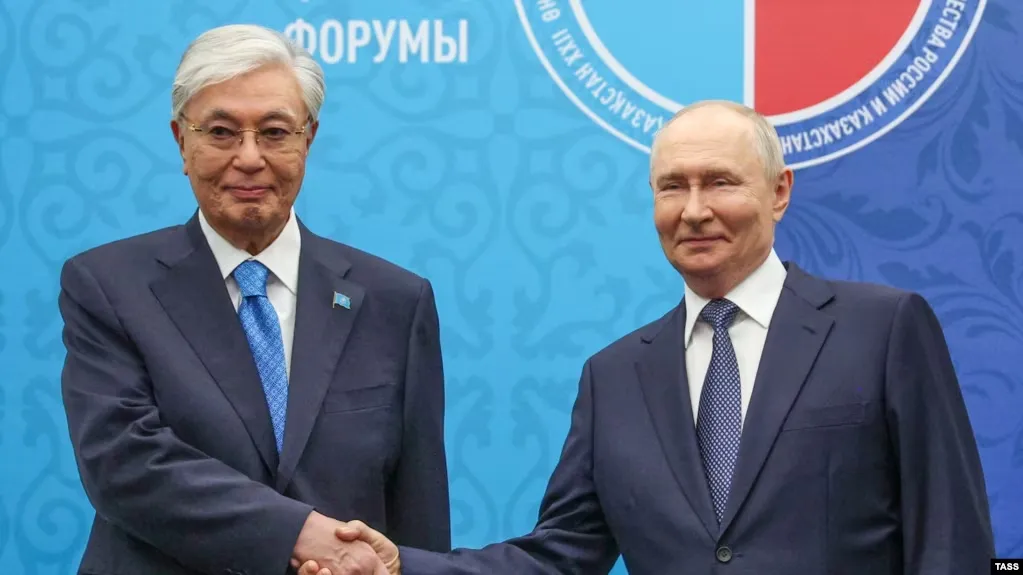
The presidents of Kazakhstan and Russia met on 25 July 2026 in Omsk during a forum on interregional cooperation. During the public part of the talks, Tokayev described the war as an interstate conflict and emphasised that he did not consider it a civil war.
The President of Kazakhstan stated that the causes of the Russian-Ukrainian war remain unclear to many people. He proposed a ceasefire, a return to the ‘Istanbul 2.0’ negotiation format, and continuing to seek a path to peace with the involvement of major powers.
Tokayev explained his appeal by citing the loss of young lives on both sides. At the same time, he declined to act as a mediator between Kyiv and Moscow and reaffirmed Kazakhstan’s commitment to its strategic partnership with Russia.
How the Kremlin responded to the proposal
Putin did not comment on Tokayev’s appeal during the public part of the meeting. Later, Kremlin spokesperson Dmitry Peskov stated that the Russian president had allegedly explained the situation in the war to his counterpart in detail.
According to Peskov, a ceasefire along the current front line is “impossible” for Russia. The Kremlin representative blamed this on Kyiv’s position and reiterated that Moscow intends to achieve its objectives.
Peskov also stated that the war could end “by the end of the day” if Ukraine took certain decisions. The Kremlin did not specify what these decisions were in this statement; however, Putin had previously demanded that Ukraine completely withdraw its troops from the Donetsk, Luhansk, Zaporizhzhia and Kherson regions – particularly from territories not controlled by Russia – and renounce its bid to join NATO.
What ISW analysts observed
The ISW believes that the meeting with Tokayev gave Putin an opportunity to once again explain his refusal to halt hostilities and to justify the decision to continue the war. Analysts emphasised that the Russian authorities continue to shift the blame for the war’s duration onto Ukraine.
According to the institute’s assessment, statements about the possibility of a swift cessation of hostilities are in fact accompanied by a demand that Kyiv agree to Moscow’s maximalist terms. Negotiations under such conditions would not guarantee the conclusion of a fair or sustainable peace agreement.
The ISW also believes that the Kremlin is preparing Russian society for further sacrifices and a protracted war. The public reaction to Tokayev’s proposal served as yet another signal that Moscow is not yet ready to halt its offensive along the current front line.
How Ukraine reacted
Foreign Minister Andriy Sibiga described Tokayev’s appeal as realistic, timely and wise. He noted that Ukraine had already proposed halting hostilities along the current front line and moving towards diplomacy.
The Foreign Minister pointed out that the Kremlin had also rejected the Kazakh President’s proposal. In Sibiga’s view, Russia will only agree to consider realistic peace initiatives once international pressure has intensified.
Ukraine refuses to hand over the unoccupied parts of its regions to Russia and insists that a ceasefire cannot be conditional on meeting demands that effectively amount to territorial concessions to the aggressor.
Follow us on Telegram.