The Steel Wolves of the Ukrainian Armed Forces: 27 May marks Special Operations Forces Day

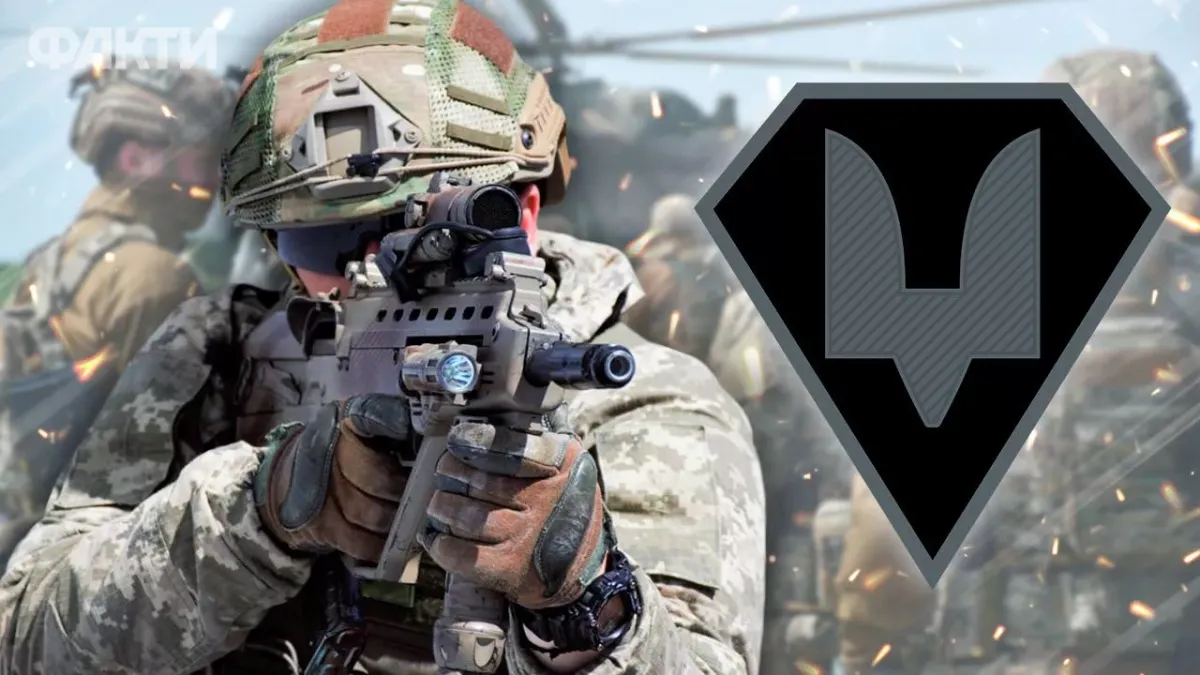
Special Operations Forces Day of the Armed Forces of Ukraine was established by Presidential Decree No. 346/2025 of 26 May 2025.
Who are the Special Operations Forces?
The Special Operations Forces are a separate branch of the Armed Forces of Ukraine. They comprise special-purpose units, units for information and psychological operations, resistance movements and support units.
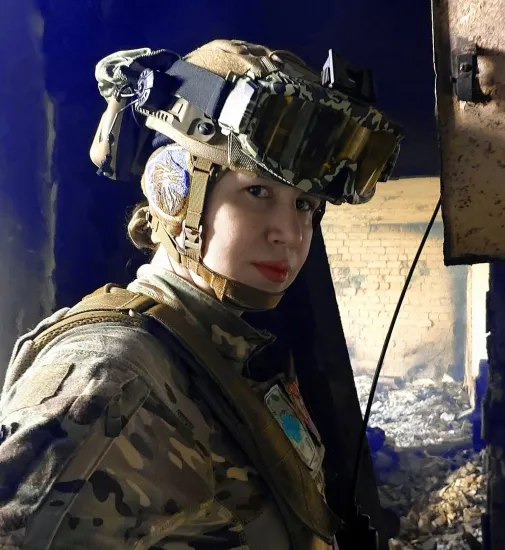
The Special Operations Forces are considered one of the most secretive and effective units of the Ukrainian military. The soldiers themselves call themselves “the steel ones”, and due to the nature of their work, the details of most operations, as well as the names, call signs and faces of the fighters, are usually not disclosed.
These units operate on land, in the air, at sea, in temporarily occupied territories and behind enemy lines.
Why Special Operations Forces Day is celebrated on 27 May
Previously, Special Operations Forces Day was celebrated on 29 July. This date was established by presidential decree in 2016.
It was linked to the events of 2014 near Latysheve, close to Snizhne in the Donetsk region. At that time, ten special forces personnel from Kropyvnytskyi were killed during an operation to search for and rescue Ukrainian pilots.
On 26 May 2025, President Volodymyr Zelenskyy established a new date for the Special Operations Forces’ professional holiday – 27 May.
It was chosen in honour of the operation to liberate the new terminal at Donetsk Airport in 2014, when Ukrainian special forces raised the Ukrainian flag over it.
Who is being celebrated on this day
On 27 May, we celebrate the servicemen of the Special Operations Forces of the Armed Forces of Ukraine.
The tasks of the Special Operations Forces include special reconnaissance, operations behind enemy lines, information and psychological operations, organising and supporting the resistance movement, participating in the fight against terrorism, protecting citizens and state property outside Ukraine, as well as international military cooperation.
The Special Operations Forces define their credo as “quality over quantity”. Selection for these units is extremely rigorous: according to the Special Operations Forces, only around 10% of candidates complete the course.
The four-month Q-course involves physical and psychological tests; candidates live at the training ground cut off from the outside world, and after the first stage, they specialise in one of the key roles: commander, engineer, weapons specialist, medic or signals officer.
SSO Symbols
The emblem of the Special Operations Forces is a silver wolf against a background of a laurel wreath. At the bottom is a double-pronged fork – the princely symbol of Sviatoslav the Brave.
The motto of the Special Operations Forces is the phrase “I am coming for you”, which is associated with Prince Sviatoslav.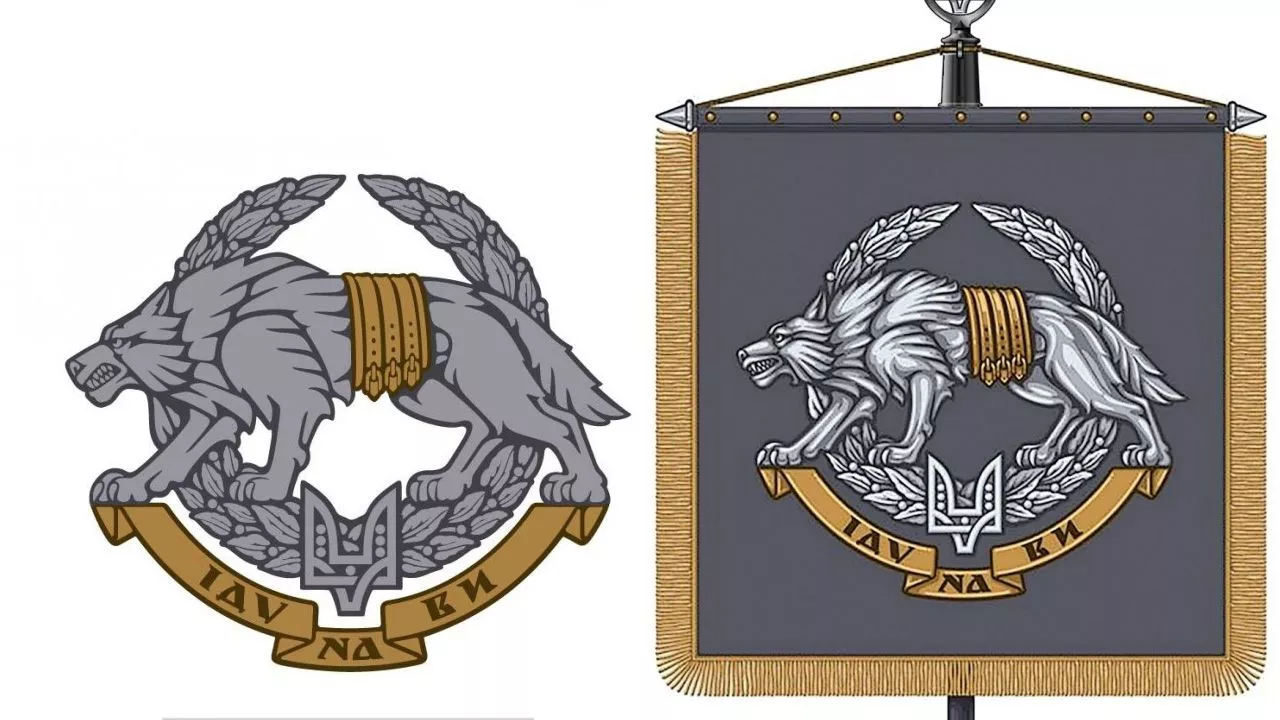
The image of the wolf was chosen for the emblem, in particular, with reference to Ukrainian legends about the Cossack ‘kharakters’. That is why the phrase ‘steel wolves’ has become a recognisable symbol of the Special Operations Forces.
Which SSO operations have become known
Most SSO operations remain classified, but the Ukrainian command and media have nevertheless disclosed some of them.
SSO soldiers took part in the defence of Gostomel airfield in the early days of the full-scale invasion. At that time, they shot down Russian helicopters, repelled attacks by sabotage and reconnaissance groups, and bought time for Ukrainian forces to arrive.
The SSO were also involved in the defence of Mykolaiv Airport. Together with the territorial defence forces and the National Police, they held the airfield and prevented Russian troops from threatening to encircle the city from the north.
During the fighting in the Kyiv region, special forces held back Russian troops in the Moshchun area, striking enemy vehicles and pontoon bridges, preventing the occupiers from opening up another direction of attack on Kyiv.
In the Black Sea, SSO fighters took part in the operation to liberate Zmiinyi Island. Combat swimmers from the 73rd Naval Centre of the SSO surveyed the coastal area for mines and secured the landing of the main force.
The Special Operations Forces were among the first Ukrainian units to enter Kherson on 11 November 2022 during the de-occupation of the region’s right bank.
During the counter-offensive in the Kharkiv region in the autumn of 2022, special forces also operated as part of the Defence Forces. At that time, the Ukrainian military liberated almost the entire territory of the region.
Notable operations by the Special Operations Forces
Among the well-known operations of the Special Operations Forces is the strike on the Russian military base in Makiivka on New Year’s Eve, 1 January 2023, where, according to former Special Operations Forces commander Viktor Khorenko, the occupiers suffered significant losses.
In September 2023, the Special Operations Forces were involved in the destruction of the large landing ship “Minsk” and the submarine “Rostov-on-Don” in occupied Sevastopol.
That same month, during Operation Crab Trap, a strike was carried out against the headquarters of the Russian Black Sea Fleet in Sevastopol.
In October 2023, during Operation Dragonfly, Ukrainian forces struck airfields in the temporarily occupied cities of Berdiansk and Luhansk. Nine Russian helicopters of various models, specialist equipment, an air defence launcher and an ammunition depot were destroyed.
Furthermore, fighters from the 73rd Naval Special Operations Centre carried out Operation Citadel in the Black Sea, blowing up one of the oil platforms illegally seized by Russia. The occupiers had been using it to bolster the operations of the Iranian Mohajer-6 reconnaissance UAV and to maintain control over the north-western part of the Black Sea.
The resistance movement and current operations
The Special Operations Forces (SOF) have been assigned a key role in organising, training and supporting the resistance movement. This is stipulated by the Law “On the Foundations of National Resistance”, adopted in 2021.
During a full-scale war, the resistance movement helps to gather intelligence, transmit coordinates, coordinate actions in the occupied territories and carry out operations against Russian troops.
In 2025 and 2026, according to Fakty ICTV, the SSO also carried out operations against Russian logistics and military facilities in the temporarily occupied Crimea, struck targets in the Caspian Sea, and attacked the occupiers’ depots, armoured vehicle repair bases and logistics centres.
Why this holiday is important
Special Operations Forces Day is not just a date on the calendar.
It is a day of gratitude to the military, whose work often remains anonymous and behind the scenes, yet is of critical importance to Ukraine’s defence.
The Special Operations Forces operate where silence, precision, composure and the highest level of training are required. That is why, on 27 May, Ukraine honours those known as the ‘steel wolves’ of the Armed Forces of Ukraine.
Follow us on Telegram