The US and Iran exchanged blows following the downing of an American helicopter near the Strait of Hormuz

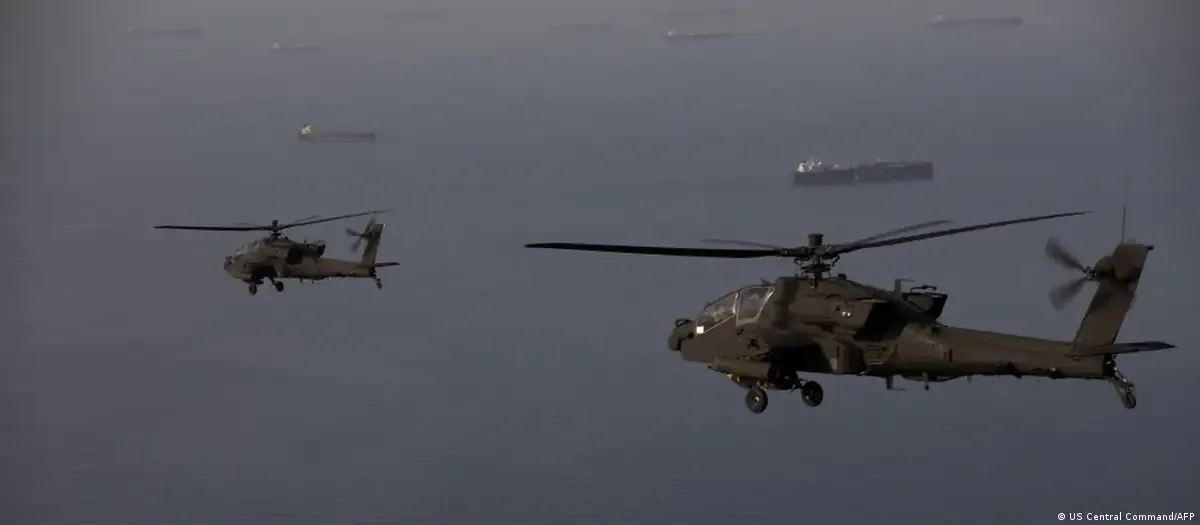
The United States and Iran exchanged missile strikes following an incident involving an American Apache helicopter that was lost near the Strait of Hormuz. The events marked a new escalation in the region and cast doubt on continued adherence to the ceasefire announced in early April, reports The Telegraph.
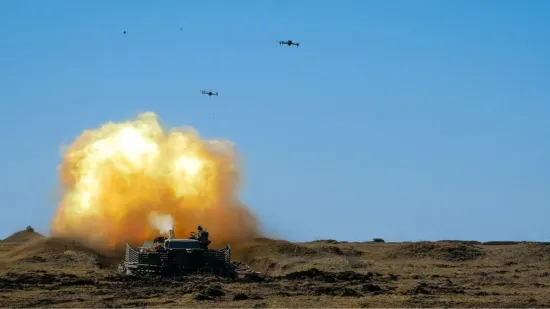
US Central Command reported that American forces carried out several waves of attacks on targets belonging to the Iranian regime. In Washington, these actions were described as acts of self-defence. This is the first large-scale US operation against Iran since the ceasefire was announced on 7 April.
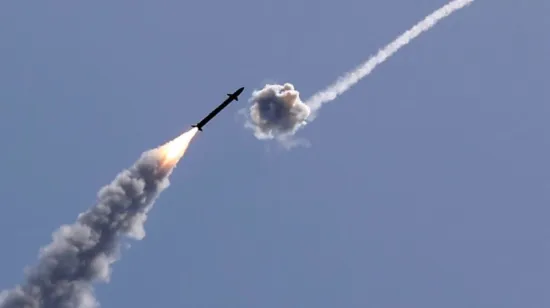
In response, on Wednesday night, Iran fired missiles at Al Azraq airbase in Jordan. Air raid sirens were also reported in Kuwait and Bahrain amid suspected drone attacks.
Prior to this, it was reported that a US AH-64 Apache helicopter had been lost. US President Donald Trump stated that he had received information that the helicopter had been shot down whilst patrolling over the Strait of Hormuz. According to him, neither pilot was injured, but the United States must respond to the attack.
Meanwhile, Axios reported that the helicopter may have collided with a drone, and the circumstances of the incident are still being investigated. The investigation is ongoing.
According to Iranian state media, explosions were heard in the Bender Abbas area, on Qeshm Island in the Strait of Hormuz, and in other parts of Hormozgan Province. At least six explosions were reported.
Following the US strikes, Donald Trump stated that the operation was a response to the events surrounding the helicopter and emphasised that the response had to be strong and decisive.
Both members of the Apache crew were rescued during a maritime operation. According to sources, they had been in the water for around two hours. A Corsair unmanned surface vessel was used for the evacuation, after which the pilots were flown by helicopter to a safe location.
Despite the exchange of fire, Donald Trump downplayed the significance of the Apache’s loss, stating that the incident was not a serious problem. At the same time, the new confrontation has become yet another test for the ceasefire, which has already been accompanied by mutual accusations and attacks on numerous occasions.
Earlier, the US president had expressed hope that a peace agreement between the parties could be reached within a few days, after which the Strait of Hormuz would be reopened to full shipping traffic.
Tensions in the region also persist due to renewed clashes between Israel and Iran. Following Israel’s attack on Lebanese territory, Tehran launched a retaliatory strike, and Israel struck Iranian targets again. This marked the first direct exchange of blows between Israel and Iran since the ceasefire was declared.
Against this backdrop, Donald Trump stated that he is continuing to work towards a diplomatic resolution of the conflict and believes it is possible to reach agreements on ceasing hostilities and preventing the development of nuclear weapons.