The US and Iran have agreed on the text of a preliminary agreement

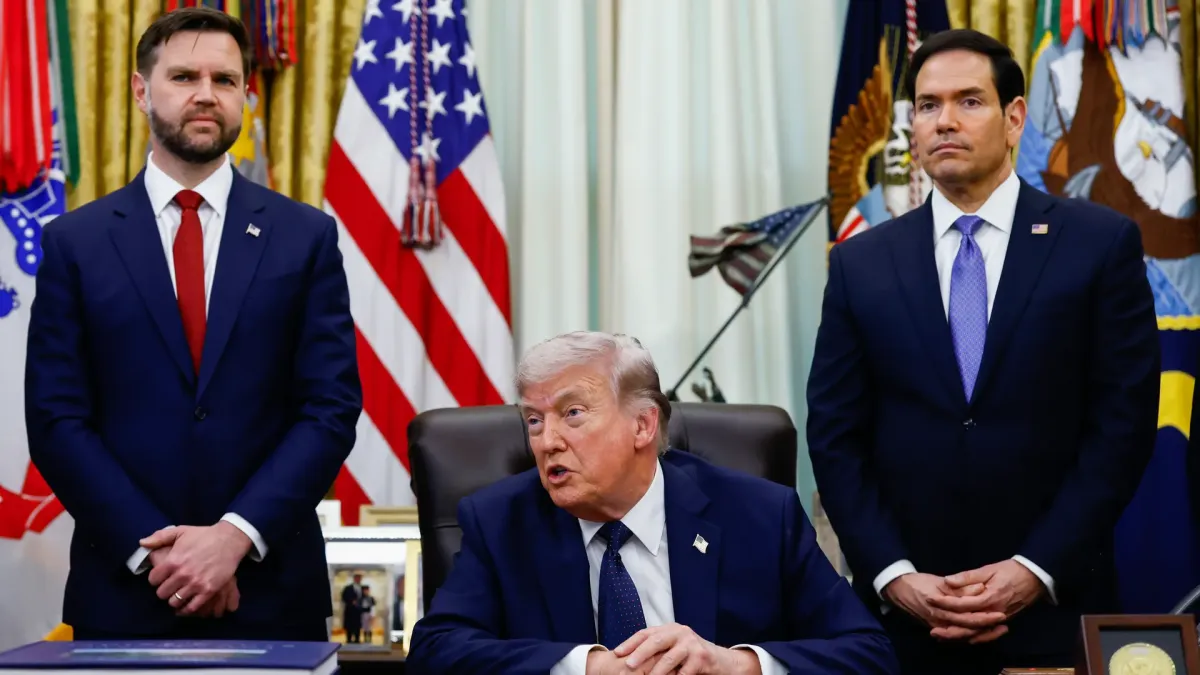
US President Donald Trump has stated that a memorandum of understanding between the United States and Iran could be signed in the near future. According to sources, the document provides for a 60-day extension of the ceasefire, including in Lebanon, as well as negotiations on Iran’s nuclear programme. This was reported by ThePublic, citing Axios.
A source from one of the mediating countries said that the parties had agreed on the text of the agreement, but the document still requires final approval. According to him, the agreement has already received high-level backing on the Iranian side, though Supreme Leader Mojtaba Khamenei’s final decision had not been confirmed as of Thursday evening.
Trump stated that the signing ceremony could take place as early as this coming weekend. At the same time, a representative of the Iranian Ministry of Foreign Affairs noted that Tehran had not yet made a final decision.
According to sources, a preliminary agreement was reached on Wednesday following hours of talks between the Qatari mediator Ali Al-Thawadi and Iran’s Foreign Minister Abbas Araghchi. During the consultations, Al-Tawadi was in frequent telephone contact with Trump’s special representatives Steve Witkoff and Jared Kushner.
It is reported that the news of the conclusion of the talks came as a surprise to Israeli Prime Minister Benjamin Netanyahu. According to sources, he had been trying to obtain further information through contacts in the US administration in recent days.
The document stipulates Iran’s commitment not to develop nuclear weapons and to resolve the issue of its stockpile of enriched uranium. A senior US official said that Trump had agreed to consider the option of diluting highly enriched uranium directly on Iranian territory under the supervision of United Nations inspectors.
At the same time, any practical steps regarding Iran’s nuclear programme are only possible after the conclusion of a separate, more detailed agreement. A source from the mediating country claims that the memorandum contains provisions on all key nuclear issues and meets the requirements of the United States.
A separate section of the document concerns the Strait of Hormuz. According to the draft agreement, shipping through the strait must be resumed immediately without the imposition of fees, and traffic volumes must return to pre-war levels within 30 days. In return, the US is to lift the blockade.
A temporary easing of sanctions is also envisaged, allowing Iran to export oil for 60 days. Further expansion of sanctions relief will depend on the implementation of the initial agreements and the progress of subsequent negotiations.
The issue of unfrozen Iranian assets abroad remains unresolved. Iran insists on receiving a portion of the funds immediately upon signing the document, whilst the US side proposes a phased release depending on the fulfilment of the agreement’s conditions.
According to sources, the US, Iran and Qatar have also discussed a mechanism for Tehran to access part of the frozen funds in Qatar for the purchase of humanitarian goods.
If the document is signed, it will be known as the ‘Islamabad Agreement’. Qatar and Pakistan are acting as mediators in the negotiations. A representative of one of the mediating countries said that the parties are currently finalising the details and the date of the signing ceremony.