Ukrainian strikes on bridges leading to Crimea are hampering preparations for Russian offensives

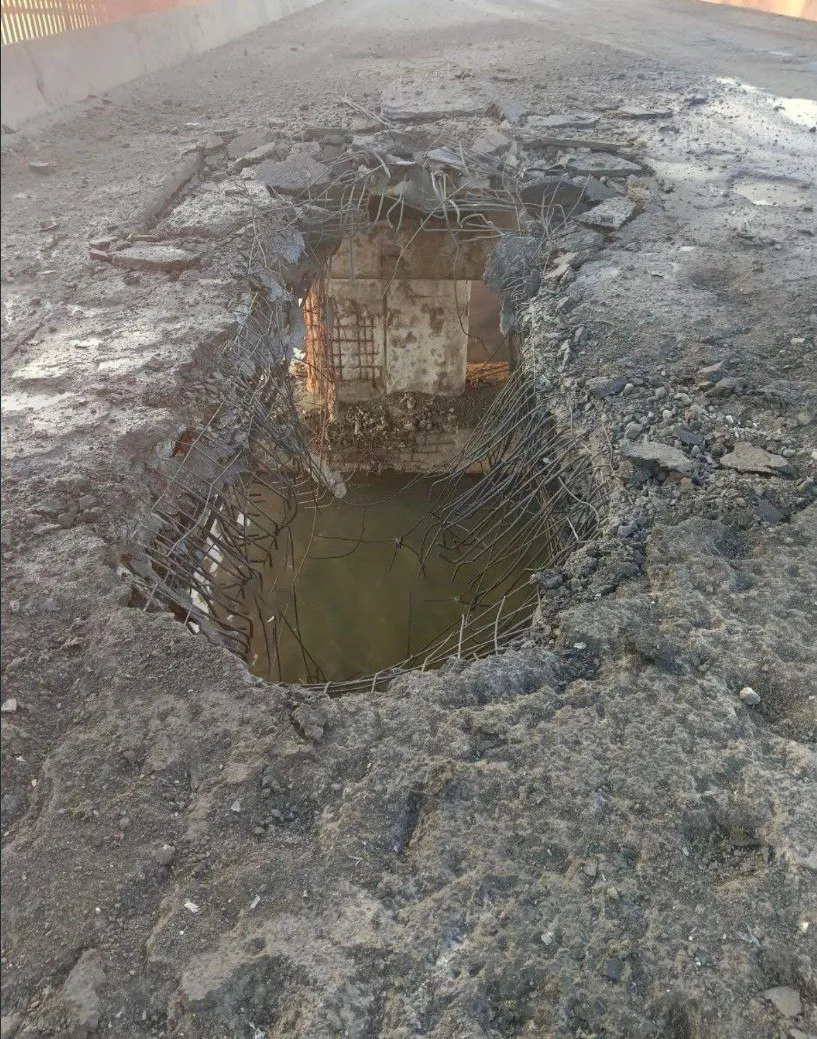
The Institute for the Study of War has reported that Ukrainian forces continue to block a number of bridges providing land links between the occupied territory of the Kherson region and the annexed Crimea. These are the routes used by Russian troops to supply and redeploy resources.
The day before, Vladimir Saldo, the Russian-appointed head of the occupation administration in the Kherson region, announced strikes on several bridges connecting the occupied part of the region with Crimea. These include the bridge across the North Crimean Canal near Preobrazhenka and Mirne, the Perekop-Armiansk road bridge, and the bridge in the Stavky area. All these crossings are located along the M-17 Armiansk-Oleshky road and pass over the North Crimean Canal.
The commander of the Ukrainian unit in the Kherson sector reported that the Defence Forces had struck a Russian logistics route via Armiansk. According to him, around 50 military trucks carrying fuel and ammunition were damaged or destroyed.
He noted that Russian troops were forced to reroute supplies via Armiansk following recent strikes on the Chongar Bridge and its subsequent closure. The military official also stated that the opportunity to strike this convoy was the result of previous strikes on Mariupol and the road to Berdiansk. Following these, the occupiers began supplying the Huliaipole sector via Crimea, rather than from the occupied part of Donetsk Oblast.
According to the ISW, geolocation and satellite imagery from 10 June recorded the effects of strikes on two bridges south of Henichesk and near Armiansk. At the same time, Russian monitoring sources claim that the strikes on the night of 10–11 June effectively cut off all land routes from the occupied Kherson region to Crimea and caused serious damage to the Chongar Bridge.
Analysts note that Ukrainian forces are intensifying their campaign of medium-range strikes against Russian military and logistics facilities in the occupied south of Ukraine. This is complicating the use of supply routes between south-western Russia and Crimea.
The Institute for the Study of War emphasised that further strikes on Russian logistics hubs could have a cascading effect on the situation at the front and complicate Russia’s preparations for offensive operations.
The report also notes that following the attacks on transport infrastructure, the occupying authorities in Crimea reported disruptions to fuel supplies to Sevastopol due to the inability of fuel tankers to enter the city. In addition, there is increased demand on the peninsula for essential goods, particularly salt, sugar, cereals and flour.