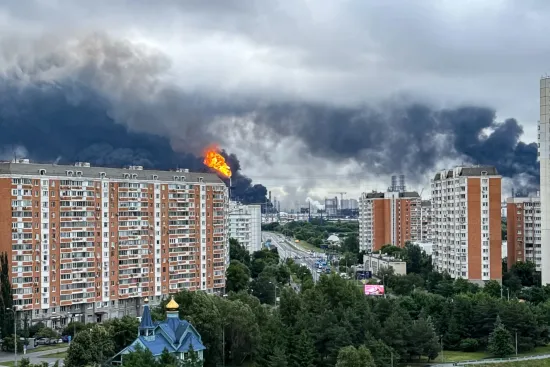
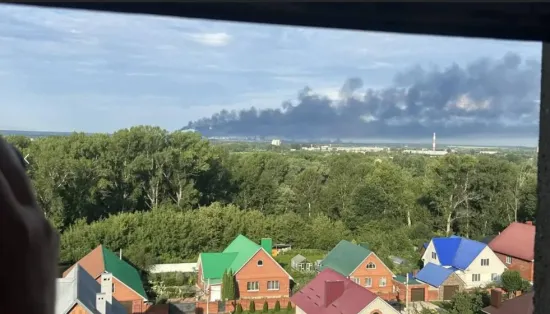
The US and Iran have exchanged strikes for the third night running following the escalation around the Strait of Hormuz

The United States and Iran have exchanged strikes for the third night running following the escalation of tensions around the Strait of Hormuz and the breakdown of previous ceasefire agreements, according to Reuters.
The Islamic Revolutionary Guard Corps stated that on Tuesday, Iranian ballistic missiles struck a US airbase in Jordan. Meanwhile, Jordan’s state news agency, citing the country’s armed forces, reported that the military had intercepted and shot down four missiles that had entered the country’s airspace from Iran.
In response, US Central Command, acting on the orders of President Donald Trump, continued a series of strikes against Iranian military targets. According to CENTCOM, the operation lasted around five hours and was the third consecutive night-time attack by US forces.
The US military reported that strikes were carried out on military facilities in Bushehr, Chah Bahari, Jask, Konarak, Abu Musi and Bandar Abbas. According to CENTCOM, coastal defence systems, missile and drone launchers, as well as maritime targets, were struck with precision-guided munitions.
Iranian media reported strikes on several cities across the country. According to their reports, at least four people were injured, and rescue operations are ongoing at the sites.
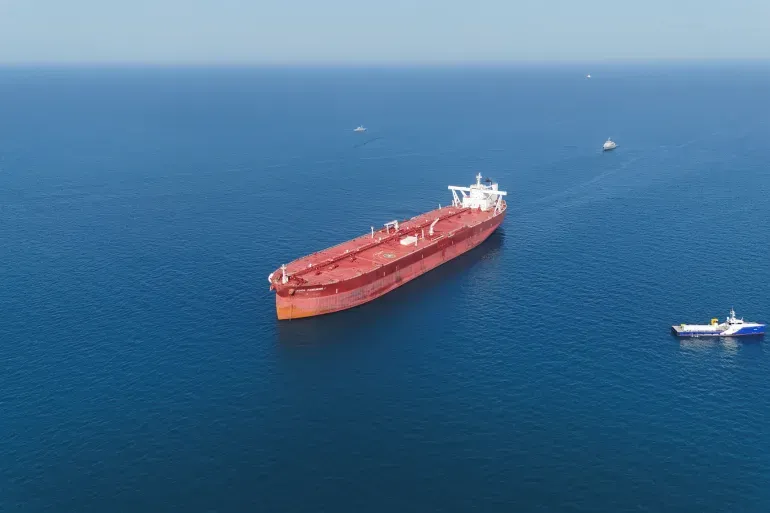
According to Al Jazeera, Iran also claimed to have carried out attacks on US military facilities in Kuwait, Bahrain and Jordan, as well as on two oil supertankers in the Strait of Hormuz.
The United Arab Emirates’ Ministry of Defence reported that two of the country’s oil tankers were struck by Iranian cruise missiles whilst passing through the southern lane of the Strait of Hormuz in Omani territorial waters. According to the ministry, one crew member was killed and several others were injured.
The escalation began after Iran announced the closure of the Strait of Hormuz. US President Donald Trump announced the resumption of the blockade on Iranian shipping and declared the introduction of a 20 per cent levy on cargo transported via this sea route.
In response, Iran’s Foreign Minister Abbas Araghchi stated that Tehran continues to regard itself as the guarantor of security in the Strait of Hormuz. Ibrahim Azizi, chairman of the Iranian Parliament’s National Security Committee, announced the tabling of a bill on strategic measures in the interests of the security and sustainable development of the Strait of Hormuz and the Persian Gulf.
Against the backdrop of this new escalation, global oil prices have continued to rise, whilst the prospects for a long-term cessation of hostilities remain uncertain.