A split is brewing within Spain’s far-right ranks, and their leader is being accused of Stalinism

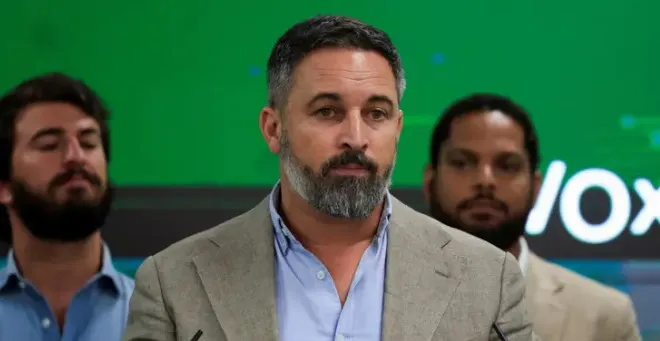
An internal power struggle has erupted within the ranks of the Spanish far-right party Vox. Its senior figures are publicly arguing over a “Stalinist” cult of leadership that has “taken hold” of the party at the height of its popularity.
This is reported in a Euractiv article.
The internal political crisis came to the surface following Vox’s rapid rise in popularity, which followed record results in regional elections.
Now, a year ahead of the general election, polls suggest Vox could secure 18% of the vote – enough to form a coalition with the main conservative People’s Party (PP).
But as the rift becomes public, doubts are growing about the party’s future and its ability to maintain political momentum.
The biggest point of contention relates to allegations of a lack of transparency regarding Vox’s party finances, which have been called into question in recent years.
The party’s apparent lack of financial transparency has come under sharp criticism from former senior party officials.
Furthermore, in early March, Javier Ortega Smith, one of Vox’s founders, was expelled from the party for refusing to step down as spokesperson for the Madrid branch – a position to which he had been demoted following sharp disagreements with the party’s leader, Santiago Abascal.
Smith is the latest in a long line of influential party figures at national and regional levels who have either been dismissed or have resigned, acknowledging differences with Santiago Abascal’s inner circle.
Dissatisfaction with the party’s more “hardline” faction, embodied by Abascal and senior figures such as MEP Jorge Buksade, has added fuel to the fire of public discord: many have condemned Vox’s decision to join the “Patriots” group in the European Parliament in 2024 and leave Giorgia Meloni’s ECR group.
In light of this situation, former senior members of the Vox party have called for an extraordinary congress to be convened to expose alleged irregularities in the actions of the party’s current leadership.
The manifesto criticises the concentration of power in the hands of Santiago Abascal and his inner circle, the absence of independent voices, and the lack of effective internal control mechanisms, which, according to the signatories, indicates a significant departure from the party’s more ‘ascetic’ founding values.
The signatories claim that, in order to silence dissenting voices, the party has gradually replaced all experts and specialists with, as a rule, younger, more pliable and less experienced individuals.
“Tension has been building for years, but it is gradually coming to the surface and exhausting our patience; the party is turning into a Stalinist one,” said one of the signatories of the manifesto, criticising the cult of personality surrounding Abascal.