Ukraine has proposed an Easter truce for 2026: what to expect from Russia


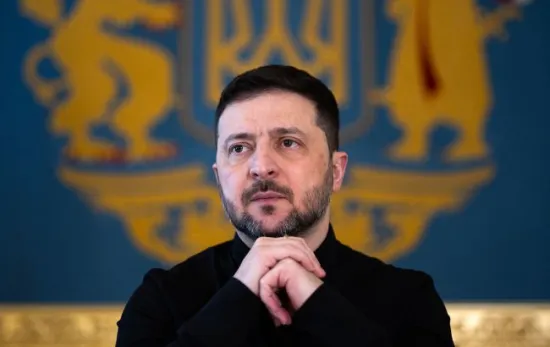
On Monday, 30 March 2026, President Volodymyr Zelenskyy stated that Ukraine is ready for an Easter ceasefire and an energy truce.
This year, Orthodox Christians celebrate Easter on 12 April.
Easter 2026 truce: what is known
“We are ready for a ceasefire over the Easter holidays. In my view, to be honest, decent people who respect life talk about a ceasefire and an end to the war for good, not just for a few days. But, of course, we are ready for any compromises, except those involving our dignity and sovereignty,” said the head of state.
According to Zelenskyy, Ukraine supports any format of a ceasefire and, in general, an end to the war, “but only if the state’s dignity and independence are not compromised”.
The President emphasised that Ukraine is ready to discuss any ceasefire — complete, energy-related, logistical, on land, in the air, at sea.
“A complete ceasefire — so that neither missiles nor drones fly. No strikes on infrastructure. We have proposed all of this. And we are open to it. If the Russians are ready — please, we are ready. Let them propose any timeframe — we are ready to resolve this issue,” said Zelenskyy.
Who stands to gain from an Easter truce
Zelenskyy was asked whether Russia might use the Easter truce to consolidate its positions.
The President expressed confidence that “in two or three days they won’t be able to strengthen anything”, recalling statements by Russian propaganda in February 2022 that the occupiers would be able to “take Kyiv in three days”.
How the Easter truce went in 2025
In 2025, on Easter, Vladimir Putin declared a ceasefire. Ukraine agreed to it, warning that it would respond to the occupiers’ actions.
However, Russian shelling continued throughout the holiday — targeting both Ukrainian Armed Forces positions on the front line and peaceful Ukrainian towns.
The Russian army carried out its most active operations on Easter, using heavy weaponry, in the Pokrovsk and Siverskyi sectors.
On Easter Sunday, Russian troops violated the ceasefire 2,935 times. There were 96 Russian assaults, 1,882 shellings of our positions — including 812 using heavy weapons — and Russian FPV drones were deployed more than 950 times.
Also, a week before Easter, Russia launched a missile strike on the centre of Sumy, killing 35 people.
And immediately after Easter, Russia struck Kyiv, killing 13 people.
The Kremlin reacted cynically to the shelling of Kyiv. Putin’s press secretary, Dmitry Peskov, stated that the ‘Easter truce’ had ended and that the Russian military would ‘continue to carry out combat missions’.
Following the massive strike on a residential area of Kyiv, US President Donald Trump once again called on Russian dictator Vladimir Putin to conclude a peace agreement.
“I am not happy with the Russian strikes on Kyiv. They are unnecessary and very ill-timed. Vladimir, stop! 5,000 soldiers are dying every week. Let’s reach a peace agreement!” Trump wrote at the time.
Meanwhile, French Foreign Minister Jean-Noël Barrot stated that the so-called ‘Easter truce’ announced by Putin was a public relations ploy to win the trust of US President Donald Trump.
Russian attacks on Easter in 2022, 2023 and 2024
On Easter in 2022, Russia fired missiles at Kremenchuk. Children aged five and 14 were also killed in the shelling of the Donetsk region.
In 2023, the Russians shelled the Preobrazhensky Cathedral of the Ukrainian Orthodox Church in Nikopol, Dnipropetrovsk Oblast, with heavy artillery, resulting in two people being injured.
On the same day, the Russians launched a massive attack on the Zaporizhzhia region, where a local church, in which no service was being held, was damaged. The occupiers also struck the Mykolaiv region, where two teenagers were killed.
On Easter 2024, which fell on 5 May, Russian forces launched two missile strikes and 100 air strikes against Ukraine. They also carried out 57 attacks using multiple launch rocket systems.
At that time, Russia struck Kharkiv, Donetsk, Poltava and other regions.
In particular, a guided aerial bomb strike on the centre of Kharkiv damaged 20 buildings and vehicles, injuring 15 people. The bomb was equipped with a special module that allowed it to fly after launch from an area beyond the reach of Ukrainian air defences.