Viktor Orbán’s 16-year era in Hungary is coming to an end

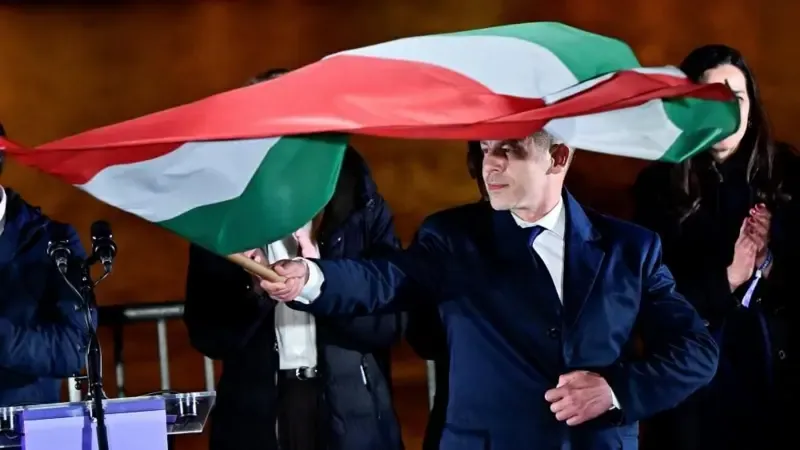
This is according to BBC News. The swearing-in ceremony will take place against the backdrop of large-scale events in central Budapest. The organisers have described them as a “celebration of freedom and democracy”. Magyar himself had previously called on citizens to pass through the “gate of regime change”.
“Tisza” secures a constitutional majority
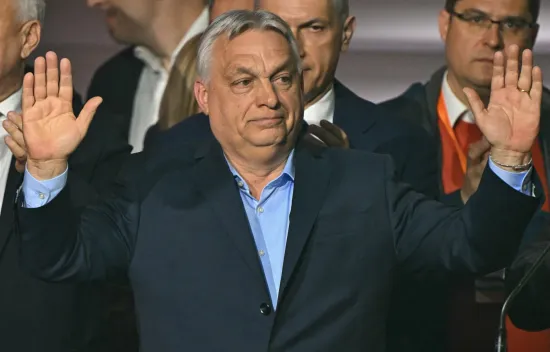
Péter Magyar’s “Tisza” party, founded just two years ago, secured 141 seats in parliament out of a possible 199. In the previous parliamentary term, the party had no representation in the legislature at all. For Viktor Orbán’s “Fidesz” party, these elections were the worst in recent years. Its representation in parliament has fallen from 135 to 52 MPs. Orbán himself, along with several key figures in his party, decided not to take up their parliamentary seats. Their future political plans remain unknown at present. The party has merely stated its intention to “rebuild the national cause”.
The new government is preparing for a difficult economic situation
Representatives of the new government are already stating that the country is in a difficult financial position. The future Minister of Social Policy and Culture, Zoltán Tárr, told the BBC that the government is effectively starting work “on the ruins of the previous one”. According to him, Magyar’s team does not yet have a complete picture of the economic situation, but expects serious difficulties. The report notes that over recent months, the Orbán government has significantly increased public spending, whilst for years government contracts and budget funds have gone to companies close to Fidesz. The budget deficit has already almost reached the annual target.
Mátyás promises a “system change”
Péter Magyar has repeatedly stated that this is not merely about a change of government, but a complete overhaul of the country’s political system. The new administration is attempting to distance itself from the practices of the previous leadership. For instance, businessman György Weberer, who switched from Fidesz to Tisza shortly before the election, told journalists that he had donated 280,000 euros to the party. According to him, Magyar returned the money. The appointment of Mádár’s brother-in-law, Márton Mellétei-Barna, as Minister of Justice caused a particular stir. Following a wave of criticism on social media, he announced his withdrawal from the post, stating that he did not wish to cast “even the slightest shadow” over the transition period.
Anti-corruption investigations have intensified in Hungary
The new government insists it has no intention of persecuting political opponents, but promises to respond to potential financial crimes. To this end, the authorities plan to establish a separate “stolen assets recovery office”. Zoltán Tár stated that this is not about a “guillotine”, but about investigations conducted in accordance with the principles of the rule of law. According to the BBC, following the elections in Hungary, the number of criminal proceedings and investigations into individuals linked to the previous government has begun to rise. A source close to the public prosecutor’s office stated that law enforcement agencies had previously been reluctant to gather evidence, but that people have now begun approaching investigators of their own accord. One of the figures under investigation is media manager Gyula Balasi, whose companies for years secured major state contracts and ran Fidesz information campaigns targeting migrants, George Soros, Volodymyr Zelenskyy and Péter Magyar himself. Last week, Balási stated that he was prepared to hand over his companies to the state, although he denied any wrongdoing. Some of his companies’ accounts have already been frozen. The investigations also concern the Hungarian National Cultural Fund and the Municipal Civil Fund, with a budget of €64.9 million. The investigation is looking into information regarding the possible funding of Fidesz candidates.
The new government will have to negotiate with the EU
One of the new government’s main tasks will be to unblock €17 billion in European Union funds that the European Commission froze for the Orbán government. According to sources in Brussels, Hungary may lose part of this money permanently. Furthermore, the new government must decide on its stance regarding the EU Migration Pact, which the Orbán government previously opposed vehemently. Currently, Hungary continues to pay a daily fine of €1 million for failing to comply with EU court rulings on the treatment of migrants.
Position on Ukraine and Russia
Opinion polls suggest that ‘Tisza’ voters, like ‘Fidesz’ supporters, are wary of illegal migration and Ukraine’s potential accession to the EU. Péter Magyar himself, like Viktor Orbán before him, acknowledges that Hungary remains dependent on Russian oil and gas supplies. At the same time, representatives of the new government speak of the need to restore partnership relations with the European Union.
“We have not come to rule. We have come to serve the country,” said Zoltán Tár.
Follow us on Telegram