The death of Ali Larijani could complicate efforts to bring the war between Iran, the US and Israel to an end

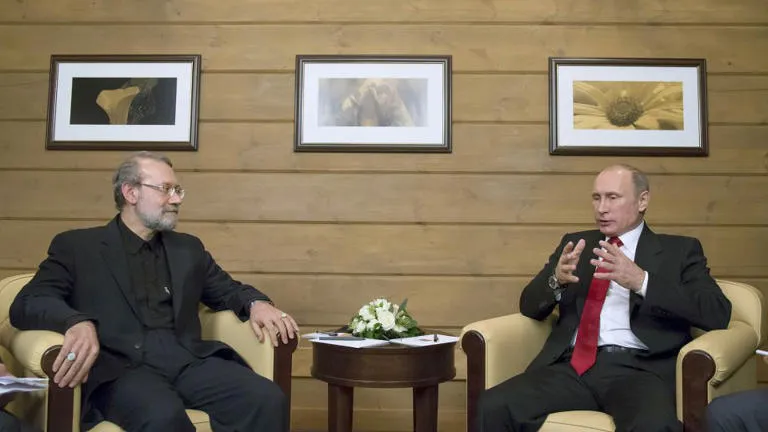
Ali Larijani, who served as secretary of Iran’s Supreme National Security Council and was regarded as the country’s de facto leader, was one of the chief architects of Iran’s military and diplomatic strategy following the outbreak of the conflict with the US and Israel on 28 February, according to CNN.
At 67, he became a public symbol of the Iranian regime. Despite remaining one of Israel’s primary targets, Larijani took part in a pro-government rally in Tehran last week.
During the first two weeks of the war, he was active on social media, addressing US President Donald Trump in particular.
On Monday, he called on Muslims in the Persian Gulf to reflect on the region’s future, stating: “You know that America feels no loyalty towards you, and Israel is your enemy. Stop for a moment and think about yourselves and the future of the region.”
Analysts believe that his death deprives the Iranian leadership of one of its most influential figures and may complicate any negotiations aimed at ending the war. According to observers, over the past few weeks, particularly following the death of Supreme Leader Ali Khamenei, Larijani had effectively been acting as the country’s de facto leader.
According to Hamid Reza Azizi, a research fellow at the German Institute for International and Security Affairs, Larijani was an “insider” who had been at the heart of the political system for decades and enjoyed authority among various elite groups.
He noted that the Islamic Republic is capable of weathering the loss of individual figures, but it is difficult to replace figures with such diverse experience.
Israeli strikes in recent months have already led to the deaths of many Iranian military commanders and security officials, but the loss of Larijani, who headed the National Security Council, is of a different magnitude.
According to a source familiar with the discussions, last September he was considered by the US and Israel as one of the possible transitional candidates. However, following his involvement in the suppression of mass protests in January 2025, which led to the deaths of thousands of people, his harsh statements regarding the US and Israel, and his active role in military planning, he became a target for Israel in early February.
Experts note that his death will not have a significant impact on the immediate course of hostilities, but will complicate the political management of the conflict due to his experience in shaping political messages and his international contacts.
Iranian President Masoud Pezeshkiyan, who is considered a moderate politician, has found himself in a secondary role since the start of the conflict and, according to analysts, will be unable to unite the elites for negotiations on ending the war without a figure of Larijani’s stature.
Ali Larijani held key positions in the Islamic Revolutionary Guard Corps, the security apparatus, state media and parliament for nearly five decades. Iran’s Supreme National Security Council paid tribute to his long career, stating that he had worked for the good of the country until the very end of his life and had called for unity in the face of external threats.
He was a commander in the Islamic Revolutionary Guard Corps during the war with Iraq in the 1980s, later headed state television, and was also Iran’s chief negotiator on nuclear issues. Western diplomats who negotiated with him described him as experienced and competent.
In 2004, he became Ali Khamenei’s security adviser and subsequently headed Iran’s parliament for 12 years, until 2020.
Following last year’s conflict with Israel, Larijani once again strengthened his position by taking the helm of the National Security Council. He also became one of Iran’s leading international representatives, making visits to Moscow, Beirut, Abu Dhabi and Oman, which acted as a mediator in the negotiations between Washington and Tehran.
Larijani also served as Iran’s chief nuclear negotiator and took part in talks with Russia and China.
His influence within the system was bolstered by family ties. He was married to the daughter of a prominent Ayatollah; his brother Sadeq is an Ayatollah and former head of Iran’s judiciary, whilst another brother, Mohammad-Javad Larijani, also held government posts.
Larijani also had an academic career. He studied at Sharif University of Technology, obtained a PhD in philosophy from the University of Tehran and researched the works of Immanuel Kant.
In his most recent publications, he stated that Iran was prepared for a protracted conflict. “Unlike the United States, [Iran] has prepared for a protracted war,” he wrote following the start of the US military operation.
Following his death, state media reported that 71-year-old former commander of the Islamic Revolutionary Guard Corps, Mohsen Rezaei, had become senior military adviser to the new Supreme Leader, Mojtaba Khamenei.
Ali Larijani was killed in an airstrike, along with his son and bodyguards.
Along with the 67-year-old senior official, his son Morteza and several bodyguards were killed.
In a statement, Iran’s Supreme National Security Council described Larijani as a ‘martyr’ who had dedicated his life to serving Iran and the Islamic Revolution.