More than ten oil tankers hit in the Strait of Hormuz after warnings from Iran

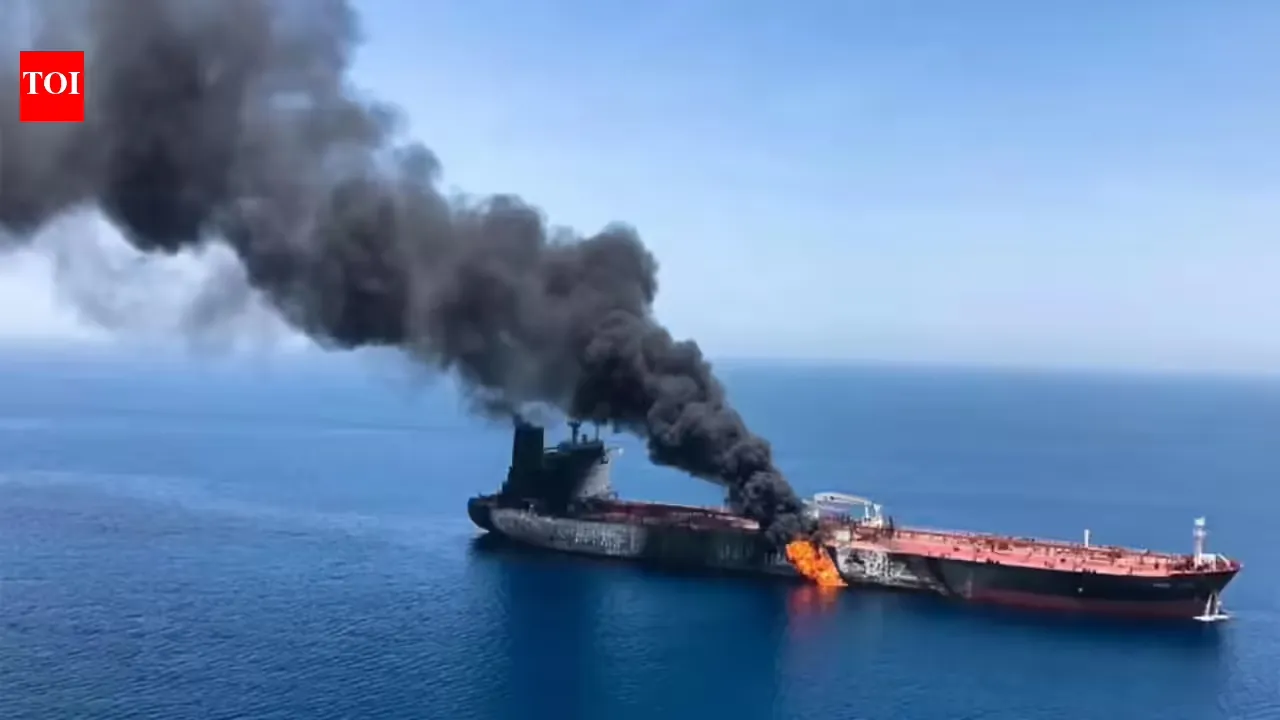
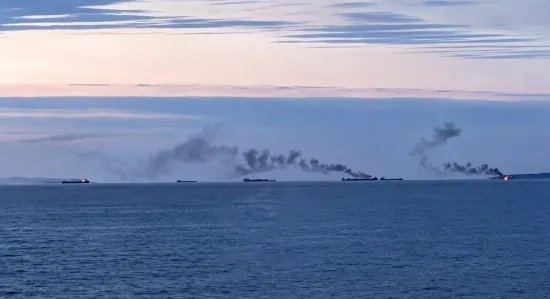
Deputy Commander of the Islamic Revolutionary Guard Corps Navy Mohammad Akbarzadeh said that more than ten oil tankers were hit in the Strait of Hormuz after warnings about the danger of navigation.
According to him, the ships ignored the warnings and continued to move through the strait. After repeated warnings from the IRGC Navy, the tankers that ignored them were hit by various shells and caught fire.
Akbarzadeh said that the military had sent a message in advance to the global navigation network about the risk of missile or drone strikes and recommended that ships not enter the area.
Colonel Mohammad Akbarzadeh, political deputy of the Islamic Revolutionary Guard Corps Navy, made these statements on Wednesday during the funeral ceremony for IRGC Navy servicemen in Babol. He noted that the IRGC Navy had issued a message to the international shipping network declaring the entire length of the Strait of Hormuz a war zone.
The message warned of possible damage to ships and recommended that they not pass through the area.
Akbarzadeh said the attacks on tankers had affected global oil prices and had a significant impact on the economies of various countries, including the United States and European Union member states. He also referred to estimates by energy experts who believe that if the situation continues for three weeks, the global economy could face a serious crisis.
He also said that Iran's actions were a response to "the stupidity of Trump and Netanyahu," adding that Iran has historically sought de-escalation and security in the region, but the war started by the United States and Israel has disrupted global economic stability.
According to Akbarzadeh, the Strait of Hormuz is under the complete control of the Iranian navy.
Earlier, on 2 March, IRGC commander General Ebrahim Jabari said that any tanker attempting to pass through the Strait of Hormuz could be "burned".
The Strait of Hormuz connects the Persian Gulf with the Gulf of Oman and further with the Indian Ocean. Approximately one-fifth of the world's oil exports pass through it.
Up to 80 per cent of this volume is destined for Asian countries, including India, China and Japan. Japan receives about 90 per cent of its oil from the Middle East.
According to estimates based on data from maritime traffic tracking services, several thousand tankers and cargo ships are waiting in the Red Sea and the Persian Gulf for an opportunity to pass through the Strait of Hormuz.
According to S&P Global Commodities at Sea, only two tankers passed through the strait on 2 March. The day before, on 1 March, five ships carrying oil and chemical cargoes passed through it.
IRGC Commander Advisor Ebrahim Jabari said that due to the closure of the Strait of Hormuz, oil prices could reach $200 per barrel.
The International Energy Agency has announced its readiness to help stabilise the global oil market amid the conflict surrounding Iran.
Japanese Prime Minister Sanae Takaichi said that the government is developing emergency measures in case of possible disruptions to energy supplies from the Persian Gulf. About 30 per cent of Japan's electricity is generated by imported liquefied natural gas.
Yuki Tonago, an expert at the Research Institute of Japan, said in an interview with NHK that a prolonged blockade of the Strait of Hormuz and oil supplies through the Red Sea could lead to a decline in Japan's gross domestic product of about 3 per cent.
Indian oil refineries have about 25 days of oil reserves. Some supplies continue to come from regions not connected to the Strait of Hormuz, allowing reserves to be partially replenished.
India's daily oil demand is about 5.6 million barrels.
Kazakhstan's Deputy Prime Minister and Minister of National Economy Serik Zhumangarin said the country does not expect any disruptions to oil supplies amid the conflict involving the US, Israel and Iran.
Sources: Bernama, Fars News Agency, Islam Times