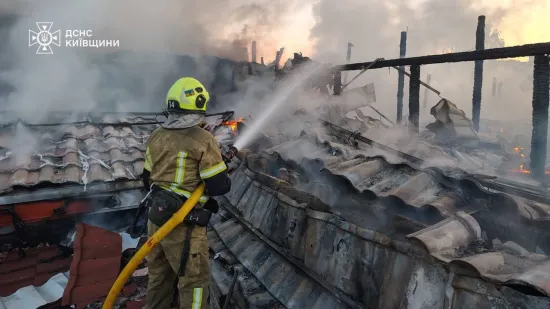
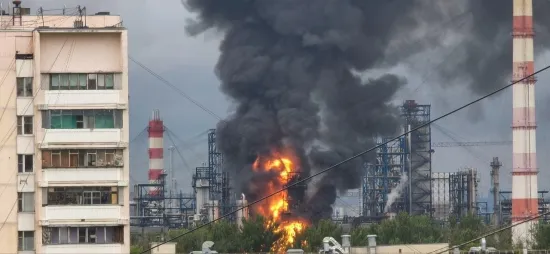
Since the start of the full-scale war, the Russians have attacked rescue workers more than 400 times; 43 of them have been killed

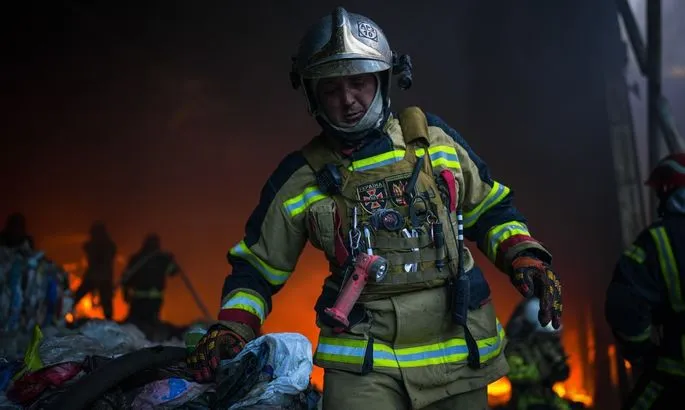
This is stated in a report by the human rights organisation Truth Hounds.
Furthermore, since 22 February 2022, 248 pieces of specialist equipment and 138 fire and rescue units have been damaged or destroyed by Russian attacks.
At the same time, official figures from the State Emergency Service for the same period are significantly higher: 111 dead, 550 wounded, 617 units of equipment damaged or destroyed, and 449 fire stations and other facilities affected. As Truth Hounds notes, this discrepancy suggests that the actual scale of the attacks may exceed that recorded in open sources.
The highest number of attacks on rescue workers was recorded in frontline regions — specifically in the Donetsk, Kharkiv, Dnipropetrovsk and Kherson regions. However, strikes also occurred in settlements far from the front line.
The number of such attacks increased over time, reaching its peak in 2025. The organisation emphasises that these attacks are systematic, follow an internal logic, and therefore cannot be considered collateral damage of hostilities.
The report pays particular attention to the changing nature of the attacks. Drones have become the primary tool for strikes against rescue workers: in 2025, 118 such attacks were recorded — almost three times more than in 2024, and more than 15 times more than in 2023. The use of drones with live video feeds allows operators to see the target in real time, which casts doubt on the accidental nature of strikes against rescue workers, who bear clear identifying markings.
One of the most common tactics has been repeated attacks – where, after an initial strike on a target, a second strike is carried out whilst rescue workers are still at work. Truth Hounds documented 200 such incidents and were able to verify 92 of them. At least 20 rescue workers were killed in these attacks, 108 were injured, and 76 pieces of equipment were damaged or destroyed.
Another trend is strikes on fire and rescue units. Truth Hounds recorded 138 instances of such facilities being damaged or destroyed. In the majority of the incidents analysed, there were no military targets nearby.
The report emphasises that such actions may constitute war crimes — specifically attacks on civilians or civilian objects under international humanitarian law and the Rome Statute. Furthermore, certain attacks may be regarded as acts of terrorising the civilian population.
Due to the constant threat of shelling, rescue workers are forced to change routes, suspend operations, work from shelters and use additional protective measures, including drone detectors and armoured vehicles. This complicates and slows down rescue operations, as well as increasing the risks for the civilian population, who are left without assistance for longer.
Follow us on Telegram