Military pay in 2026 has been put on hold: Friz explains why

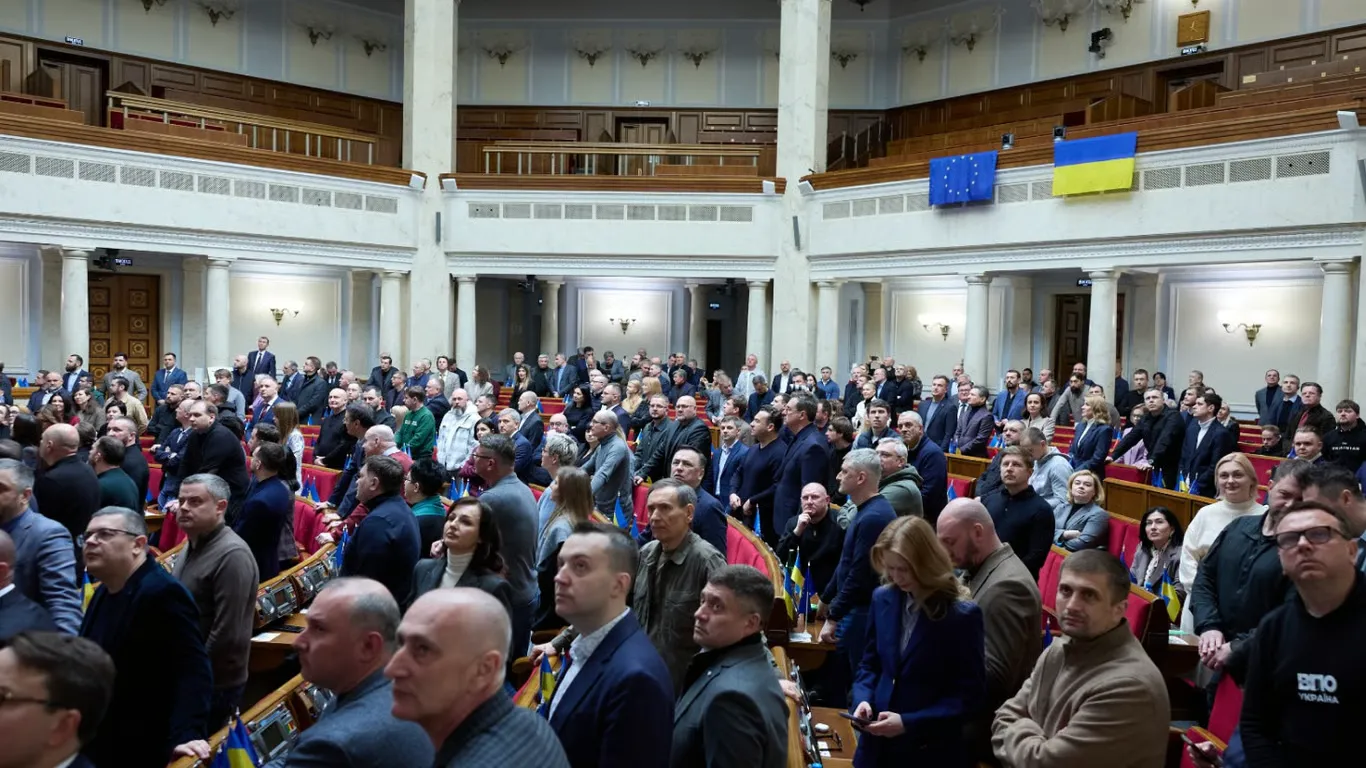
Iryna Friz, a member of the Committee on National Security, Defence and Intelligence, made these remarks on air; similar criticisms of budgetary and legislative policies regarding payments to military personnel had previously been voiced both in the media and in parliament.
Friz claims that the first problem is technical and financial. According to her, current legislation does not distinguish between the issue of increasing pay for serving military personnel and the recalculation of payments to military pensioners. It is precisely for this reason, in her view, that any attempt to raise salaries for those currently serving immediately runs up against the need to find significantly more funding.
The second reason cited by the MP is political. Friz stated that the National Security Committee does not consider legislative initiatives from MPs unless they have the support of the security and defence sector, primarily the Ministry of Defence. According to her, the opposition has already registered a number of bills that address not only salary increases to account for inflation since the start of the full-scale war, but also the establishment of clear terms of service; however, these initiatives do not reach the floor of the parliament for consideration.
In a broader context, this statement relates to the already adopted 2026 budget. Radio Liberty explicitly stated that the state budget for 2026 does not provide for a general pay rise for military personnel. The publication also noted that the minimum pay in the army remains at around 20,000 hryvnias excluding ‘combat pay’, and that this amount has not been revised since February 2023.
LB.ua made a similar point during the budget’s adoption. The publication reported that parliament had approved the 2026 budget without a pay rise for military personnel, whilst the opposition publicly criticised the government for ignoring amendments to increase payments to defenders. The same report quoted Yaroslav Zheleznyak as saying that even without a new increase, there is a shortfall of at least 180 billion hryvnias in military funding for 2026.
At the same time, the Radio Free Europe report also includes the Ministry of Defence’s position. Minister Denys Shmyhal had previously stated that the 2026 budget does not allocate funds for a general increase in pay, but does provide for the launch of new contracts with better financial terms. According to this logic, the increase in pay should not come through a one-off rise in the basic salary for everyone, but through a new contractual model. In this situation
, Friz is calling on the government not to limit itself to talk, but either to swiftly introduce its own legislative changes or to support the draft legislation already tabled by MPs. In her view, the delay in raising salaries and establishing clear terms of service not only undermines social justice for military personnel but also directly affects mobilisation. Formally, this is a political assessment by an opposition MP, but it is based on a confirmed fact: the 2026 budget did indeed fail to deliver a systematic increase in pay for all military personnel.
As a reminder, in 2026, combatant status in Ukraine can be obtained in two ways: automatically via the Unified State Register of War Veterans, or by submitting an application and supporting documents to the relevant commission. The automatic mechanism applies to serving military personnel, whilst volunteers who have been discharged from service and those whose details have not been entered into the register will have to go through the procedure separately.