Attacks on Kyiv: what lies behind the Russian war machine

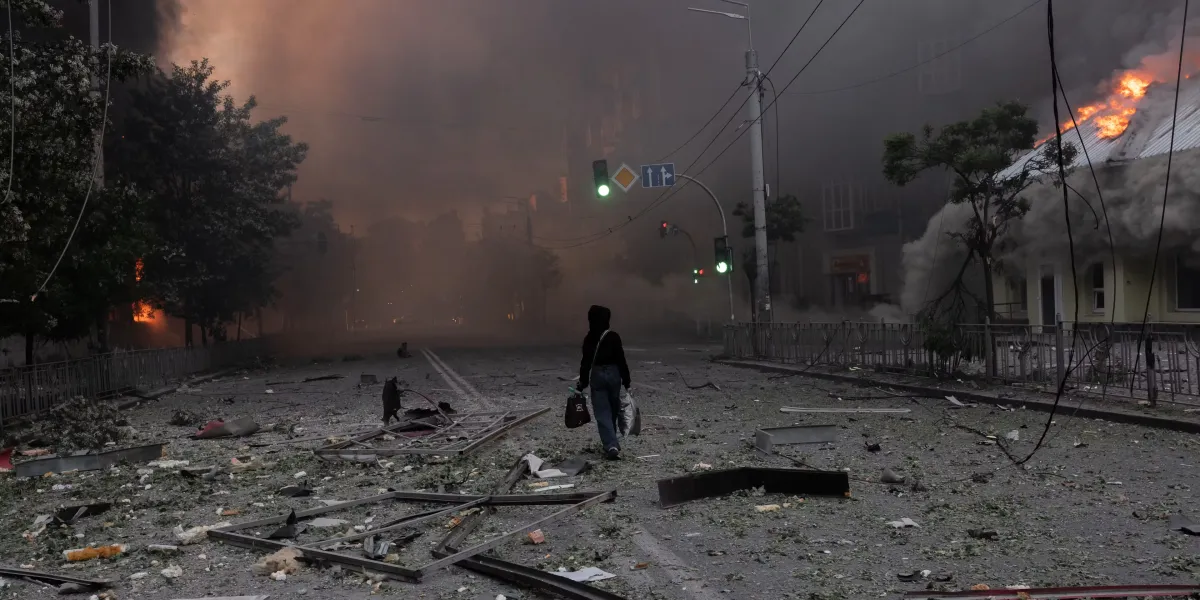
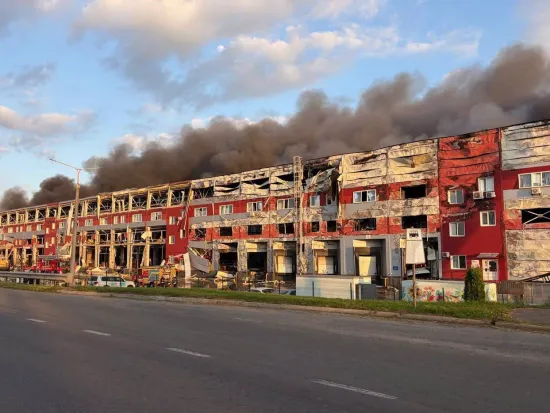
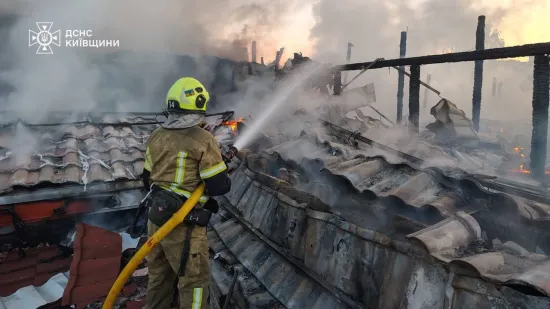
On the night of 23–24 May, Kyiv came under a large-scale attack involving ballistic and cruise missiles, as well as long-range Shahed-type drones. The shelling lasted from 01:00 to 05:00.
Residents of the capital witnessed numerous anti-aircraft missile launches from various parts of the city. In most cases, the missiles were fired in bursts of two or three at short intervals. This was followed by powerful explosions, reports Le Monde.
At least four people were killed in the attack, and over 100 were injured.
Russia launches between 100 and 200 attack drones at Ukraine every day. At the same time, large-scale combined strikes involving nearly a thousand drones and missiles take place once or several times a month.
Preparing such attacks requires complex coordination between various units of the Russian army. Strategic aviation, the Black Sea Fleet, the Caspian Flotilla, missile forces and artillery are all involved in the operations.
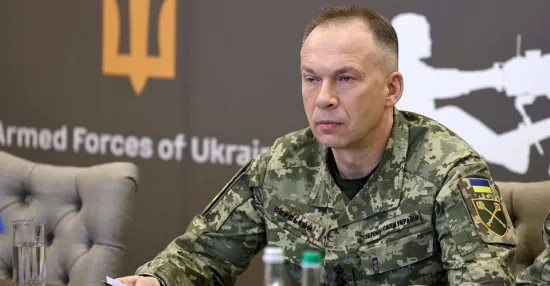
Spokesperson for the Ukrainian Air Force Yuriy Ignat stated that “several tens of thousands of Russian troops” were involved in the recent massive attacks.
According to him, preparations begin with the deployment of cruise missiles, the arming of aircraft and the redeployment of aircraft to operational airfields. Such operations can take several days.
How Russia prepares combined strikes
Ruslan, a representative of the Ukrainian air defence, said that the Ukrainian military knew about the attack on 14 May six days before it began. On that occasion, Russia used 1,560 drones and missiles over a 36-hour period.
According to him, three hours before the strike, the Ukrainian side already had a clear understanding of the quantity and types of munitions.
According to military expert Oleksandr Kovalenko, the decision to carry out massive combined strikes is taken by Russian President Vladimir Putin.
Operational planning is carried out by the Chief of the General Staff of the Russian Federation, Valery Gerasimov, and Defence Minister Andrei Belousov. Commanders of the missile forces, strategic aviation and the navy are also involved in the process.
The strikes are coordinated by the commands of the Engels, Olenya and Shaykovka airfields, as well as the Black Sea Fleet and the Caspian Flotilla.
According to Kovalenko, the main factor influencing the frequency of attacks remains the rate of weapons production at Russian factories.
Factories in Yelabuga and Izhevsk produce approximately 130 Dalra drones and the same number of Gerber decoy drones every day. It takes Russia at least a week to accumulate the approximately 500 drones required for a massive attack.
Russian factories also produce, on average, one 3M14 Kalibr missile, two or three Kh-101 missiles and two or three 9M723 Iskander ballistic missiles every day.
The consequences of Ukrainian strikes on Russian logistics
Kovalenko noted that Russia’s capabilities had been affected by Ukrainian attacks on Russian military infrastructure, in particular Operation ‘Spider’ in June 2025, during which dozens of Russian aircraft were destroyed.
According to him, Russia subsequently began using Tu-160 aircraft for strikes against Ukraine, as it had only five or six Tu-95MS aircraft remaining capable of launching cruise missiles.
The capabilities of ships and submarines capable of launching Kalibr missiles also remain limited.
As a result, Russia is increasingly relying on mobile Iskander ground-based systems, which are more difficult to detect and destroy.
According to Ruslan, a representative of the Ukrainian air defence forces, the Russian military is constantly changing the flight paths of drones and missiles and attempting to identify gaps in the Ukrainian air defence system.
To this end, they use reconnaissance drones and sometimes carry out simulated attacks to trigger Ukrainian radars.
Another tactic involves flying near the borders with Moldova, Romania, Poland and Belarus, which complicates the work of Ukrainian air defence due to the risk of international incidents.
Oleg Katkov, editor-in-chief of Defense Express, stated that no European country is currently prepared for attacks on this scale.
According to him, Russia produces around 60 Iskander missiles and 10 Kinzhal aeroballistic missiles every month.
By comparison, the US produces only 56 PAC-3 anti-missile missiles per month, and two such missiles are required to intercept a single Iskander or Kinzhal missile.