Will Russia be able to continue the war against Ukraine for long?

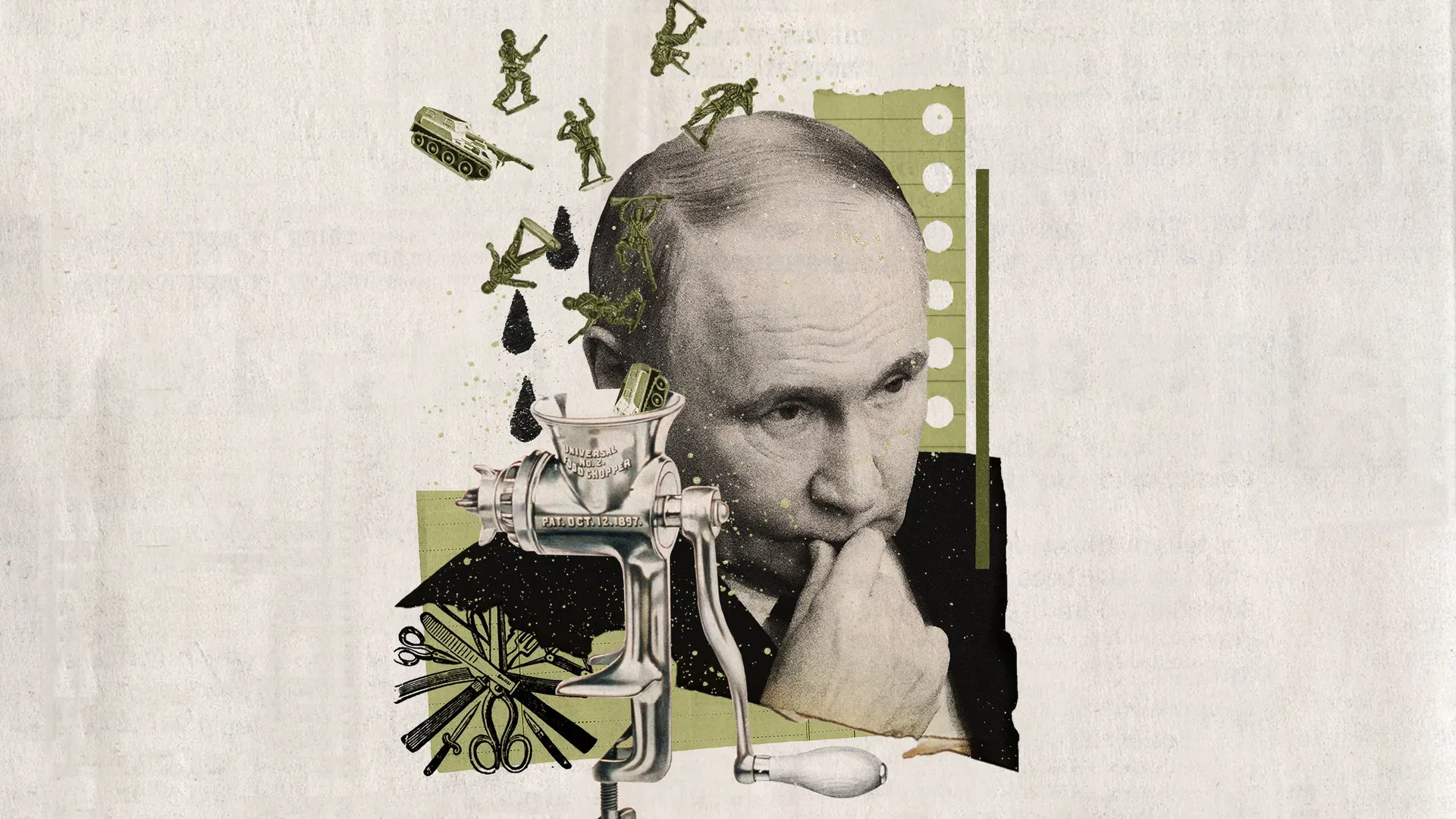
"Vladimir Putin has not achieved his goals," Volodymyr Zelenskyy said in a televised address marking the fourth anniversary of Russia's full-scale invasion of Ukraine. The invasion in February 2022 was conceived as a short and successful military operation that would force Kyiv back into Moscow's orbit and change the security architecture in Europe after the Cold War, said BBC Russia editor Steve Rosenberg. According to him, events did not go according to plan, and the price for Russia continues to rise. This was reported by The Public with reference to The Week.
According to estimates by Seth Jones and Riley McCabe of the Centre for Strategic and International Studies, as the war enters its fifth year, Russia's victory seems as distant as ever, and its losses are estimated at approximately 1.2 million people. The average pace of Russian troops' advance was sometimes only 15 metres per day, slower than almost any major offensive campaign of the last century.
The Russian economy is beginning to show signs of instability. The country is facing a significant reduction in oil revenues and has been forced to sell gold reserves to cover its budget deficit.
Western countries hoped that domestic discontent over sanctions would convince Vladimir Putin to abandon the war, Peter Rutland and Elizabeth Gauffman noted in an article for The Conversation. This approach was based on the assumption that the legitimacy of Putin's system rests on a social contract that provides stability and income in exchange for loyalty.
However, they argue that this position underestimates the role of ideology, which the Kremlin uses to portray the war as an existential threat and maintain support for the president. Statista data shows that this level of support remains unchanged.
This narrative is also applied externally. The Institute for the Study of War stated that the Kremlin's claim of the imminent collapse of the Ukrainian front line is an attempt to force the West and Ukraine to agree to Russian demands that Moscow cannot deliver militarily, calling it a misinterpretation.
In a publication for the European Council on Foreign Relations, Yana Kobzova and Leo Litra called on the West not to perceive Russia as invincible and to strengthen its support for Ukraine in order to achieve real negotiations to end the war. In their view, the assertion that time is on Russia's side reflects a lack of strategic patience and a missed opportunity to exploit Moscow's growing structural vulnerabilities.
The Economist notes that economic theory predicts a tendency to negotiate when the situation deteriorates, as a rational actor facing rising costs will seek a way out. At the same time, Russian political scientist Tatyana Stanovaya said in a comment for The I Paper that there are no signs that Putin is willing to abandon his demands for Ukraine's surrender.
In the absence of a peace agreement, the war could escalate further. The I Paper also mentions the possible role of China as a factor gaining weight, as well as fears of a new nuclear arms race.
The Economist believes that Russia is likely to be able to continue the war in the foreseeable future, but each additional year increases systemic risks, including fiscal crisis, institutional collapse and large-scale consequences that will be difficult to remedy after the war ends.
In this context, Western allies are faced with the question of what Russia will become once its willingness to wage war has been exhausted, and whether there is a plan for further action.