Iran has announced strikes on US military targets following a new wave of American attacks

On 9 July, the Iranian armed forces announced strikes against US military infrastructure in the Gulf states, following American attacks on Iran’s southern coastal and eastern provinces. According to Reuters, this has further complicated the situation following a ceasefire that had lasted for around three weeks.
Iranian media reported explosions in the southern regions of the country, notably in Bushehr, where one of Iran’s nuclear power stations is located, as well as in Konarak, Chogadak and Bandar Abbas. At the same time, a US official stated that the US had not carried out any new strikes in the last few hours.
On the same day, the funeral of Iran’s Supreme Leader, Ayatollah Ali Khamenei, took place in Mashhad; according to Reuters, he died on 28 February as a result of an air strike at the start of the war. The funeral marked the end of a week of mourning ceremonies and mass processions.
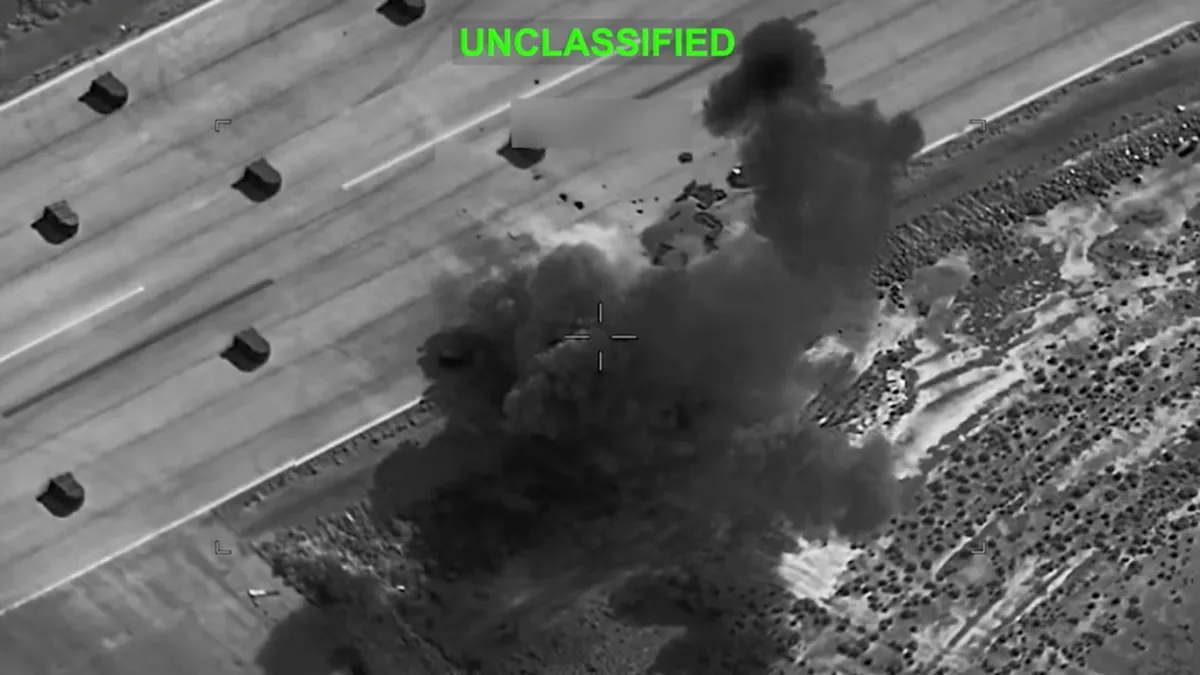
According to US Central Command, on 8 July, the US military struck approximately 90 Iranian military targets, including air defence systems, coastal surveillance assets, and storage sites for missiles and drones.
Iranian state media reported that 14 people were killed and a further 78 injured as a result of the US strikes on 8 and 9 July. The Fars news agency also reported that one of the strikes hit the Aq Taqeh Khan railway bridge in Golestan Province. According to the agency, this route through Turkmenistan and Kazakhstan is a vital overland transport corridor to China, the importance of which has grown since the United States blocked Iranian ports in the Persian Gulf. Fars also claims that, from the end of 2025, Russia will use this route for freight transport to Iran. According to the agency, repairs to the bridge are scheduled to be completed as a matter of urgency.
Local authorities have also reported that one of the American munitions struck the perimeter of the nuclear power station in Bushehr.
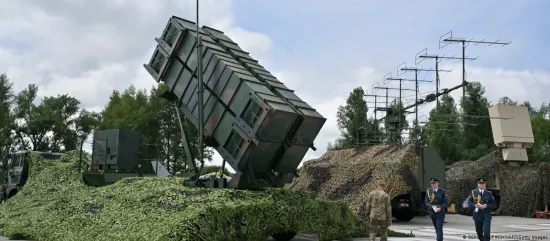
The Iranian army stated that it had attacked US Patriot systems in Kuwait, an early warning facility in Qatar and a US Army fuel depot in Bahrain.
In Kuwait, it was reported that air defence forces had intercepted a cruise missile, three ballistic missiles and ten drones. One person was injured by falling debris.
Air-raid sirens also sounded in Jordan after missiles launched from Iranian territory were detected. The country’s state news agency reported that eight missiles had been intercepted, with no casualties or damage reported.
Later, the Islamic Revolutionary Guard Corps announced that it had fired ten ballistic missiles at the Azraq military base in Jordan, which is used by the US military, as well as at the US military command centre in the Middle East.
The Islamic Revolutionary Guard Corps also stated that US interference with shipping through the Strait of Hormuz is preventing it from being fully reopened. According to the Iranian side, over the past two weeks, the volume of shipping under Iranian control has recovered to approximately 50 per cent of pre-war levels, and only vessels using routes designated by Tehran are granted passage.
In response, the US military stated that its actions are aimed at ensuring free navigation through the Strait of Hormuz following accusations against Iran of attacks on three tankers. According to their figures, since the beginning of May, the US has facilitated the passage of over 800 commercial vessels through the strait and the transport of 380 million barrels of crude oil, whilst Iran does not control this sea route.
Against this backdrop, oil prices – which had previously risen sharply due to fears of supply disruptions – fell on Thursday.