Israel prepares a staging area near the Red Sea for strikes against the Houthis

This was reported by Bloomberg.
Against the backdrop of the war with Iran, Israel is quietly preparing a possible base near the entrance to the Red Sea, from which it will be able to strike one of Tehran's last proxies that still retains full combat capability - the Houthis in Yemen.
The key to this was Somaliland, an unrecognised territory on the coast of the Gulf of Aden, which the government of Israeli Prime Minister Benjamin Netanyahu recognised in December. This gave Israel its first diplomatic presence opposite Yemen.
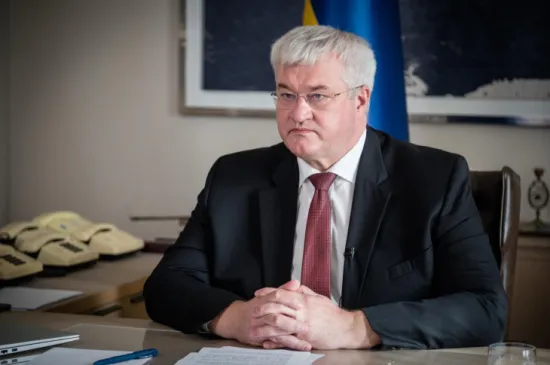
Now the parties must move on to a strategic security partnership, which may include the construction of an Israeli base, possibly even a hidden one, on the coast of Somaliland. This was stated by the Minister to the President of Somaliland, Hader Hussein Abdi.
"From a security standpoint, we will have a strategic partnership, and that includes many things. We have not yet discussed whether it will be a military base, but at some point there will definitely be such an analysis," Abdi said in an interview with Bloomberg at his office in Hargeisa.
According to two Somaliland officials who spoke on condition of anonymity, the territory will allow Israel to gather intelligence on the Houthis and conduct operations against them.
The Houthis, considered a terrorist group by the United States, have attacked Israel with long-range weapons and destabilised shipping in the Red Sea, one of the world's most important trade corridors, for years.
After the US and Israel attacked Iran on 28 February, oil and gas prices rose sharply, and the Strait of Hormuz, through which about a fifth of the world's oil passes, was effectively closed.
As the conflict dragged on, the shipping industry faced a sharp rise in insurance premiums for war risks, and Iran attacked several ships.
So far, the Houthis have refrained from attacking ships in this area, but they have made it clear that they may enter the war.
Even if the war ends quickly, it has already shown how important it is for Israel to consolidate its presence on the approaches to the Red Sea.
According to Bloomberg's sources, Israel has already begun preparatory work for a possible base.
In June last year, a small group of Israeli security forces arrived in Somaliland to survey its strategic coastline.
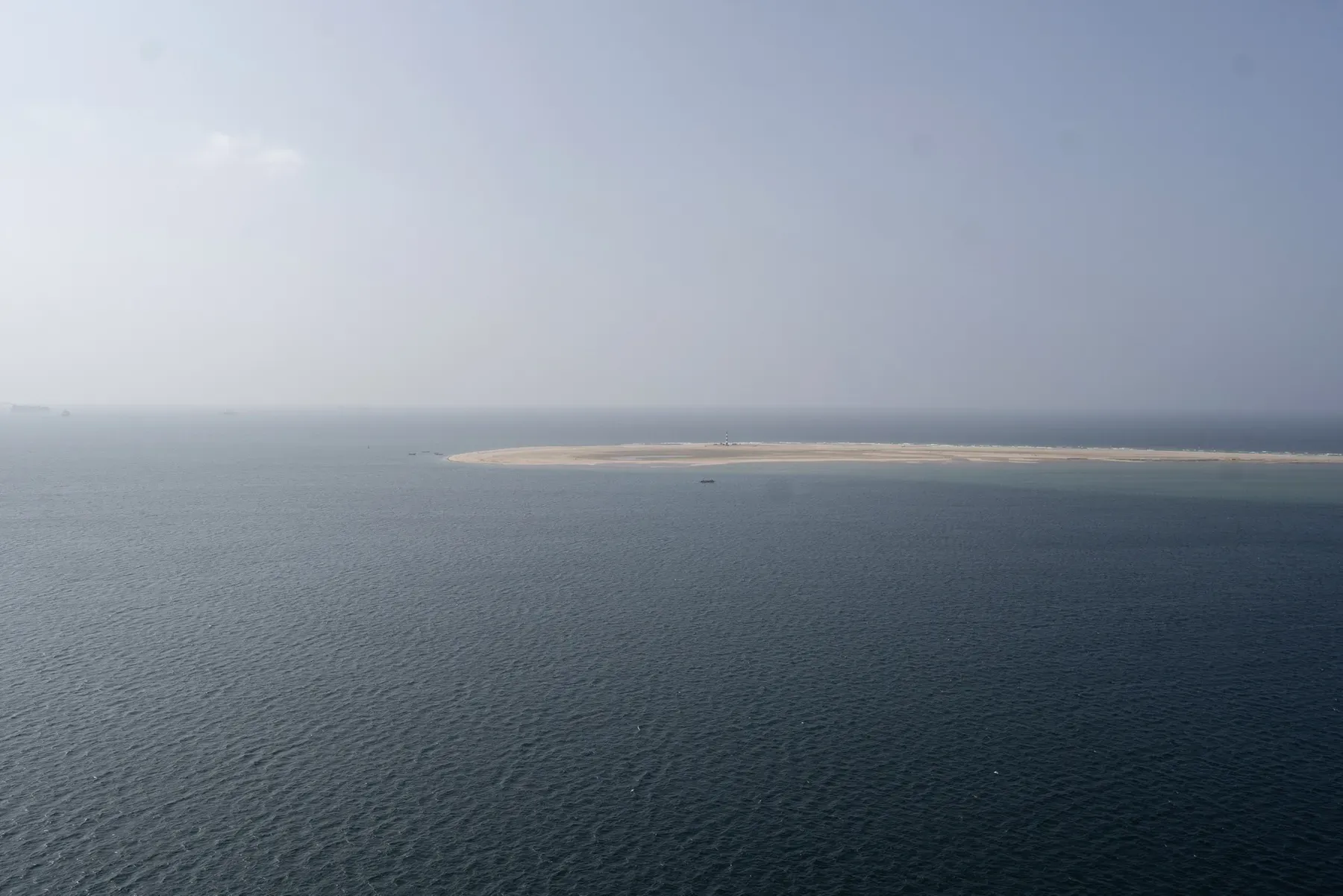
Over several days, they studied the beaches of the self-proclaimed state to identify a possible location for a base or other facility to combat the Houthis, who are based 260 kilometres across the Gulf of Aden in Yemen.
An Israeli government spokesperson did not provide Bloomberg with immediate comment on the matter.
One of the locations Israel is considering is an area on high ground about 100 kilometres west of Berbera, a port city where the United Arab Emirates, which normalised relations with Israel under the Abraham Accords, has a DP World port and a military airstrip.
The Houthis are maintaining a pause after the US-Israeli strikes on Iran, but remain Tehran's most dangerous proxy after Israel severely weakened Hamas and Hezbollah.
Tensions between Israel and the Houthis escalated sharply in 2023 when the Yemeni group began attacking both the Red Sea and Israel itself in response to the war in Gaza.
An Israeli general set up a separate intelligence unit on the Houthis and said in a closed briefing to Bloomberg that the group has hundreds of missiles capable of reaching Israel.
Ari Haystein, a research fellow at the Jerusalem Institute for Strategy and Security, noted that Israel's ties with Somaliland are important largely because the Houthis are expanding their influence along the Horn of Africa.
He said that if the current US and Israeli campaign weakens Iran's ability to support the movement, the region could become an even more important strategic arena for it.
According to regional officials, Israel and Somaliland have been discussing recognition for years.
However, at the end of last year, the agreement was concluded quickly due to the position of Israeli intelligence, which now considers the Houthis to be one of the greatest threats to Israel.
After Somaliland's recognition on 26 December, more than a dozen high-ranking military officials from the territory travelled to Israel for training to deepen security ties.
In addition, Israel rented rooms with blast-proof windows on the top floor of a hotel in Hargeisa, while simultaneously looking for a location for its embassy.
In December, Netanyahu stated outright that the recognition of Somaliland was achieved, among other things, with the help of the Mossad.
Israeli officials also visited Hargeisa on 27 February, the day before the war with Iran began.
Following this diplomatic move, 21 Arab, Islamic and African states, including Egypt and Qatar, expressed outrage and warned of "serious consequences" for peace and security in the Horn of Africa and the Red Sea.
Omar Mahmoud, senior analyst at the International Crisis Group on Somalia, noted that events in the Persian Gulf, especially after Iran's strikes on US allies, also present a dilemma for Somaliland - the risk of being drawn into regional conflicts without sufficient defence capabilities.
The Houthis emerged in the 1990s and have been fighting in Yemen's civil war since 2014. Saudi Arabia and the UAE supported the opposing side, but later reduced their involvement and are now betting on rival non-Houthi political forces, while the group itself controls the north of the country.
In early January, Somalia, under pressure from Saudi Arabia, which accused Abu Dhabi of using its territory to transport a Yemeni separatist leader, severed all trade and security ties with the UAE.
At the same time, Somalia specifically mentioned the DP World ports in Berbera and neighbouring Bosaso in Puntland. Both regional administrations immediately rejected Somalia's statement.
Israel's growing presence in Somaliland also puts it in direct competition with Turkey, which is the main ally of Somalia's central government.
This comes as Israeli officials increasingly cite Ankara as a key threat to Israel.
Former Israeli Prime Minister Naftali Bennett recently called Turkey "the new Iran."
Conor Veasey, an analyst at London-based consulting firm J.S. Held, noted that for Israel, recognising Somaliland creates a security counterweight to Houthi dominance in the Gulf of Aden and also helps to curb the growth of Turkish influence in Somalia.
Turkey has established its largest overseas military training base in Mogadishu and recently deployed F-16 fighter jets there to protect its interests, including a ship conducting oil and gas exploration on the shelf.
During his December trip to the region, Turkish President Recep Tayyip Erdogan called Israel's recognition of Somaliland illegal.
In addition to the struggle for influence among Middle Eastern states, the Islamist groups Al-Shabaab and Islamic State in Somalia have also threatened to attack Somaliland if Israel uses it for its own interests.
Mohamed Abdirahman, Director General of the Somaliland Ministry of Foreign Affairs, said that the territory has many enemies who want to put pressure on it through Israel.
Somalia is now seeking the main prize - recognition from the United States.
Support for this idea is already growing among American experts associated with the Republican Party. Among them are former US Special Representative for the Sahel and the Great Lakes Region J. Peter Pham and former US Assistant Secretary of State for African Affairs Tibor Nagy.
Hargeisa has also hired Washington lobbying firms Panterra and FGS Global to promote its position in Donald Trump's administration.
Fam told Bloomberg that from a strategic real estate perspective, Somaliland is hard to beat, citing Africa's longest runway at 5,000 metres and Berbera's deep-water port facilities.
In August, Republican Senator Ted Cruz, who chairs the Senate Foreign Relations Subcommittee on Africa, sent a letter to Trump calling on him to recognise Somaliland as an independent state.
Trump himself has previously expressed dissatisfaction with the 30-year American military presence in Somalia, although he has already carried out 162 airstrikes on targets in that country — three times more than under the Biden administration, according to the New America Foundation.
In addition, according to Bloomberg's sources, the US has also hired a former senior intelligence officer to assess Somaliland on behalf of the American government.
The US State Department did not immediately respond to Bloomberg's request for comment.
Somali President Hadar Hussein Abdi said the territory is ready to give the US access to its largely unexplored reserves of rare earth metals and oil.
According to him, the possibility of establishing a US military base also remains on the table.
"They are tired of supporting a failed state in Mogadishu. They have been pouring money and military aid into it for years, but nothing is changing in Somalia. A change in policy is coming," Abdi said.