EU prepares new security strategy amid threat from Russia – Callas

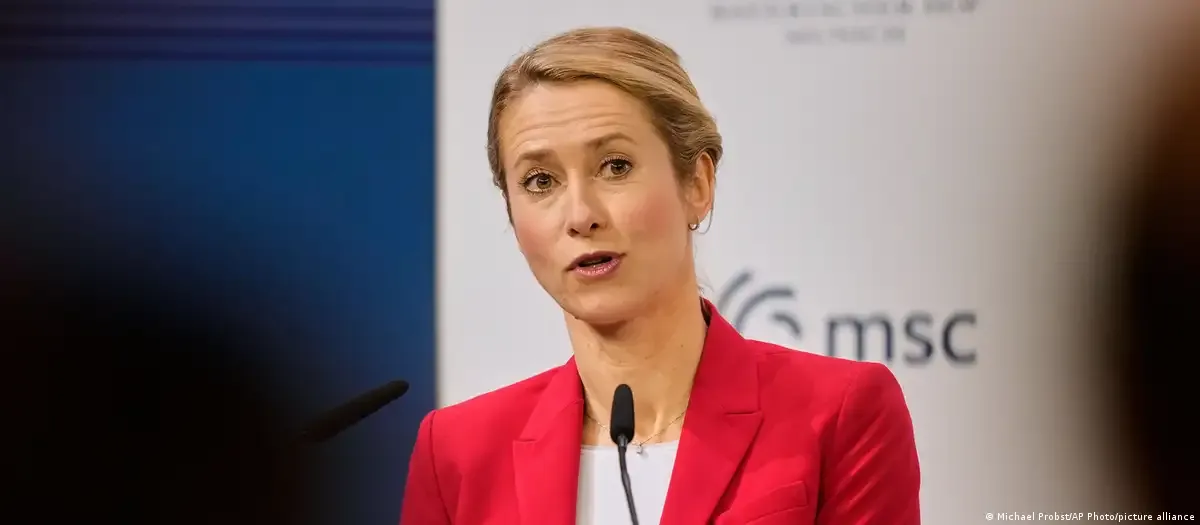
The High Representative of the European Union for Foreign Affairs and Security Policy, Kaja Kallas, said that she is working with European Commission President Ursula von der Leyen on a new European security strategy. The document is to cover all aspects of European security and take into account the growing risks from Russia in a more hostile geopolitical era.
Speaking at the Munich Security Conference on 15 February, Callas stressed that defence is a key priority. According to her, everything starts with Ukraine, but the Kremlin's strategic goals are not limited to Donbas. She also mentioned Moscow's hybrid actions and sabotage against critical infrastructure in Europe.
Kallas stressed that Russia is not a superpower. After more than a decade of conflict, including four years of full-scale war against Ukraine, Moscow, she said, has advanced only slightly beyond the 2014 lines, paying for it with approximately 1.2 million killed and wounded. She also stated that the Russian economy is weakened, the country is being cut off from European energy markets, and citizens are leaving it.
At the same time, she believes that the danger lies in the fact that Russia could gain more at the negotiating table than on the battlefield. She stressed that there can be no minimalist response to Moscow's maximalist demands.
Among the key conditions for a possible peace, Callas named the absence of amnesty for war crimes, the return of Ukrainian children, compensation for damages caused to Ukraine, and symmetrical restrictions in the event of a reduction in the Ukrainian Armed Forces. In her opinion, this is the minimum that Russia must agree to if it truly desires peace.
She also emphasised that EU enlargement is an antidote to Russian imperialism. According to her, since 1990, countries that have freed themselves from Soviet influence and joined the European Union have grown more than twice as fast as Russia. While in 1990 Russians were twice as rich as Poles, today Poles are about 70 per cent richer than Russians.
At the same time, Callas acknowledged that the European Union sometimes acts slowly and needs reform, but assured that Europe is capable of maintaining its subjectivity in a more complex world.